
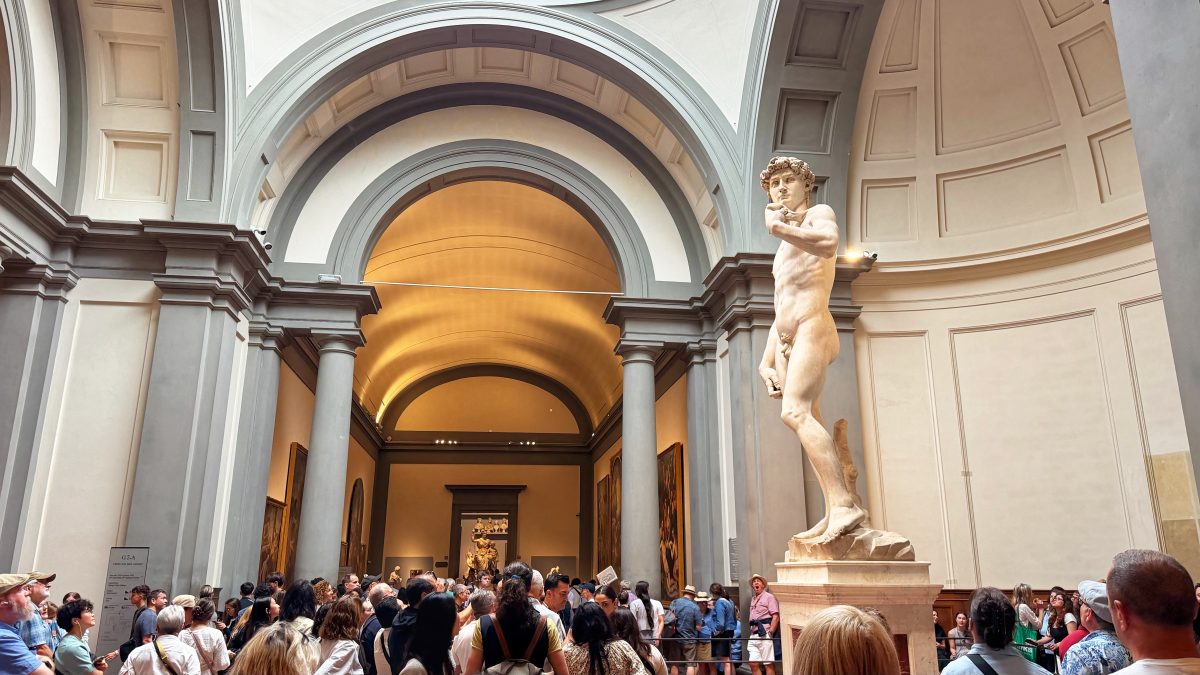
2026年6月3日,星期三,2026北部意大利之旅的第十三天
June 3, 2026, Wednesday — Day 13 of Our Northern Italy Trip
著名的大卫雕像就诞生在佛罗伦萨。这尊被誉为西方雕塑史巅峰之作的巨作,由米开朗基罗创作,而他开始雕刻时年仅26岁。我第一次知道大卫雕像,还是初中学素描的时候。画室里摆着它的石膏头像,老师总说这是最经典的素描对象之一。所以那时的我只知道它是一尊著名的石膏像,并不知道这座雕像所代表的许多颠覆时代的意义。
The famous Statue of David was born in Florence. Widely regarded as one of the greatest masterpieces in the history of Western sculpture, it was created by Michelangelo, who was only 26 years old when he began carving it. The first time I learned about David was when I was studying sketching in middle school. A plaster cast of David’s head stood in the art studio, and our teacher often said it was one of the most classic subjects for drawing practice. At the time, I only knew it as a famous plaster model and had no idea of the many revolutionary ideas and meanings that this sculpture represented.
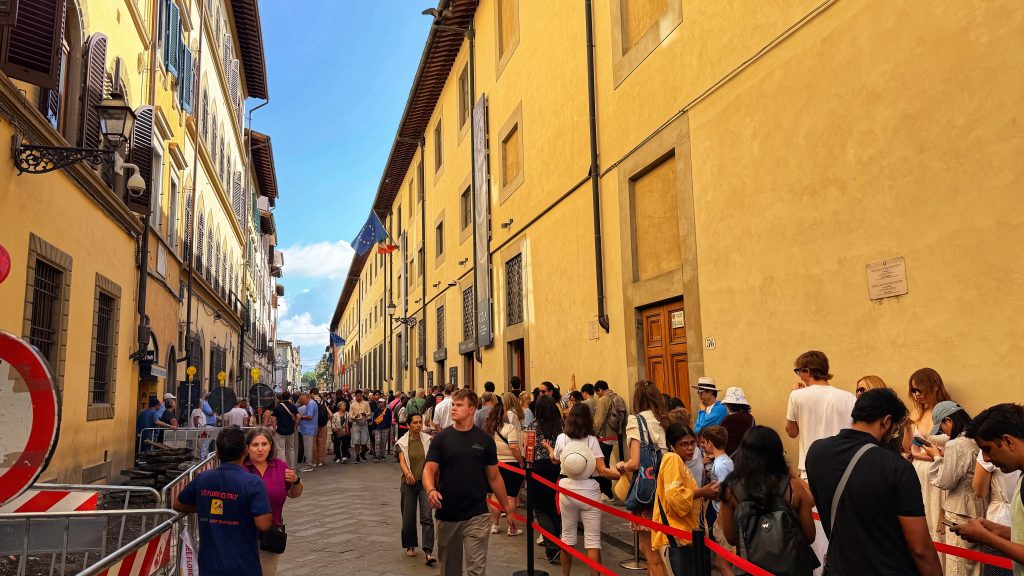
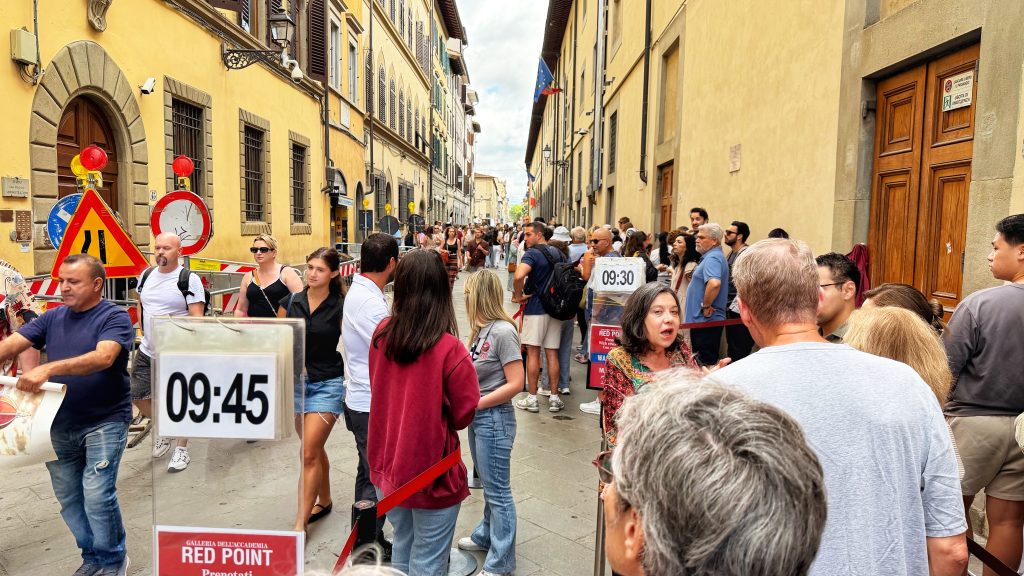
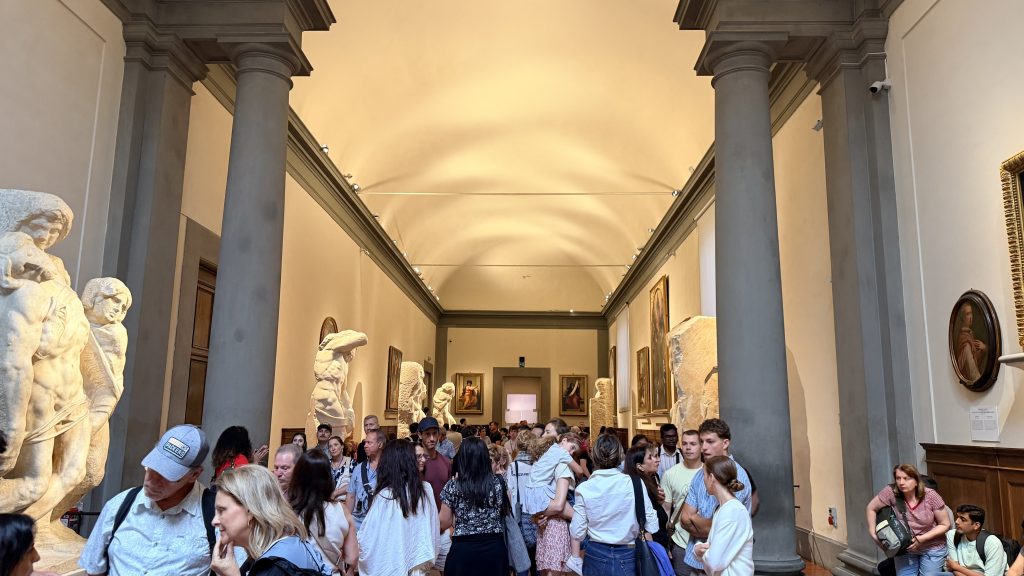
我们提前在网上买好了参观大卫雕像的门票,预约时间是今天上午9:45。从民宿步行到博物馆大约需要二十分钟,9点刚过我们就到了目的地。没想到博物馆门口早已排起了长长的队伍。每条队伍前都竖着时间牌,而且还分为红色、绿色和蓝色几个不同通道。我们去售票处咨询,询问持72小时通票的游客应该排哪一队,工作人员告诉我们是红色通道。于是我们站在一旁等待。没过多久,工作人员将队伍前的时间牌翻到了“9:45”,我们立刻加入了队伍。
We had purchased our tickets online to see David in advance, with an entry time of 9:45 a.m. It was about a twenty-minute walk from our apartment to the museum, and we arrived shortly after 9:00. To our surprise, long lines had already formed outside. Each queue had a sign showing an entry time, and there were separate red, green, and blue lines. We went to the ticket office to ask which line visitors with the 72-hour pass should join, and the staff told us to use the red line. So we waited nearby. Before long, a staff member flipped the sign at the front of the queue to “9:45,” and we immediately joined the line.
说起文艺复兴,在成长过程中,它对我来说一直只是历史课本里的一个名词,并没有真正理解它的意义。直到2018年第一次来到欧洲旅行,亲眼看到那么多文艺复兴时期留下来的艺术品、雕塑和建筑,才开始慢慢学到这场运动对人类历史的深远影响。“文艺复兴”字面意思是“重生”或“复兴”,但它远不只是一场艺术上的繁荣,更是人类历史上一次伟大的思想解放运动。如果用最简单的话来概括它的核心,那就是:人类告别了凡事以“神”为中心的黑暗中世纪,重新发现了“人”的价值。这场运动于14世纪发源于意大利,尤其是佛罗伦萨,随后逐渐影响整个欧洲。它提倡人文主义,鼓励人们关注现实生活,追求知识、幸福、财富与爱情;它推崇理性与科学,鼓励独立思考和探索世界;它赞美人的创造力与潜能,相信人不仅能够理解世界,更能够改变世界。
Growing up, the Renaissance was simply a term from history textbooks to me, and I never truly understood its significance. It was not until my first trip to Europe in 2018, when I saw so many Renaissance artworks, sculptures, and buildings with my own eyes, that I began to appreciate the profound impact this movement had on human history.
The word “Renaissance” literally means “rebirth,” but it was far more than an artistic flourishing. It was one of the greatest intellectual awakenings in human history. In the simplest terms, its core idea was this: humanity moved away from a worldview centered entirely on God during the Dark Ages and rediscovered the value of human beings. Originating in 14th-century Italy, especially in Florence, the movement gradually spread across Europe. It promoted humanism, encouraging people to focus on real life and pursue knowledge, happiness, wealth, and love. It celebrated reason and science, inspiring independent thought and exploration of the world. Above all, it praised human creativity and potential, fostering the belief that people could not only understand the world, but also change it.
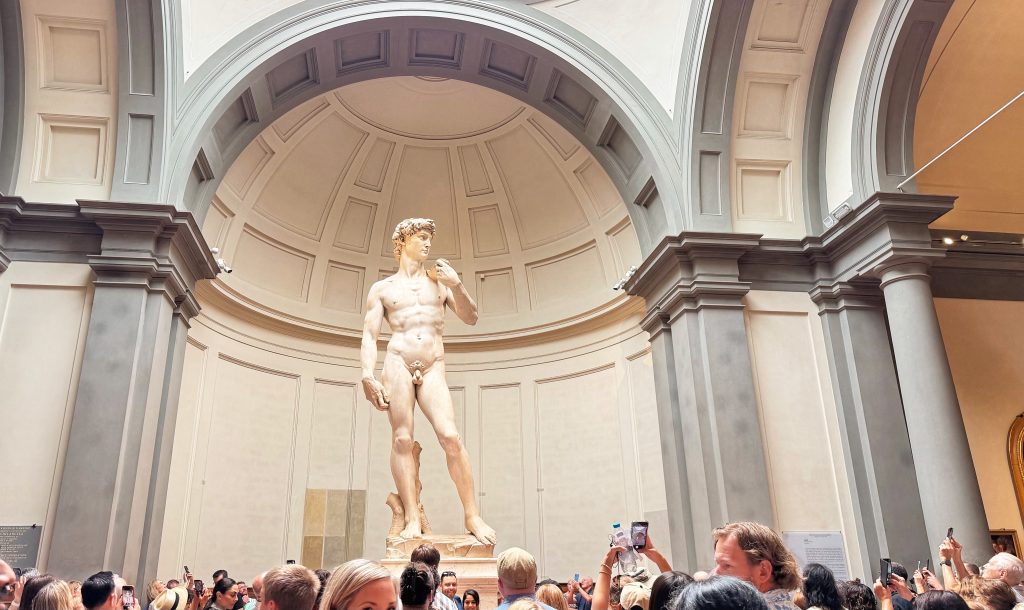
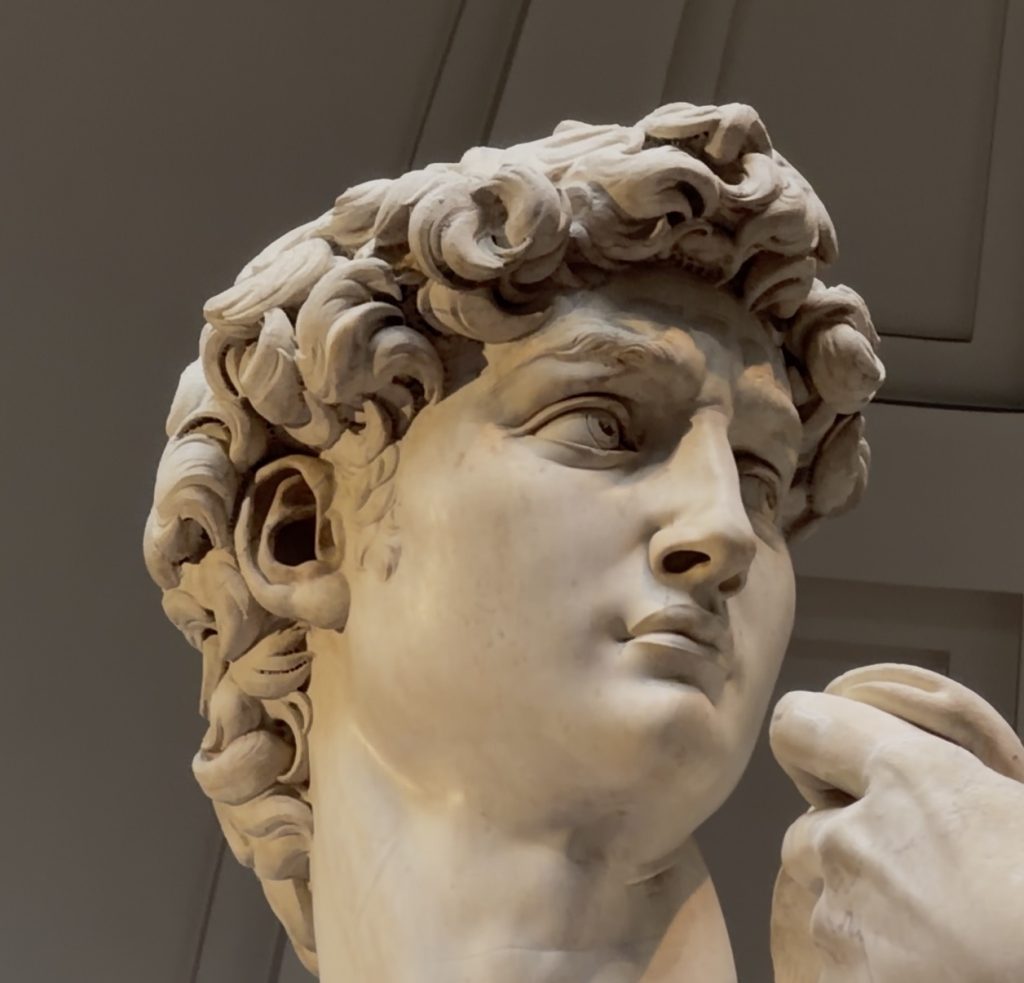
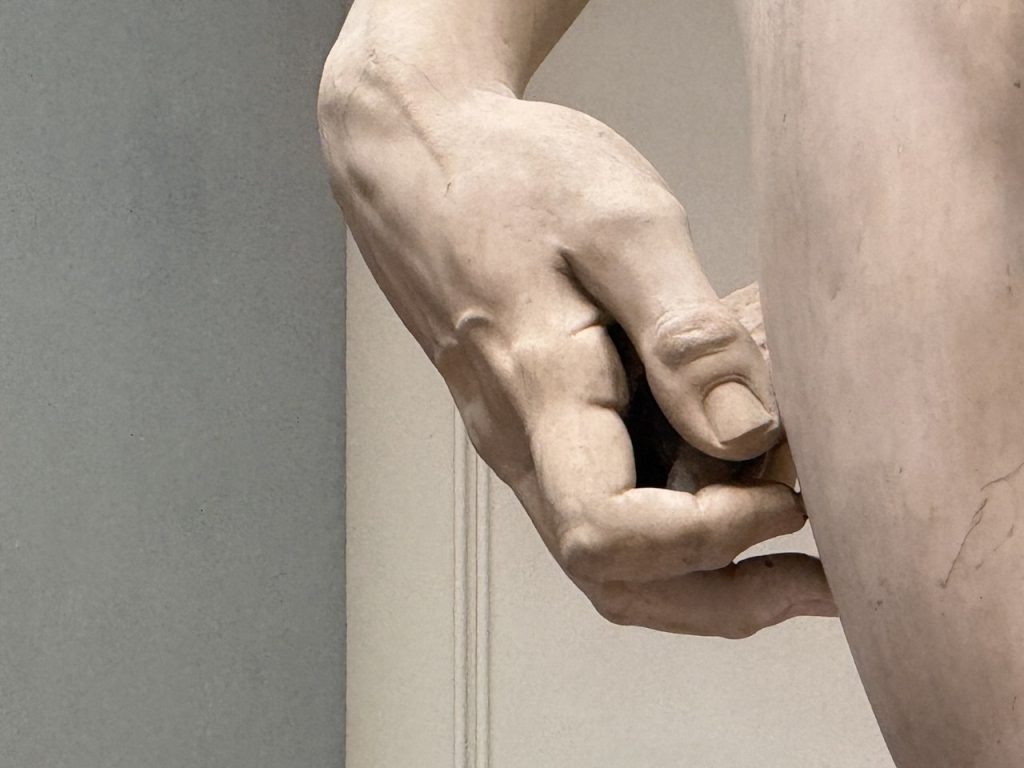
这也是为什么大卫雕像,这件完美的裸体雕塑,被视为文艺复兴的象征的原因。不仅因为它精湛的雕刻技艺,更因为它体现了文艺复兴对“人”的重新发现。在圣经故事里,大卫之所以能打败巨人,全靠“耶和华赐予的力量”。但米开朗基罗的大卫身上,你看不到任何神迹的痕迹。他没有翅膀,没有光环,没有神明暗中相助的符号。这种将“人”置于中心的位置,正是文艺复兴人文主义精神最鲜明的体现。米开朗基罗曾亲自解剖过无数具尸体,对人体的骨骼、肌肉和血管走向了如指掌。在大卫身上,右手的静脉因为紧张而微微暴起,腹部的肌肉随着呼吸仿佛在起伏,大腿的肌腱绷紧。这种对极端真实人体结构的追求,正是文艺复兴时期用经验科学和理性观察去探索世界的缩影。
This is also why David, this perfect nude sculpture, is regarded as a symbol of the Renaissance. It is celebrated not only for its extraordinary craftsmanship, but also because it embodies the Renaissance rediscovery of humanity.
In the biblical story, David defeats the giant through the power granted to him by God. But in Michelangelo’s David, there is no visible sign of divine intervention. He has no wings, no halo, and no symbols suggesting that a god is secretly aiding him. Instead, David stands entirely on his own. This placing of human beings at the center is one of the clearest expressions of Renaissance humanism.
Michelangelo personally dissected numerous corpses and developed an intimate understanding of human anatomy, including the structure of bones, muscles, and veins. In David, the veins in the right hand appear slightly swollen with tension, the abdominal muscles seem to rise and fall with each breath, and the tendons in the legs are tightly drawn. This relentless pursuit of anatomical realism reflects the Renaissance spirit of using observation, experience, and reason to explore and understand the world.
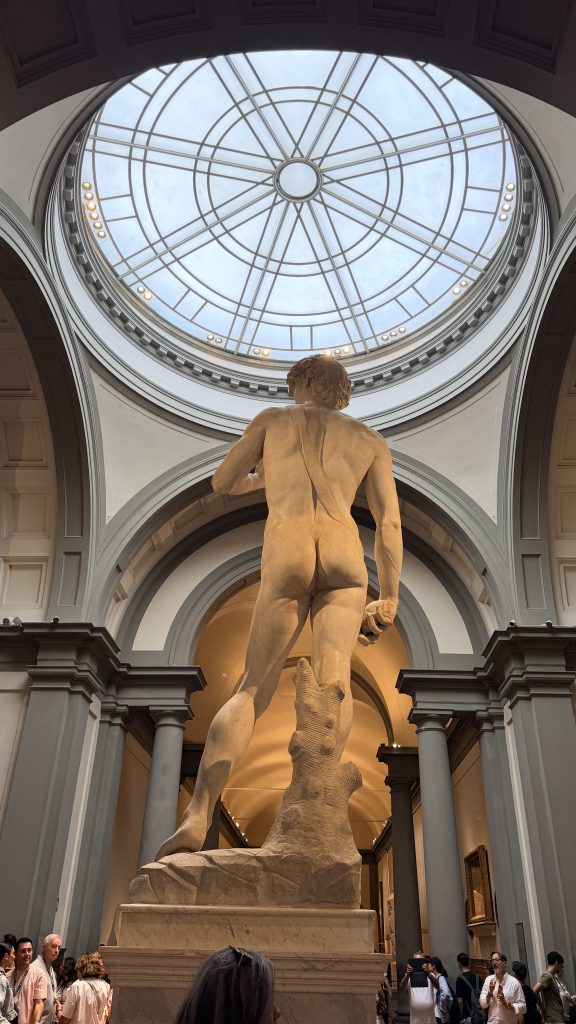
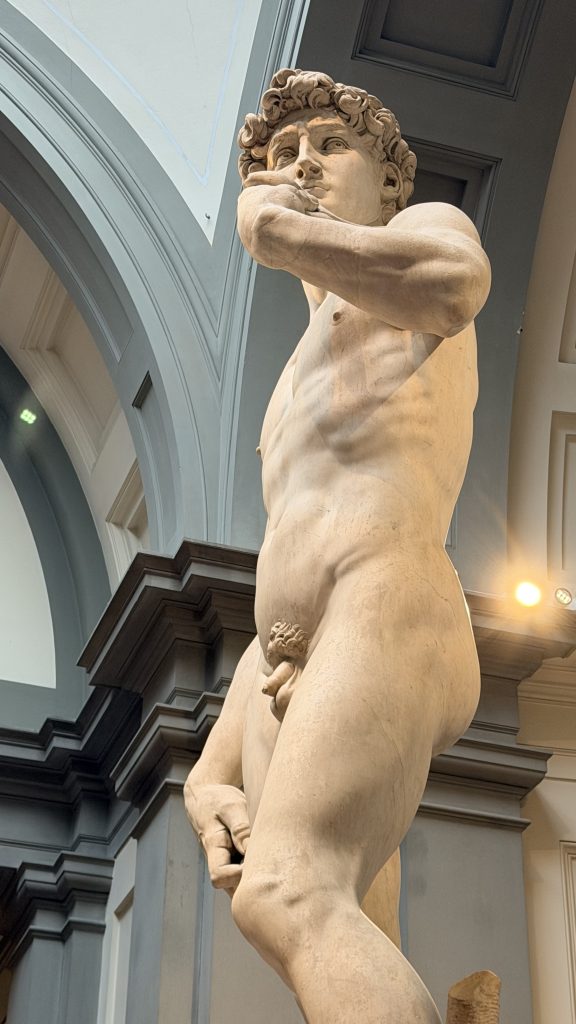
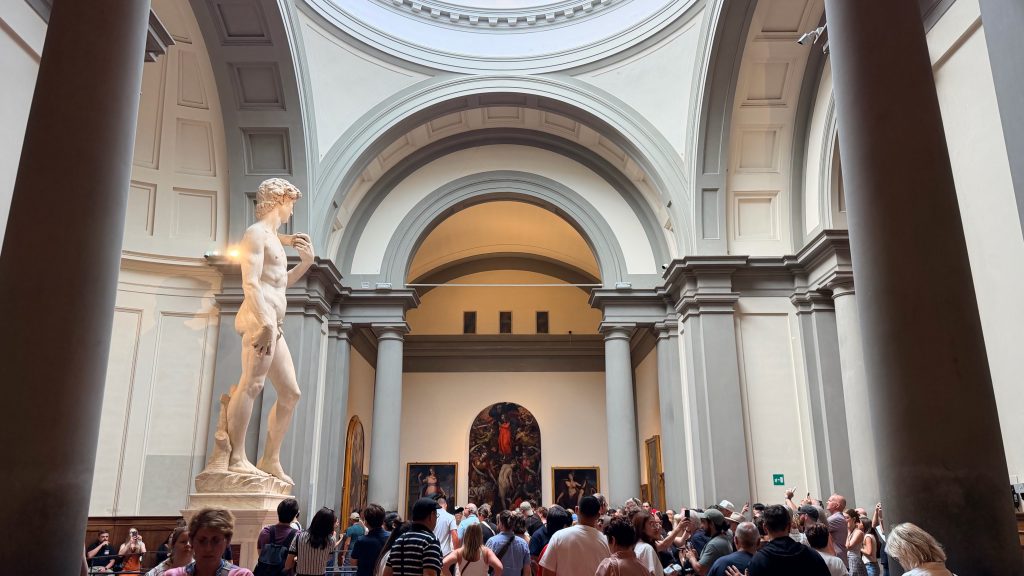
The statue was originally commissioned for the roof of Florence’s Cathedral of Santa Maria del Fiore. However, when it was completed in 1504, it was considered so extraordinary that the people of Florence decided it deserved a far more prominent location. Instead of placing it high atop the cathedral, they moved it to the entrance of the Palazzo Vecchio, the city’s town hall. The statue standing outside the Palazzo Vecchio today is a replica.
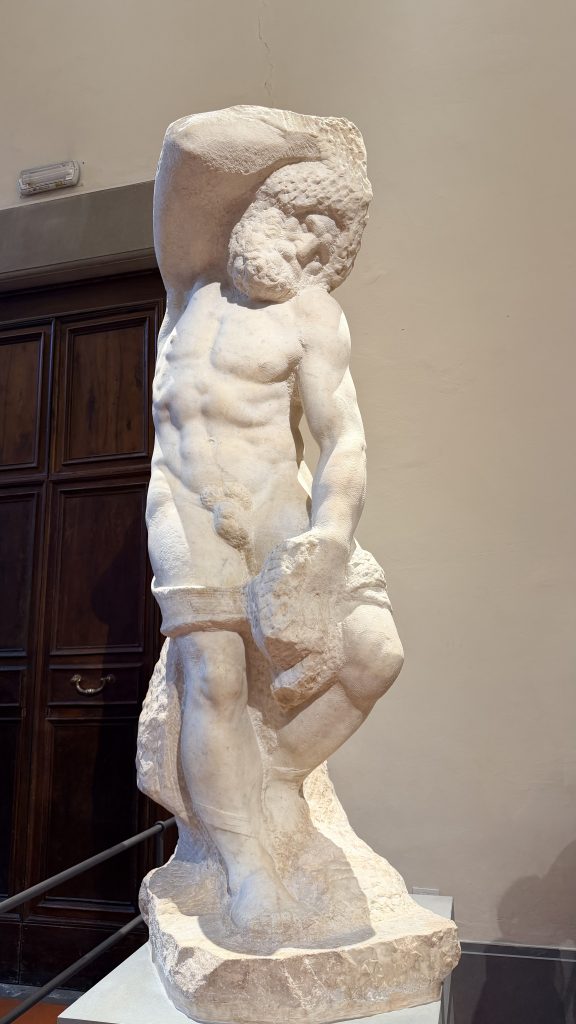
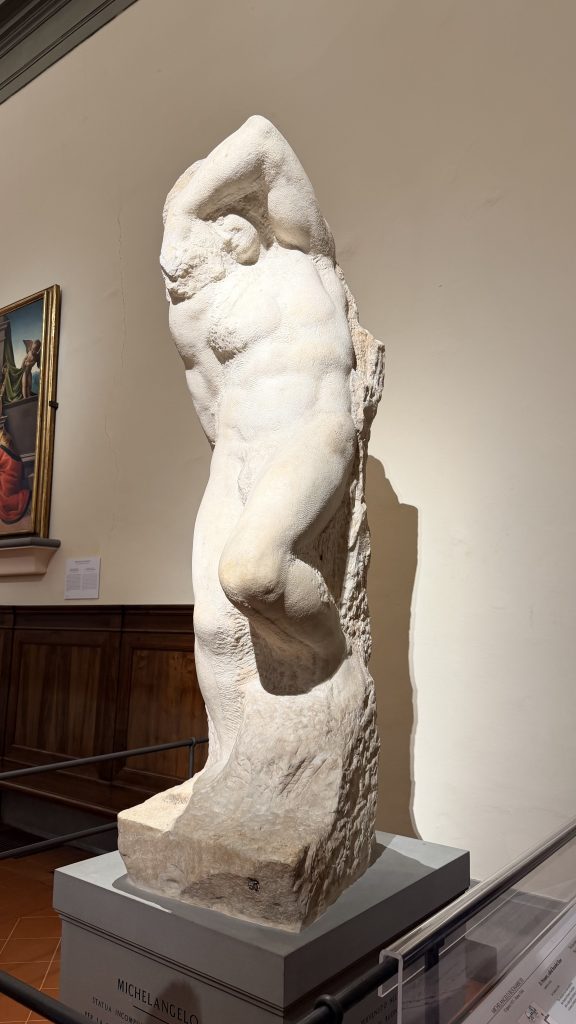
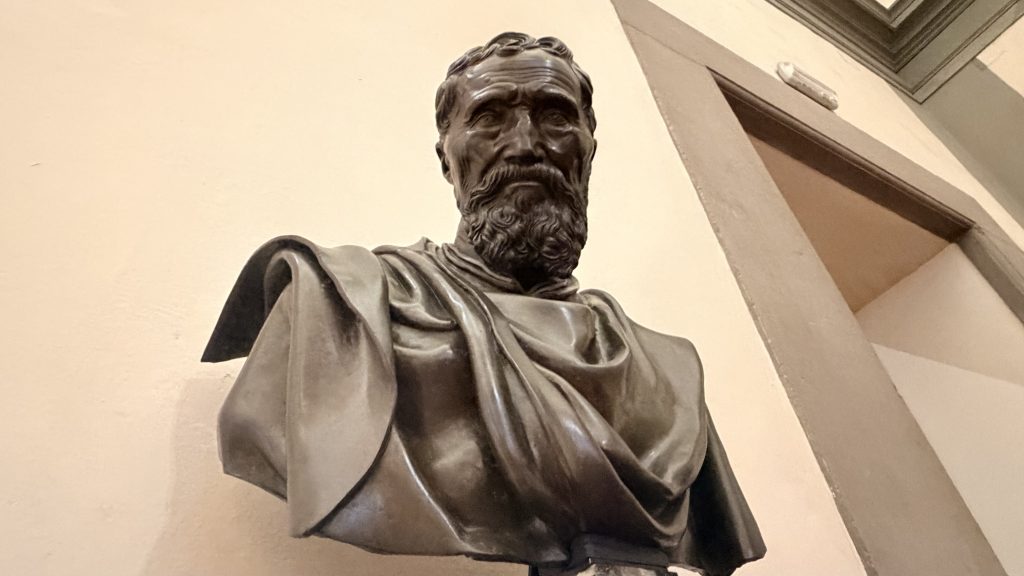
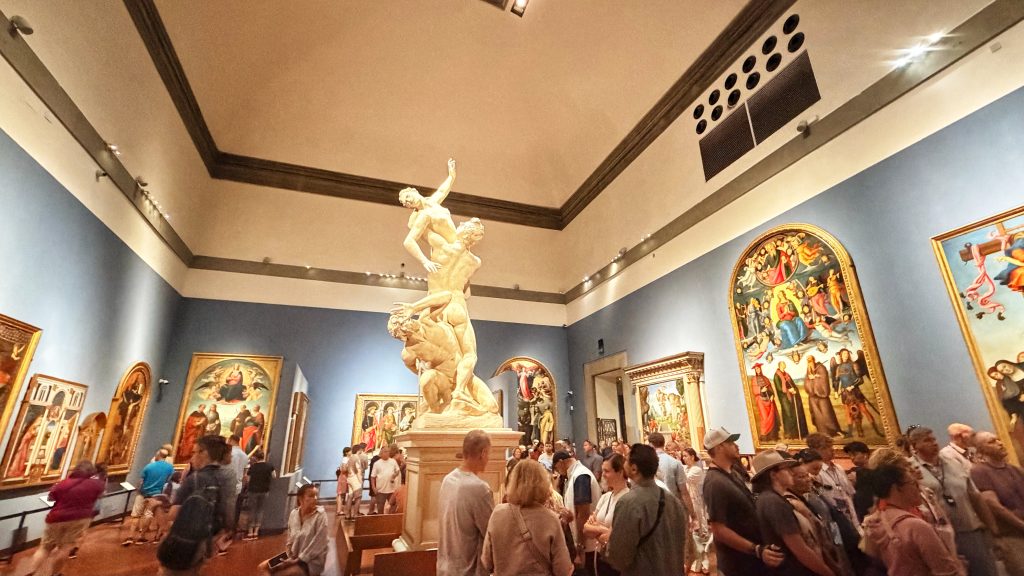
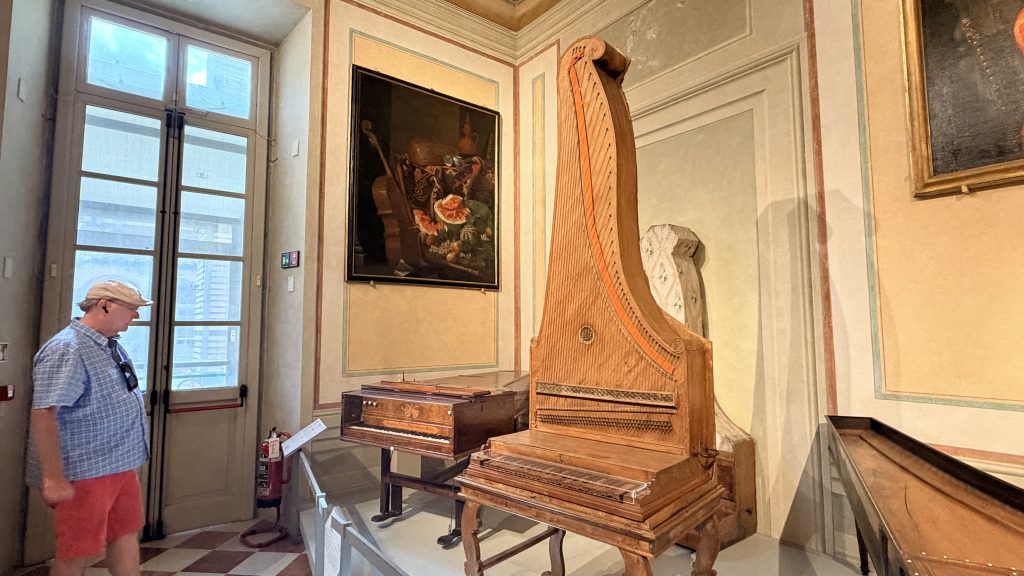
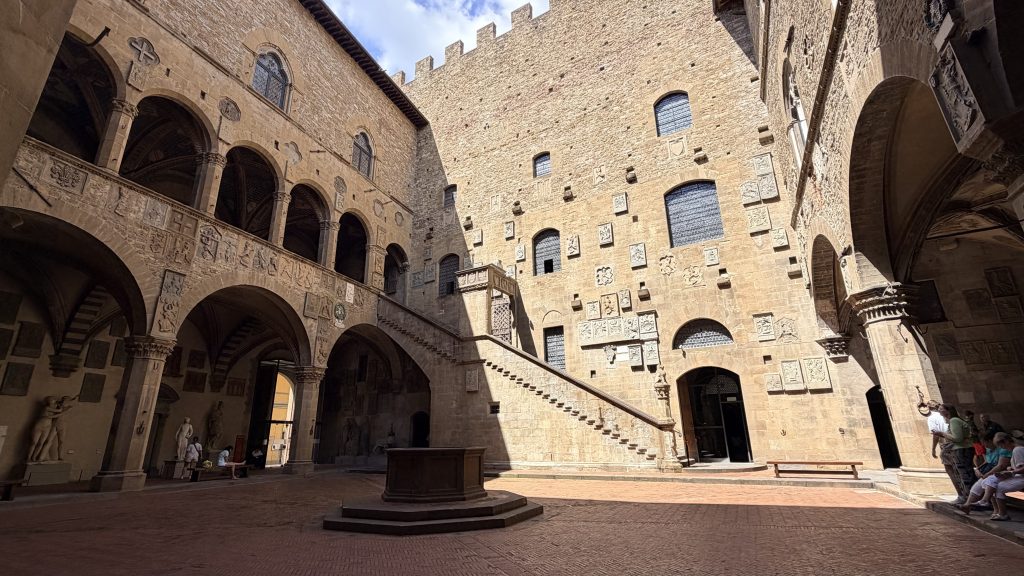
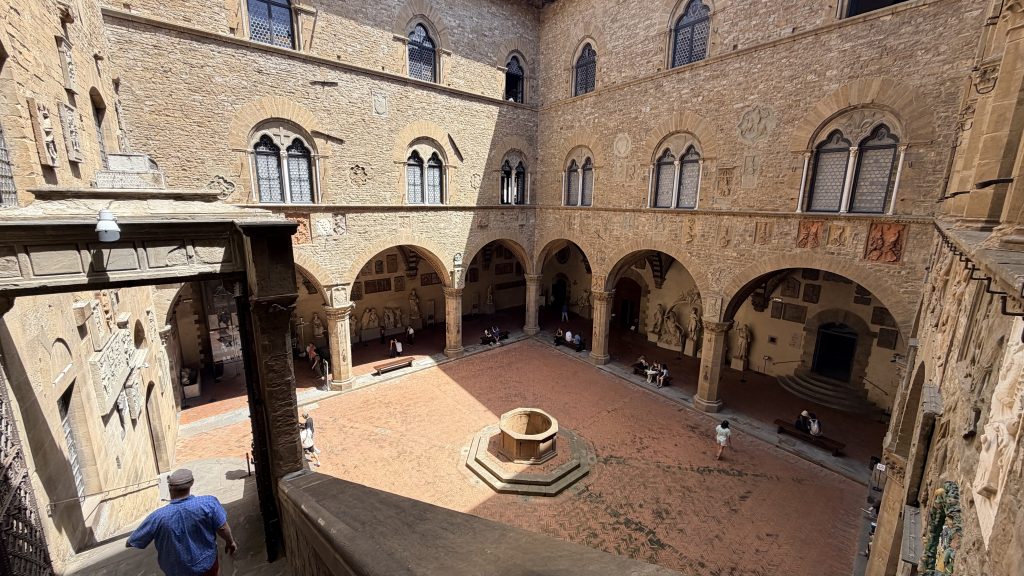
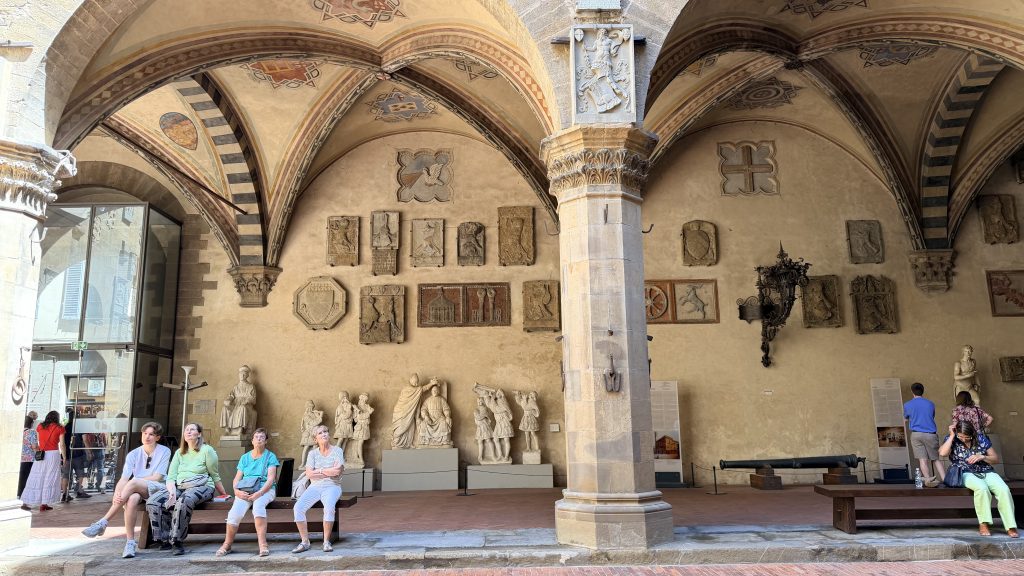
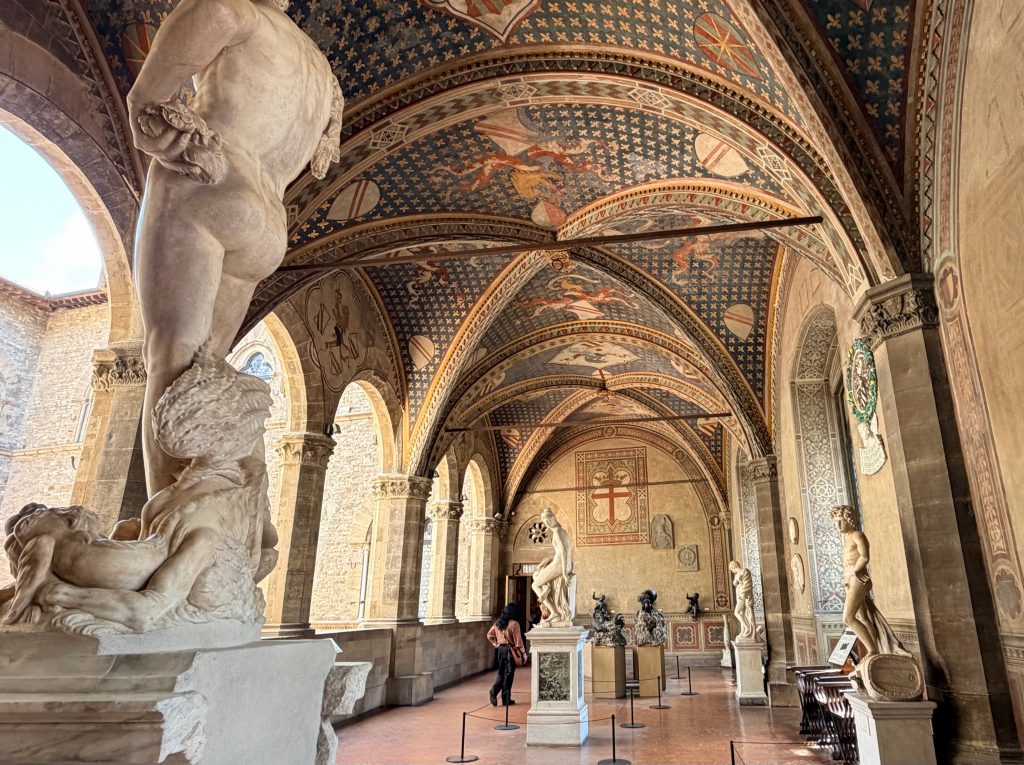
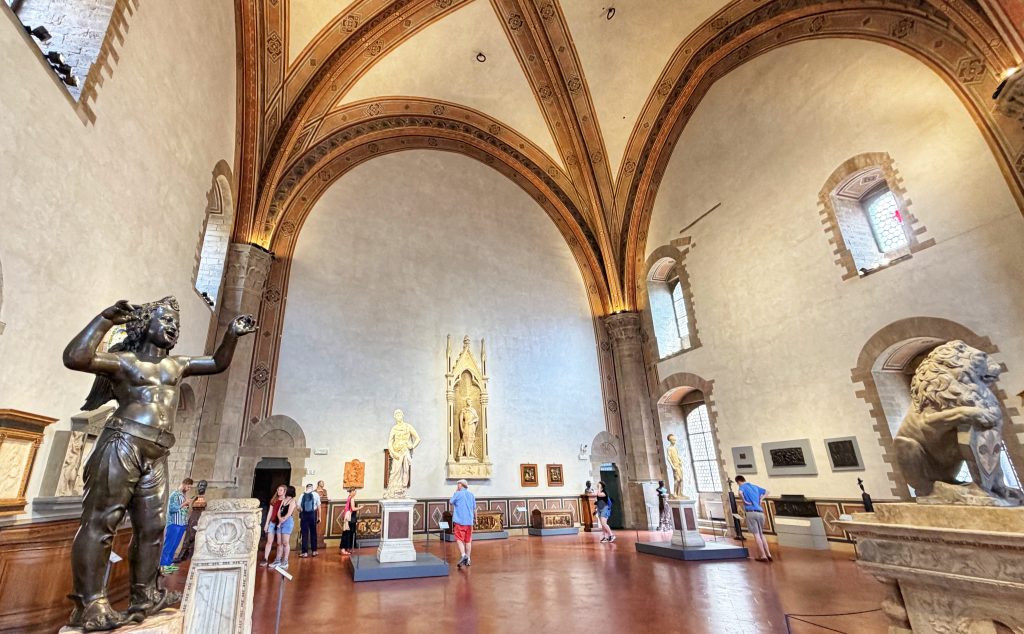
看完大卫雕像后,我们顺路去了巴杰罗美术馆,包含在72小时通票之内。相比大卫雕像的排队人潮,这里显得安静许多,中庭是一个很有氛围的露天庭院。建于1255年,是佛罗伦萨最古老的公共建筑之一,最初曾作为市政官邸使用。如今这里收藏了大量文艺复兴时期的雕塑作品,其中也包括米开朗基洛的几件早期作品,可以近距离看到他不同时期的创作风格。
After seeing David, we continued on to the Bargello Museum, which was included with our 72-hour pass. Compared with the crowds at the Accademia, this museum felt much quieter. Its central courtyard is a beautiful open-air space with a wonderful atmosphere.
Built in 1255, the Bargello is one of Florence’s oldest public buildings and originally served as the City Hall. Today, it houses an impressive collection of Renaissance sculptures, including several early works by Michelangelo. Seeing these pieces up close offers a fascinating glimpse into the evolution of his artistic style over different periods of his career.
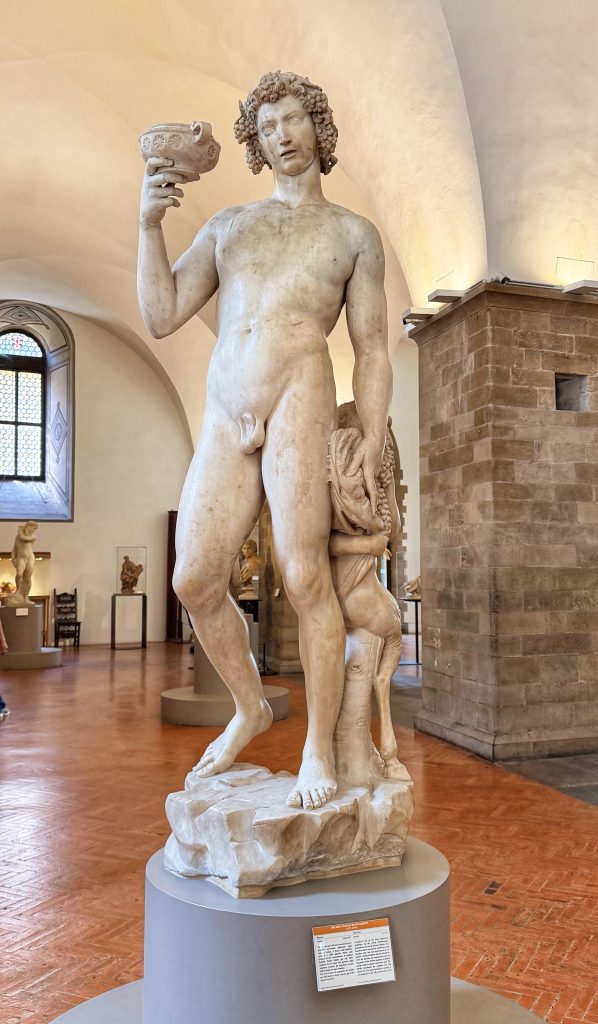
The figure is shown in a slightly unsteady pose, suggesting the mild intoxication of the wine god. Combining the ideals of classical sculpture with the bold experimentation of a young artist, Bacchus stands as one of the defining examples of Michelangelo’s early style.
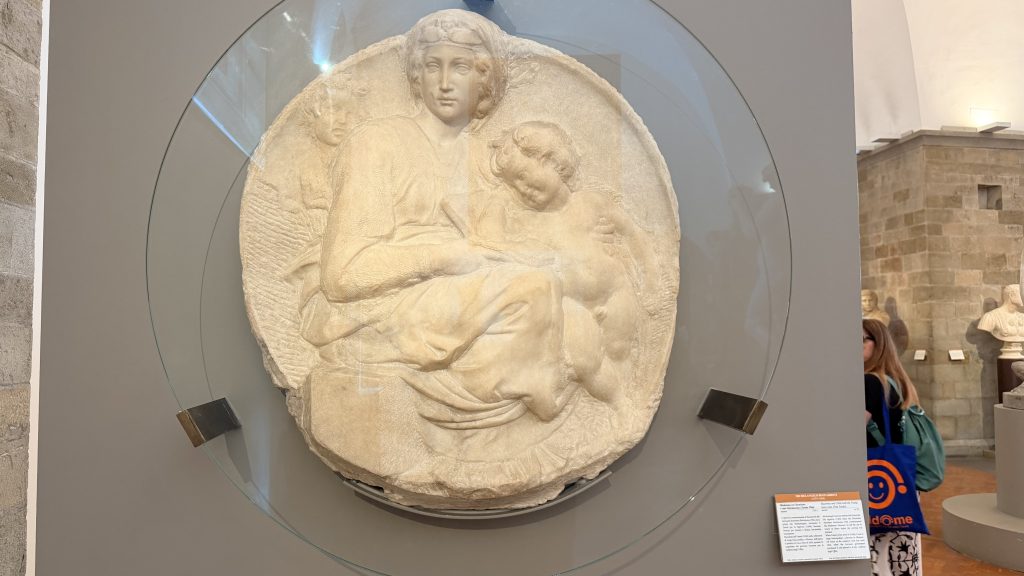
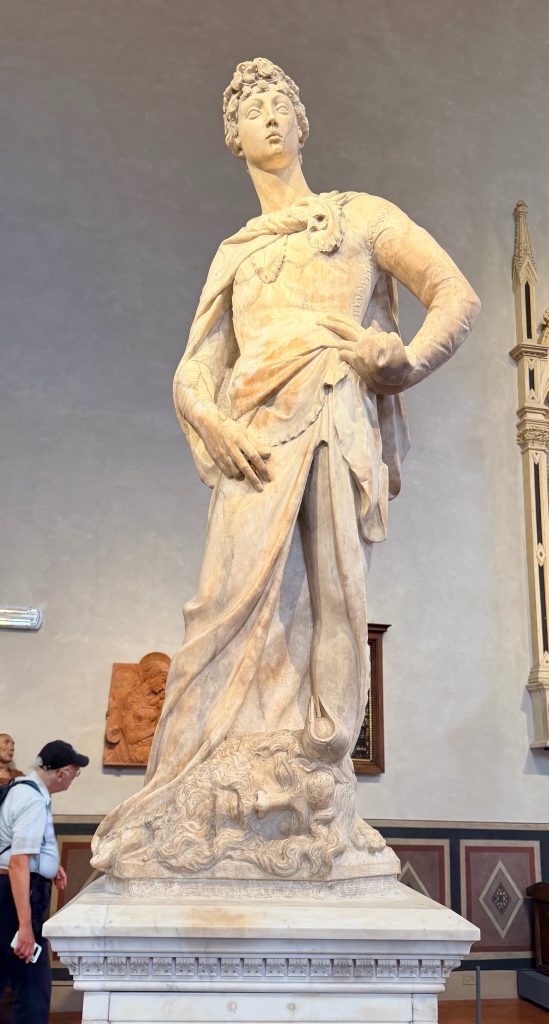
Donatello’s clothed David.
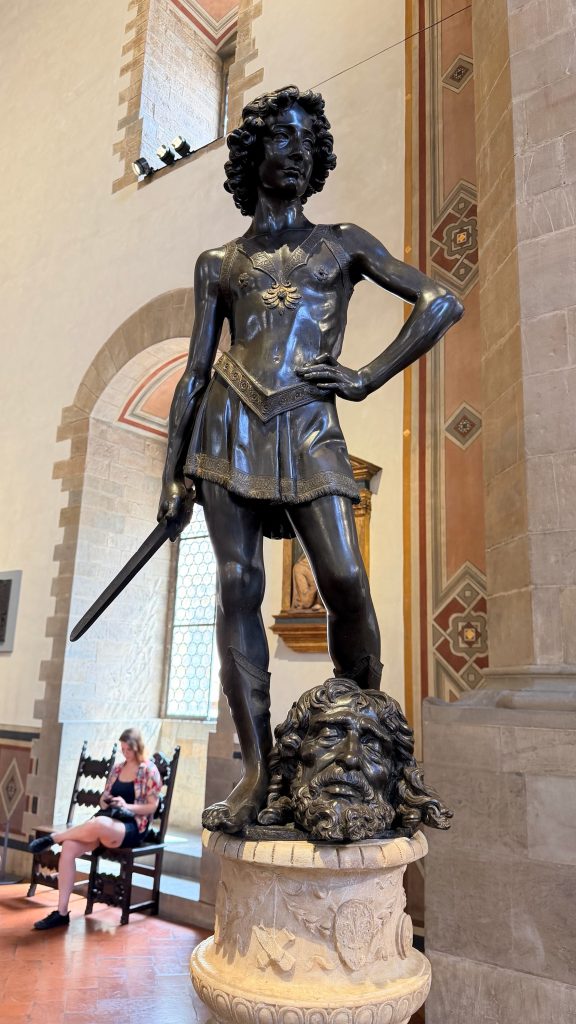
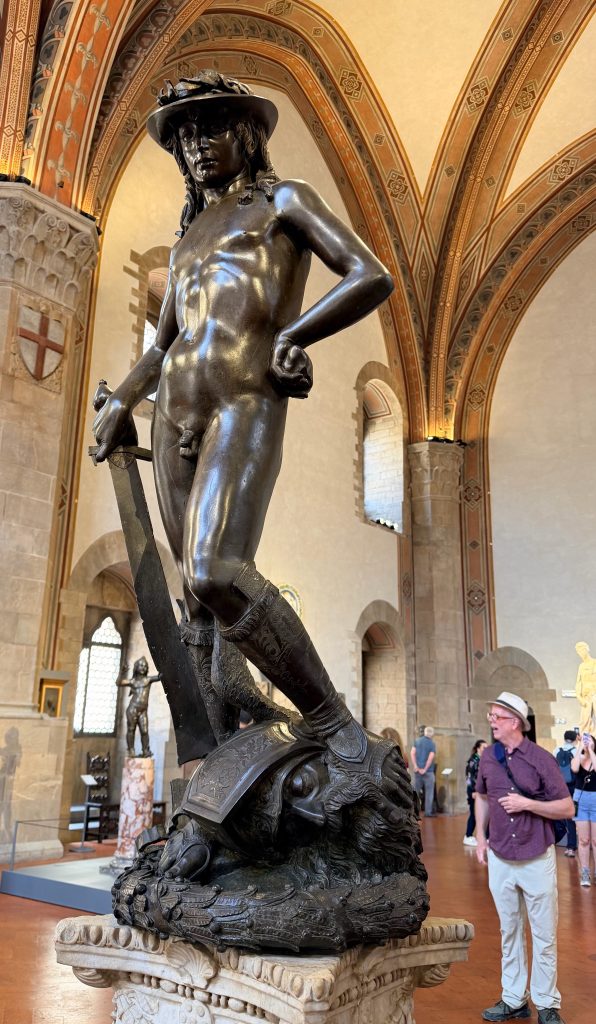
Donatello’s Renaissance-style nude David.
这三个也是“大卫”的雕像,比米开朗基罗的大卫早很多年,相比之下,传统的大卫形象通常更强调胜利之后的状态,少年踩着歌利亚被割下的头颅上,带有一种庆祝胜利的姿态。These three are also statues of ‘David,’ created many years before Michelangelo’s. In contrast, the traditional image of David usually emphasizes the post-victory moment, showing the young boy stepping on Goliath’s severed head in a celebratory pose.
在巴杰罗美术馆里,最有意思的展品之一,是墙上并排陈列的两块青铜浮雕。它们诞生于1401年,是为佛罗伦萨圣乔瓦尼洗礼堂第二道青铜大门设计竞赛所作的作品。这场竞赛被认为是文艺复兴真正意义上的开端之一。当年佛罗伦萨决定为洗礼堂定制全新的青铜大门,向众多艺术家发出征稿,最终进入决赛的是布鲁内莱斯基和吉贝尔蒂。评委会最终将胜利授予了吉贝尔蒂。落选的布鲁内莱斯基因此有机会前往罗马学习古典建筑与工程技术。多年之后,当佛罗伦萨圣母百花大教堂那座长期无法封顶的巨大穹顶再次面向世界征集方案时,布鲁内莱斯基带着全新的结构设计回到佛罗伦萨,最终完成了那座改变建筑史的大穹顶。很多人说那一场竞赛是文艺复兴时代真正开启的起点。
One of the most interesting exhibits in the Bargello Museum is a pair of bronze relief panels displayed side by side on the wall. Created in 1401, they were submitted for the competition to design the second bronze doors of the Baptistery of San Giovanni in Florence. This competition is often regarded as one of the true starting points of the Renaissance.
At the time, Florence decided to commission new bronze doors for the baptistery and invited artists to submit designs. The two finalists were Brunelleschi and Ghiberti. In the end, the judges awarded the commission to Ghiberti.
After losing the competition, Brunelleschi traveled to Rome, where he studied classical architecture and engineering. Years later, when Florence once again sought solutions for the enormous dome of the Cathedral of Santa Maria del Fiore—a dome that had long remained unfinished—Brunelleschi returned with an innovative structural design and ultimately completed the great dome that transformed the history of architecture.
Many people consider that competition to be the moment when the Renaissance truly began.
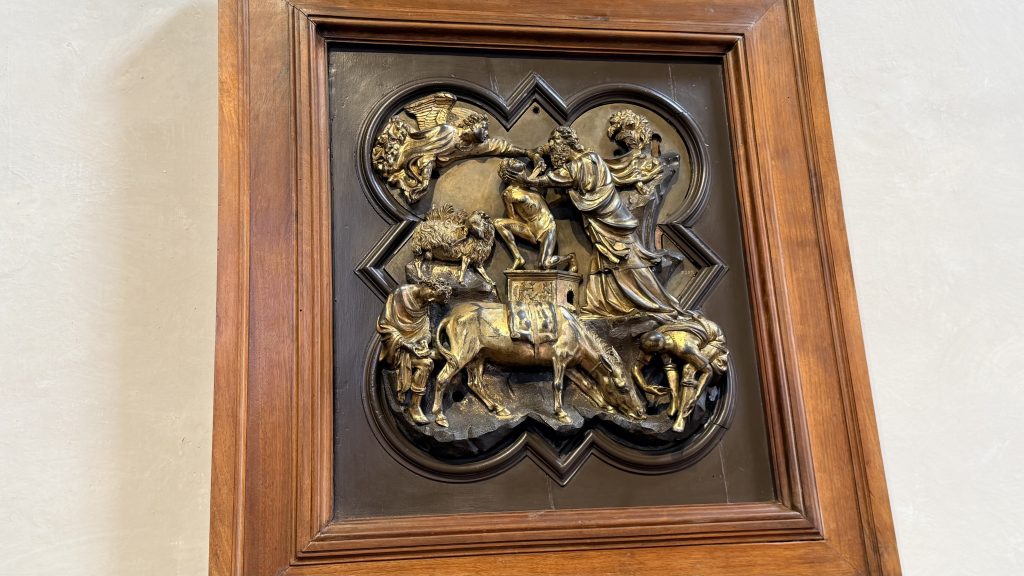
Brunelleschi’s version.
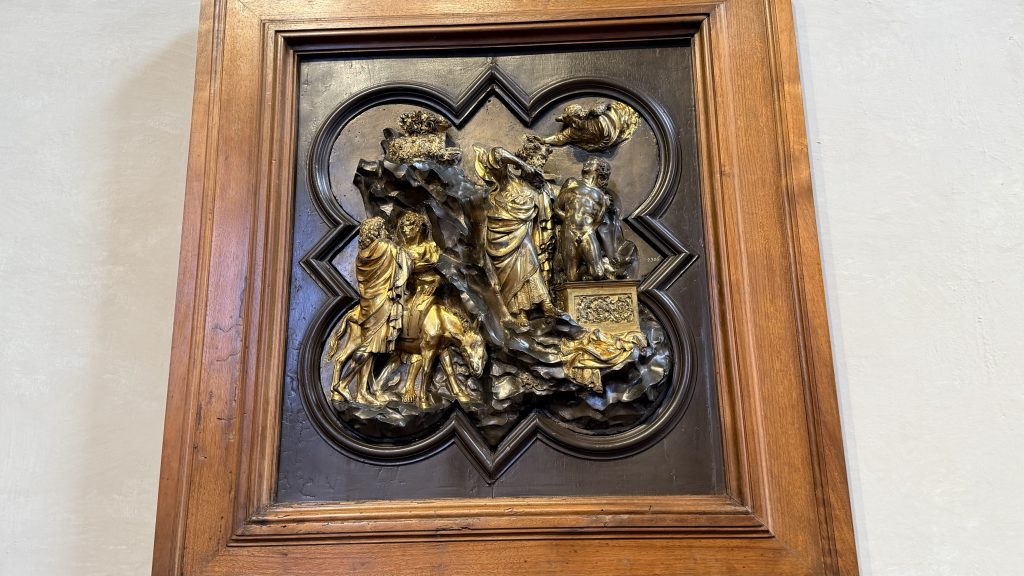
Ghiberti’s version, the winning entry.
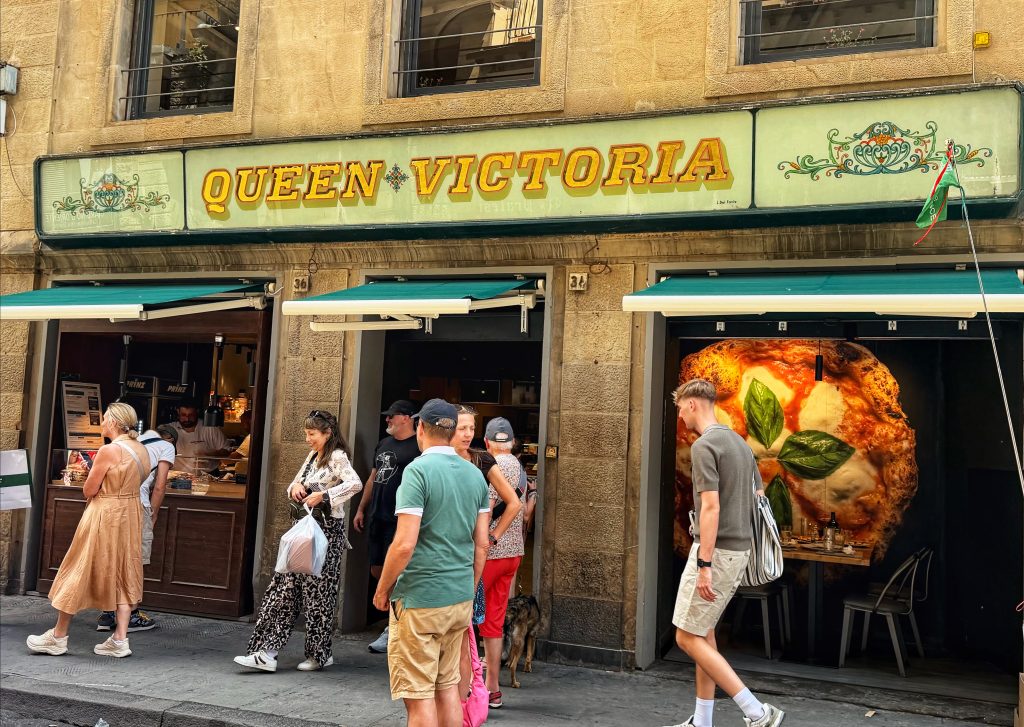
看完这些惊世骇俗的艺术品,肚子也开始抗议了。我们随意找了一家披萨店坐下,点了一份薄底披萨,正是某人一直心心念念的那种类型。刚出炉的披萨热气腾腾,饼底很薄,又很有口感,简单却非常好吃。
After seeing all these extraordinary works of art, our stomachs began to protest. We randomly picked a pizzeria, sat down, and ordered a thin-crust pizza—the exact kind someone had been craving since Milan. Fresh from the oven, it arrived piping hot. The crust was thin yet still had a satisfying texture, simple but absolutely delicious.
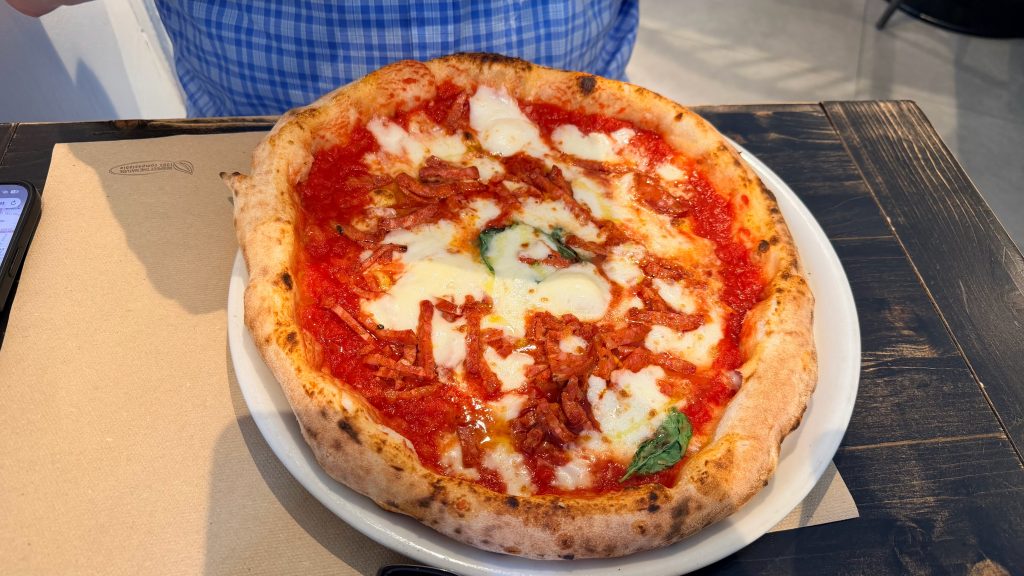
Spicy salami pizza
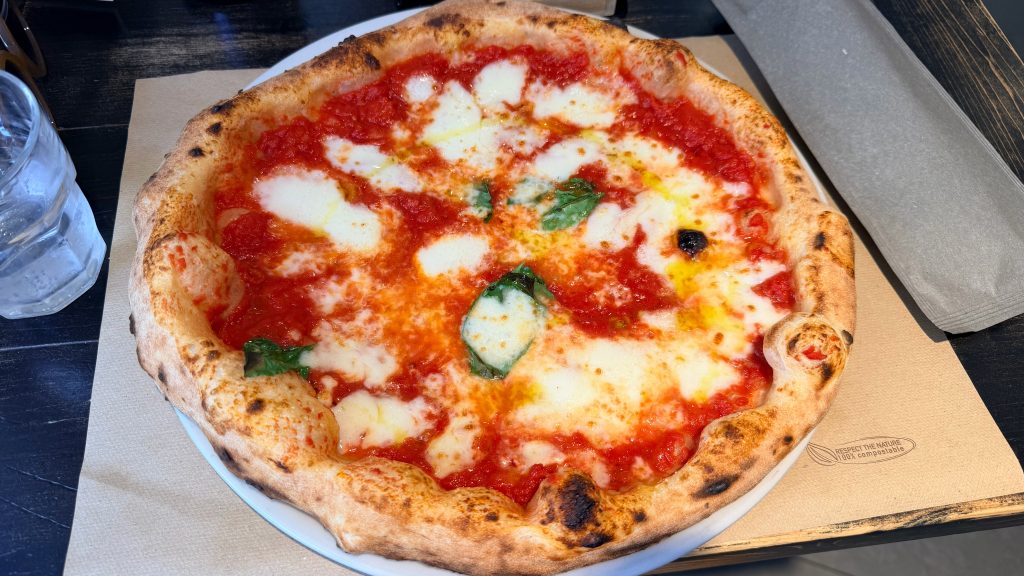
Margherita pizza
下午我们听着瑞克·史蒂夫斯的佛罗伦萨文艺复兴徒步音频导览,跟着他的路线在城市里走了一圈。今天在美术馆里学到的很多背景知识,其实也都是从他的讲解里补充来的,让整个参观变得更完整。晚饭时,我们在谷歌地图上随意找了一家餐厅,距离民宿不到10分钟步程。没想到走过去才发现,旁边就是皮蒂宫。某人原本想点一份意大利面,便向服务员询问,结果对方很热情地表示:“可以让厨房特别做一份,我是意大利面的专家,保证很好吃。”说着还配上了典型的意大利手势,我们一下子也被说服了,对这顿饭充满期待。我点了一份意大利烩饭,结果上菜时才发现,竟然给我们端上了两份烩饭。至于那份“专家特制”的意大利面不知道为什么变成了一份烩饭,哈哈。
In the afternoon, we followed Rick Steves’ Florence Renaissance audio walking tour and explored the city along his suggested route. Much of the background knowledge we learned in the museums today was actually reinforced by his commentary, making the entire experience feel more complete.
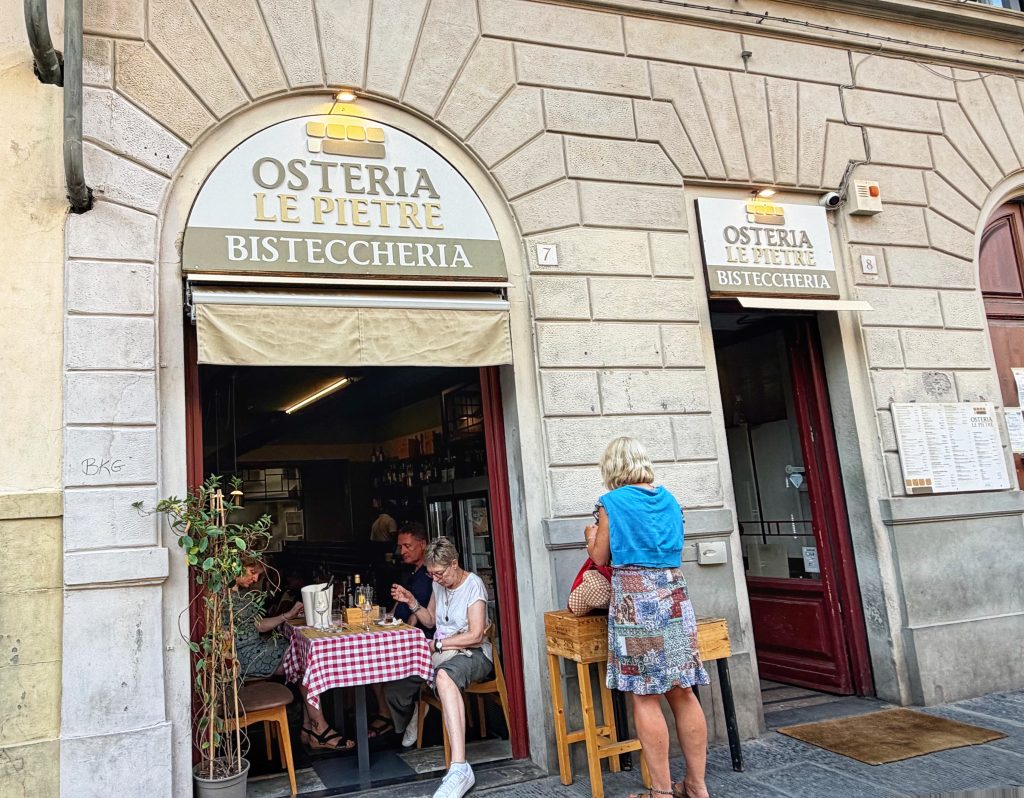
For dinner, we randomly picked a restaurant on Google Maps less than a ten-minute walk from our apartment. When we arrived, we realized it was right next to the Pitti Palace. Someone originally wanted to order a pasta dish and asked the waiter for a recommendation. The waiter enthusiastically replied, “I can have the kitchen make a special pasta just for you. I’m a pasta expert—I guarantee it will be delicious.” Accompanied by the classic Italian hand gestures, he quickly won us over, and we looked forward to the pasta meal.
I ordered a risotto, but when the food arrived, we discovered that two risottos had been brought to the table. As for the “special pasta” prepared by the expert, somehow it had mysteriously turned into another risotto. We never quite figured out what happened, but it gave us a good laugh.
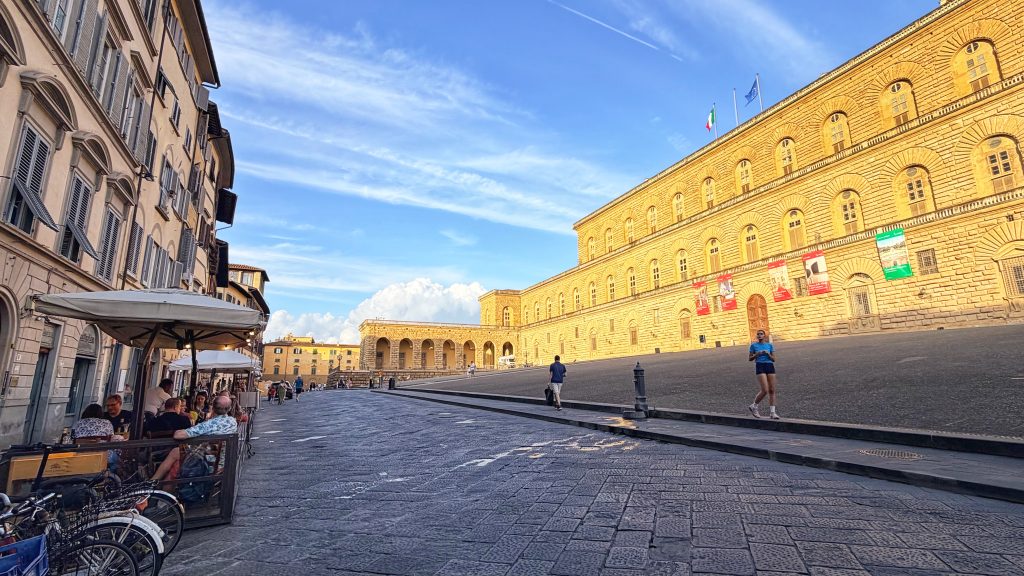
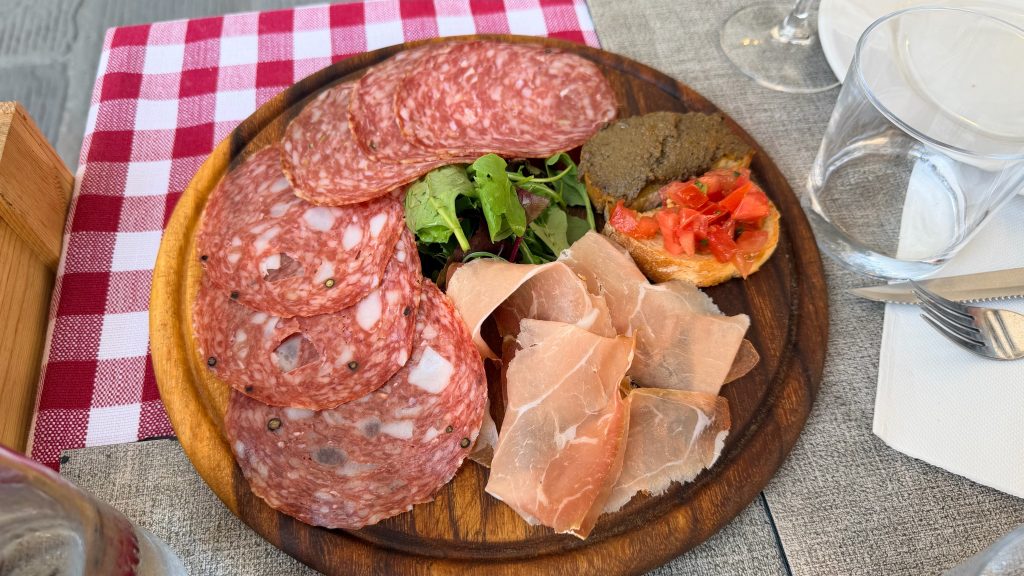
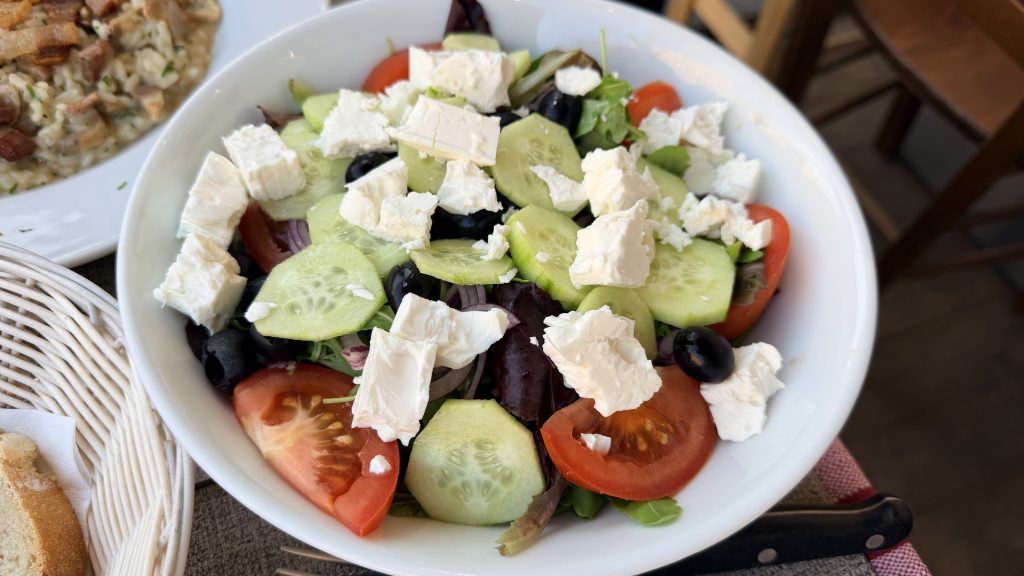
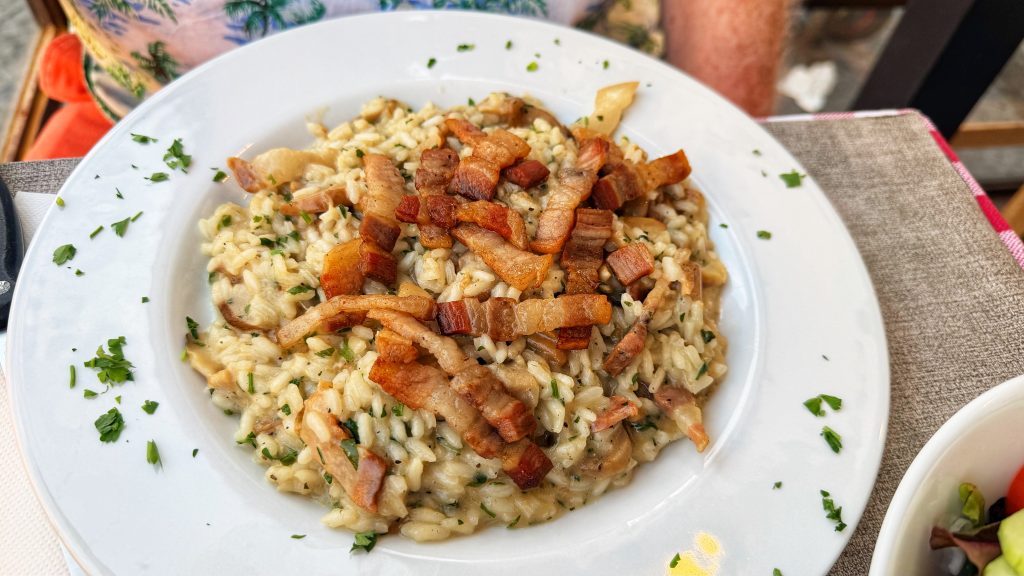
Experts Pasta: bacon risotto.
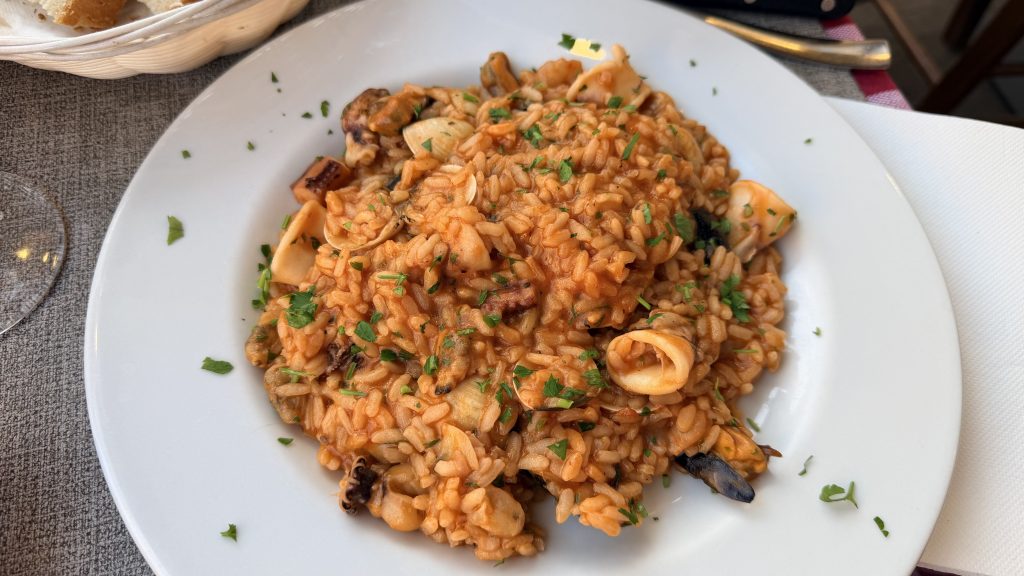
My seafood risotto.
今天的大卫雕像之行就结了,我们又回到民宿的平台上坐下,静静地看着佛罗伦萨的城市景色慢慢铺展开来。
That concluded our visit to David for the day. We returned to the terrace of our apartment and sat quietly, watching the cityscape of Florence slowly unfold before us.
Thank you for the history lesson of David. You seemed to have a lovely day.
今天,看了此文我才知道了文艺复兴意味着什么。头脑中一直是模糊和抽象的,从神到人,多么艰难多么伟大的转变!空前绝后的时代。
参观了艺术馆美术馆,看到那么多精美的作品,又知道那么多故事,太幸福了!
专家特制的意大利面的故事很有趣。我都看笑了。