11/21-22, 2025 星期五和星期六, Friday & Saturday, the 20th & 21st day of our Down Under to Eastern Delight trip
周五的行程很简单,有点像“过渡日”。我们在 Ibis CBD旅店订了两晚,但真正的计划是在晚上 9 点半退房去赶凌晨飞往清迈的航班。
Friday’s schedule was simple, with the feeling of a “transition day.” We booked two nights at the Ibis CBD, with the plan to check out at 9:30 pm to catch our early-morning flight to Chiang Mai.
我们和 Jackie 一起吃了三个小时的长午餐,听她分享她那一支家族的故事。在这次旅途中,我们已经在墨尔本见过她的儿子 Grahame,上周也见了她的女儿 Julia 和女婿 Andy。今天终于第一次与Ta们的母亲 Jackie 本人见面,亲耳听她讲述自己从小成孤儿、后来又与亲生家庭重新相认的动人经历。这个故事我早已听过许多次,但这是我第一次从她口中听她亲自讲述。其实我和她的关系更近一步,因为我们共享同一位曾祖父。
We had a long three-hour lunch with Jackie, catching up on stories from her side of the family. On this trip we’ve already met her son Grahame in Melbourne, and last week we met her daughter Julia and son-in-law Andy. Today we finally met their mother Jackie in person and listened to her moving story of being orphaned and eventually reconnecting with her birth family. I’ve known the story for a long time, but this was the first time hearing her tell it herself. In fact, my connection with her is the closest, since she and I share the same great-grandfather (Wilfred).
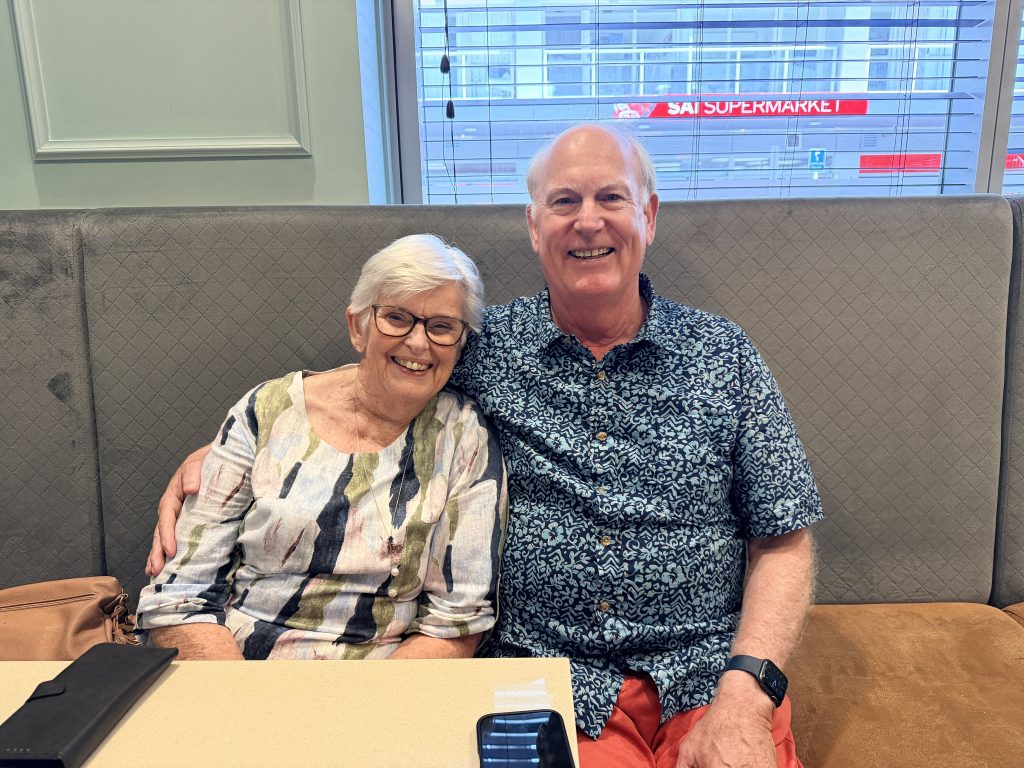
Jackie 是一位非常优雅、友好又风趣的女士,她的身世故事离奇传奇,对时事极其敏锐,政治新闻脱口而出,对科技发展也特别关注,平时还会用AI工具,真是活得通透又精彩。和她聊天轻松愉快,三个小时的午餐一眨眼就过去了。
Jackie is an elegant, friendly, and witty woman. Her life story is full of twists and turns, almost legendary. She’s incredibly sharp about current events—political news rolls off her tongue—and she follows technological developments closely, even using AI tools in her daily life. She truly lives with clarity and brilliance. Talking with her is effortless and delightful; our three-hour lunch disappeared in the blink of an eye.
午饭后我们回到旅馆休息了一会儿。傍晚出去随便吃了顿中餐,可惜味道不太好。之后回到房间收拾好行李,正式进入“等待模式”,准备搭乘凌晨 1 点 15 分飞往新加坡的航班。
After lunch, we went back to the hotel to rest for a while. In the evening we headed out for a simple Chinese dinner, which unfortunately wasn’t very good. After that, we returned to the room, packed up, and basically entered “waiting mode” for our 1:15am flight to Singapore.
航程很顺利,我们俩都睡了大约五个小时,醒来时飞机已经抵达新加坡。转机期间,我们第一次预订了一个三小时的付费休息室。整体体验不错——有食物、饮料,也有舒适的地方可以伸展休息,为下一段旅程提供了一个放松的缓冲。我们现在离飞往清迈的航班还有大约五个小时,只能在这里慢慢等着,等待旅程的下一段正式开启。
The flight was smooth and we both slept for about five hours. For the layover, we booked a three-hour paid lounge (for the first time!) It was fine—food, drinks, and comfortable places to stretch out and rest—a nice buffet before the next leg. We now have about five hours until our flight to Chiang Mai, just waiting for the next part of the trip to begin.
这也意味着我们正式告别南半球,踏入“从南半球到东方”旅程的第二段,心里满是期待。
This marks our departure from the Down Under and the official beginning of the second leg of our journey to the Eastern Delight. We’re really looking forward to it.
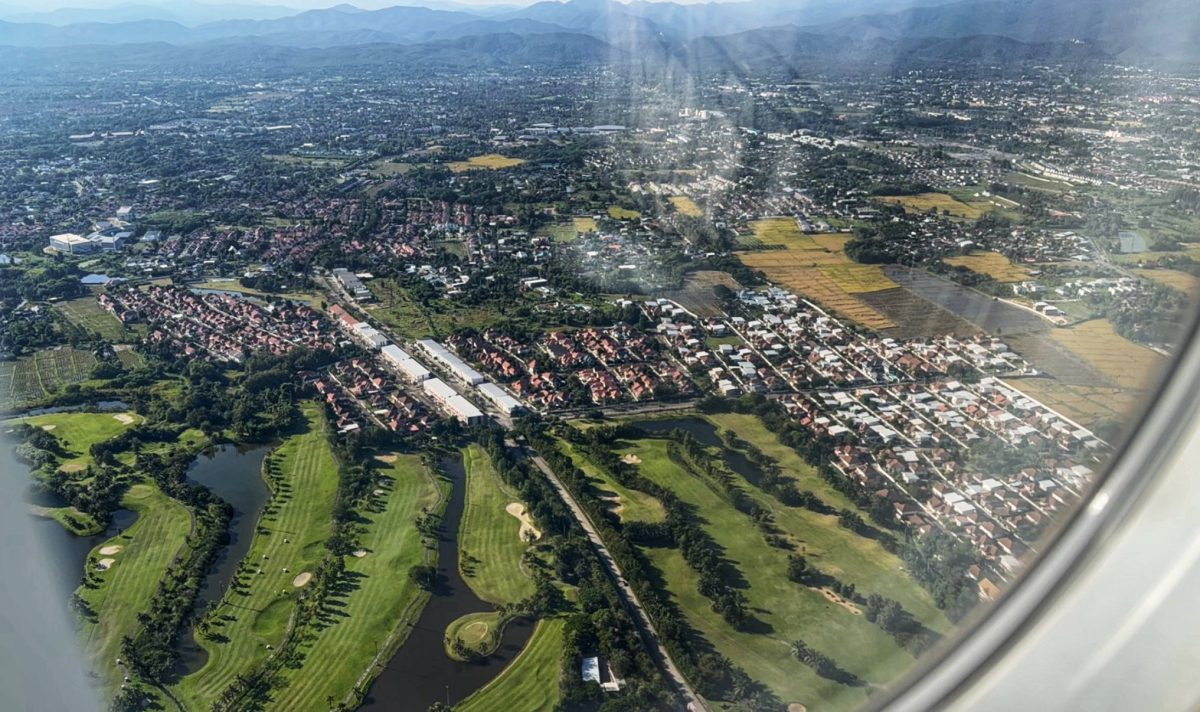
飞了两个多小时,我们终于抵达清迈。下飞机、排队入境的时候原本挺轻松,想着马上就能过关。没想到海关要查的电子入境卡 我们竟然忘了填。只好在现场补办,但他们的网站一直登不上去,机场的自助机前又排着长龙,一折腾就是三十多分钟。五点多的时候终于坐上 Grab,抵达酒店。
After a little over two hours in the air, we finally arrived in Chiang Mai. Getting off the plane and lining up for immigration felt easy at first—we thought we would be through in no time. But then we realized we had forgotten to fill out the electronic arrival card. Duh!! We had to complete it on the spot, yet their website wouldn’t load, and the self-service kiosks at the airport had long lines. After more than thirty minutes of scrambling, we finally made it through. Around five o’clock, we got into our Grab and headed to the hotel.
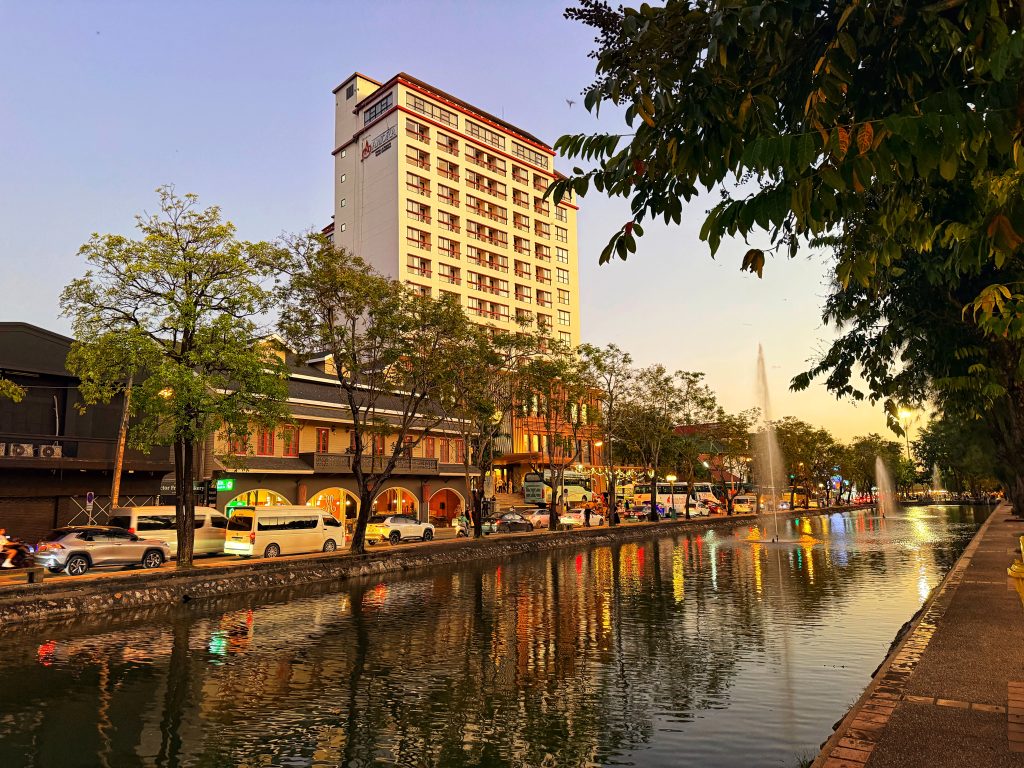
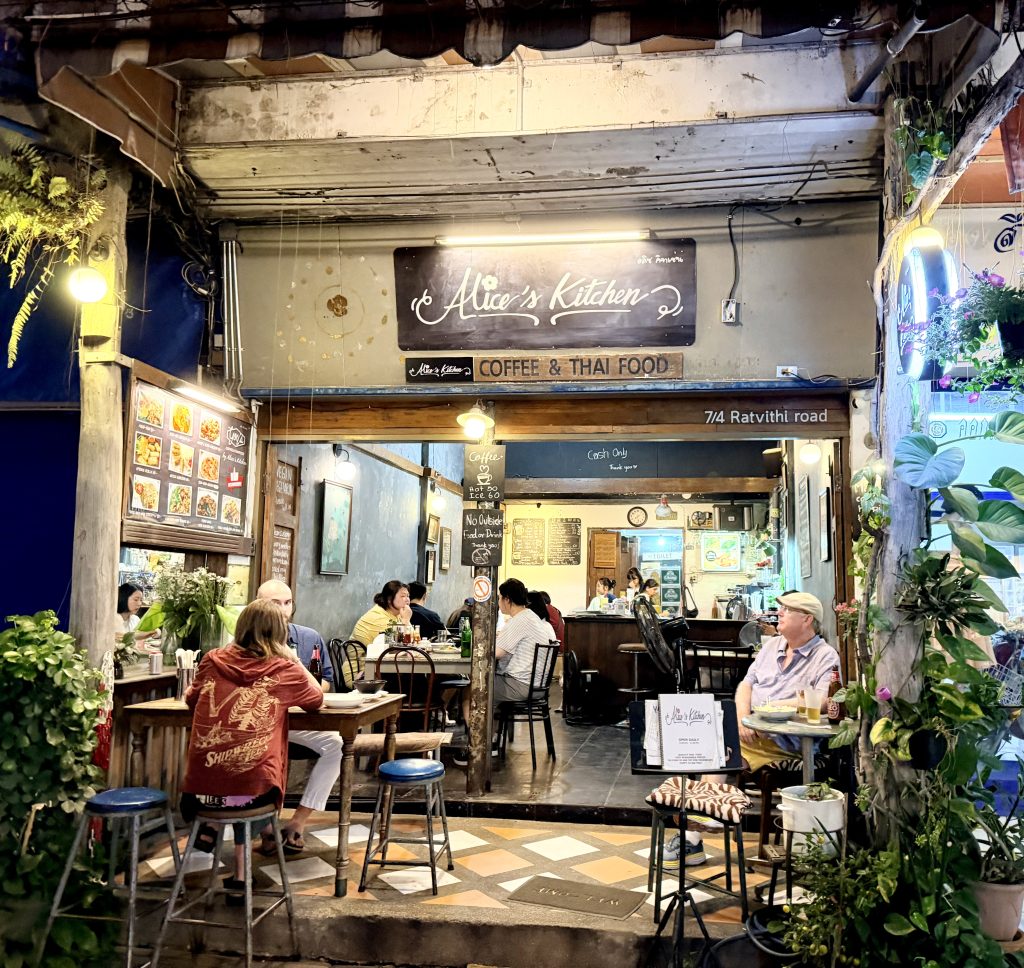
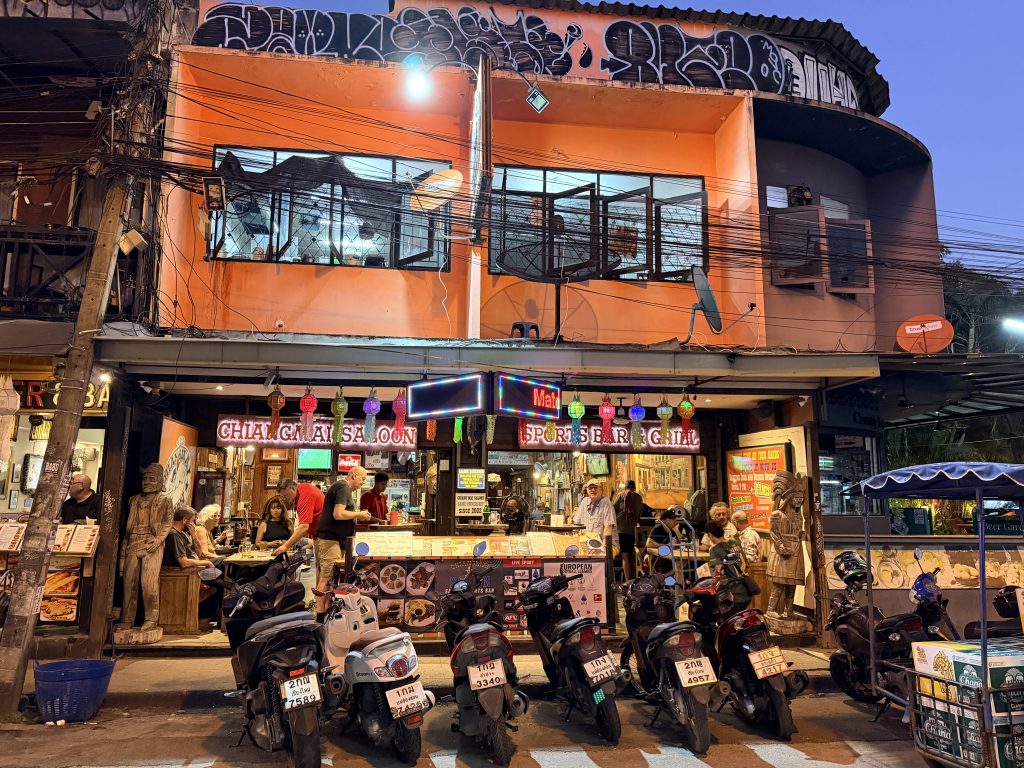
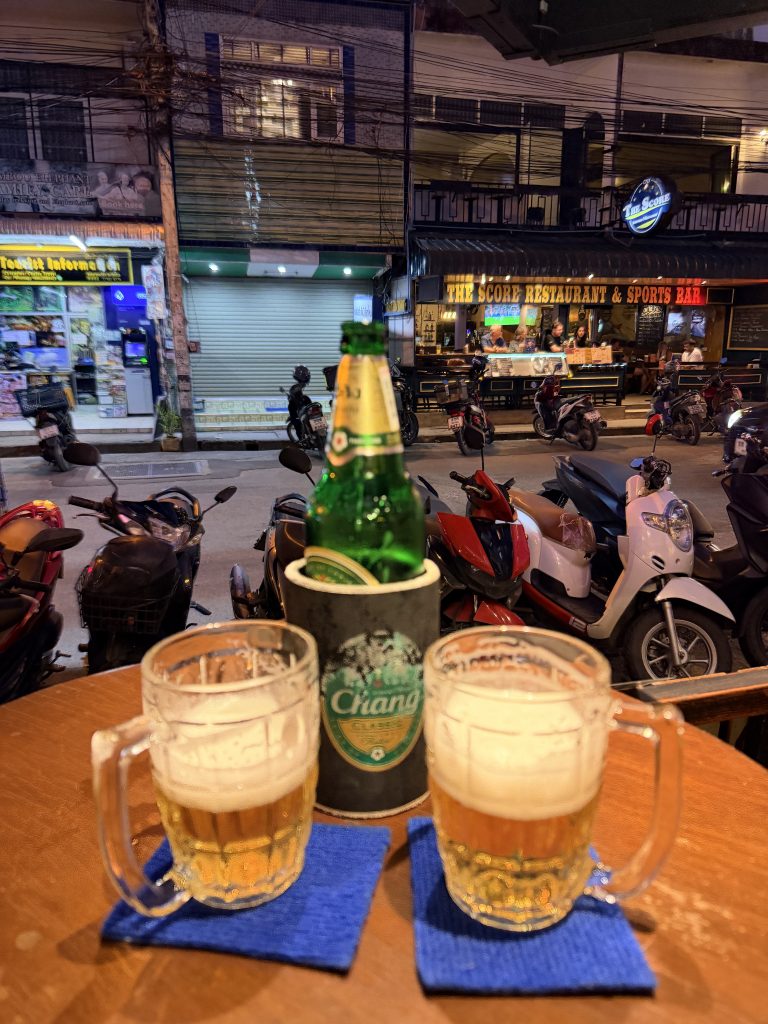
安顿好后的第一件事,当然就是坐在清迈的街道边,点一瓶大大的象牌啤酒,开始久违的街头发呆。意外的是,欢乐时光的大瓶价格竟然还是80泰铢,和六年前在曼谷一样。晚饭在酒店附近的泰国小店吃了第一顿泰国菜,那个久违的泰式辣味一入口,整个人都满足了。
After settling in, the very first thing we did was sit by a Chiang Mai street, order a big bottle of cold Chang beer, and ease back into the long-missed pleasure of people-watching on Thai streets. Surprisingly, the happy-hour price for a large bottle is still 80 baht—exactly the same as it was six years ago in Bangkok. For dinner, we went to a small Thai place near the hotel for our first meal of the trip, and the moment that familiar Thai heat hit my tongue, we felt completely satisfied.
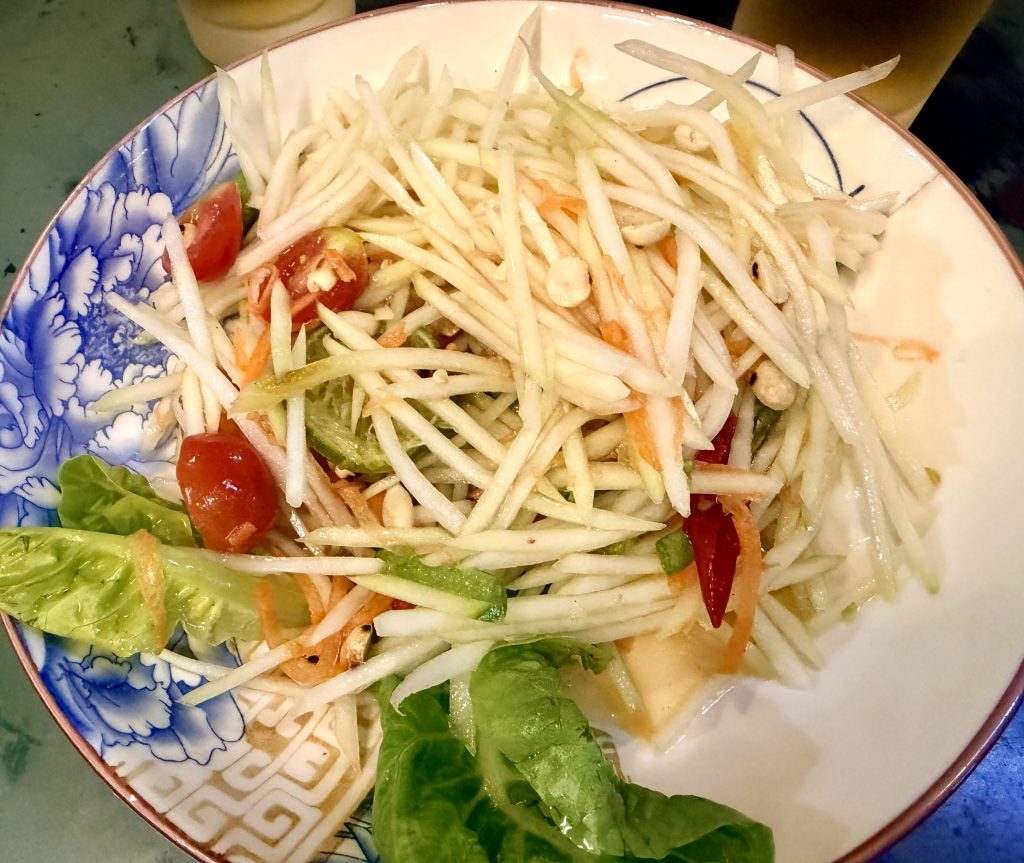
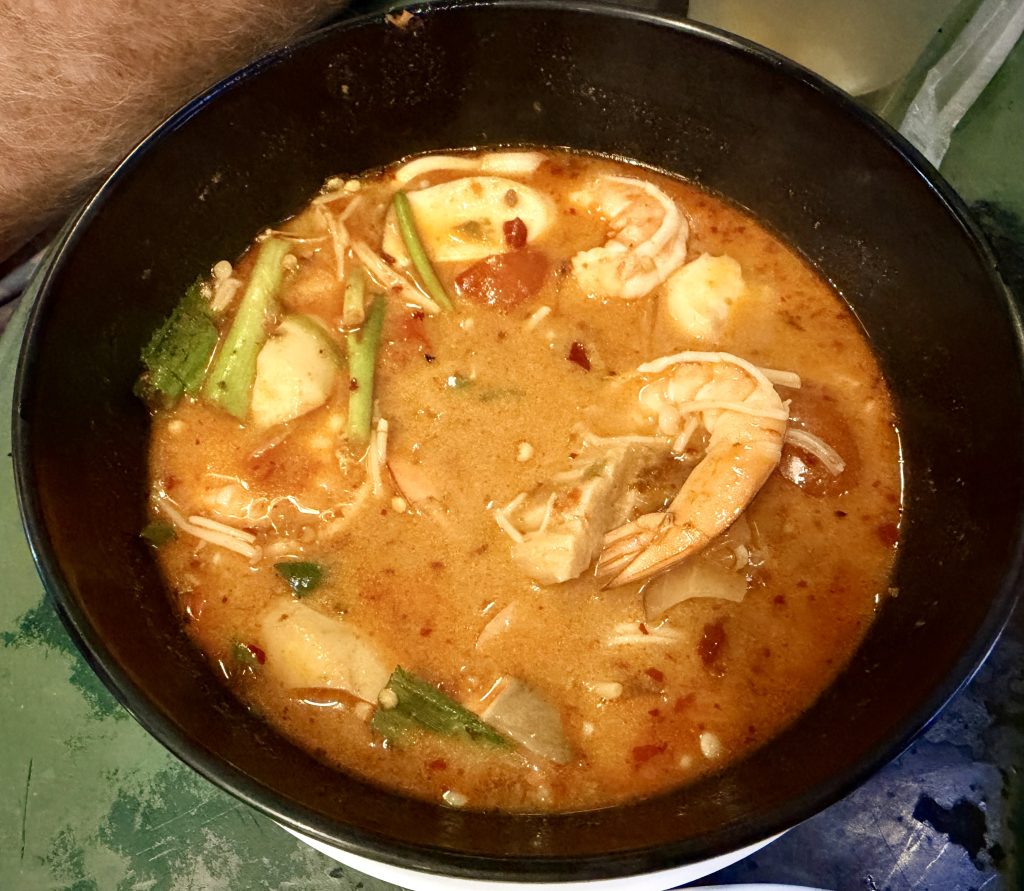
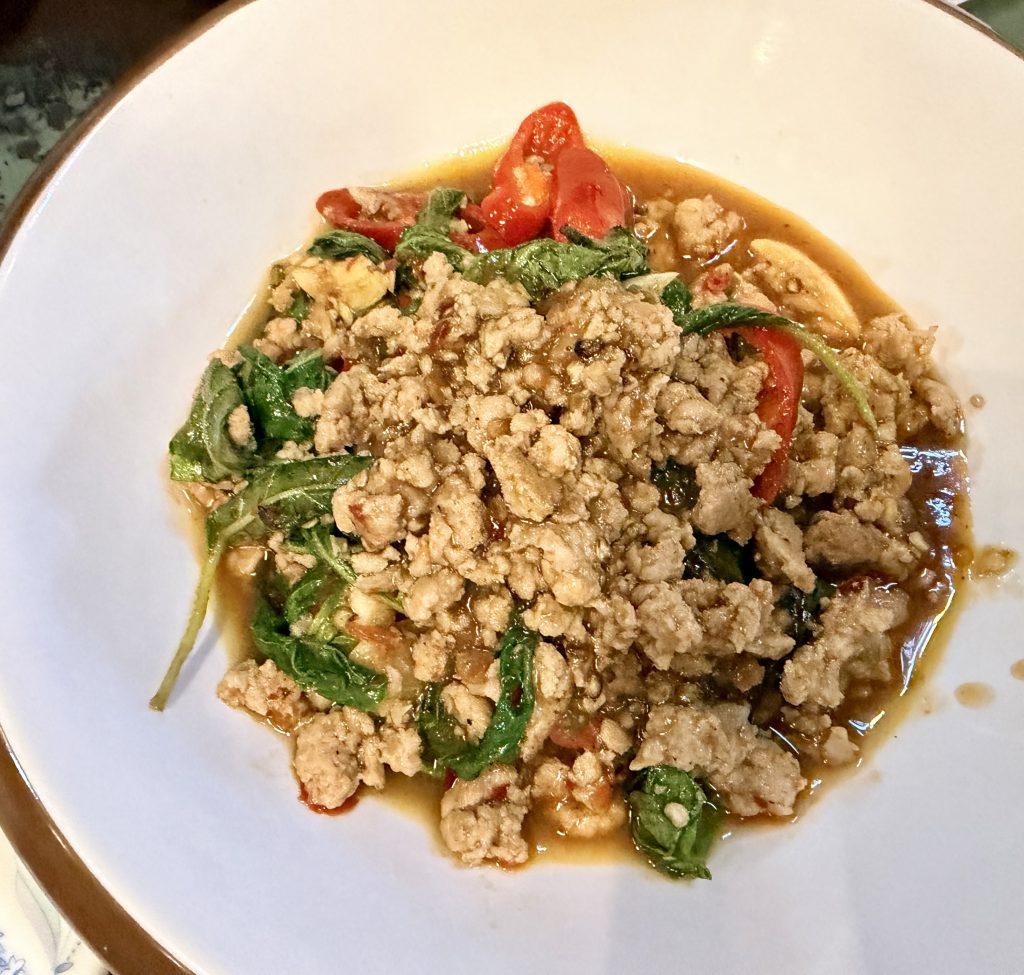
青木瓜沙拉,冬阴功汤,泰式打抛猪肉 – Papaya salad, Tom yum soup, Thai basil minced pork
坐在清迈街头,看着完全不同于新西兰的画面,这种突然切换频道的感觉很奇妙。
Sitting on a Chiang Mai street, looking at scenes completely different from New Zealand, that sudden feeling of switching to a whole new channel was strangely fascinating.
澳大利亚和新西兰跟预期有些小差距。它们的文明程度、友好程度、整洁干净的街道、井然的秩序、清新的空气和美得不真实的自然景观,都印证了发达国家的标签。让我意外的是那里的亚洲人特别多,尤其是中国人,机场的标识竟然是英文和中文;各种亚洲料理的丰富程度远远超过美国。
Australia and New Zealand were a bit different from what we expected. Their level of development, the friendliness of the people, the clean and orderly streets, the fresh air, and the almost unreal natural beauty all lived up to the label of “developed countries.” What surprised me most was how many Asians there were, especially Chinese people — even the airport signs were in both English and Chinese. And the variety of Asian food was far greater than anything you find in the US.
而清迈,就像曼谷、越南的胡志明市、马拉西亚的乔治城那样,只要一走进街道深处,就是典型的东南亚景象:
Chiang Mai, like Bangkok, Ho Chi Minh City in Vietnam, or George Town in Malaysia, turns into a classic Southeast Asian scene the moment you step deeper into the streets:
狭窄的街道被各种交通工具挤得满满当当,摩托车呼啸而过,嘟嘟车停在路边招揽生意,汽车和电动车横跨在本来就不宽的路面上。人行道坑坑洼洼,有些地方被摊位、异物、垃圾, 烟头,盆栽植物占道;高空的电线像一团黑色的毛线球乱成一片,有时垂到几乎碰到人头;空气里混着汽油味、垃圾味、食物的香味、潮湿泥土的味道;街边摊的铁锅里油火翻腾,店铺门口,一家人围着一张小桌吃着晚餐;树根旁随意摆着用来祭拜的供奉盘;一转头是剥落的旧楼,再转头就是金光灿烂的寺庙屋檐;每次过马路都像在和命运博弈;那些在发达国家早已习以为常的盲道与无障碍道路,在这里是从未被赋予存在的;各种声音混在一起——喇叭声、摩托车引擎、油锅爆响、建筑施工、游客笑声…… 很多景象我难以用语言形容,这些特有的混乱、旺盛、拥挤、破败但又充满生命力的氛围,就是眼前这真实的样子。
Narrow streets packed with every kind of vehicle, motorbikes whipping past, tuk-tuks idling at the curb looking for passengers, cars and scooters clogging roads that were never wide to begin with. The sidewalks are uneven, sometimes blocked by stalls, stray objects, trash, cigarette butts, and potted plants. Overhead, the power lines tangle into a black ball of yarn, some hanging so low they almost brush your head. The air is a mix of gasoline, garbage, street-food aromas, and damp earth. Woks roar with oil at roadside stalls, and in front of tiny shops families gather around small tables for dinner. Religious offerings sit casually at the foot of tree trunks. One glance shows a peeling old building; another reveals a temple roof glinting in gold. Crossing the street feels like gambling with fate every time. Disabled friendly and barrier-free sidewalks—so ordinary in developed countries – simply don’t exist here. All the sounds blend together: honking, motorbike engines, the crackle of hot oil, construction noise, the laughter of tourists… Many sights are hard to describe, but this unique mix of chaos, energy, crowding, decay, and sheer vitality is exactly what’s in front of us. And to be honest, what we enjoy about the experience.
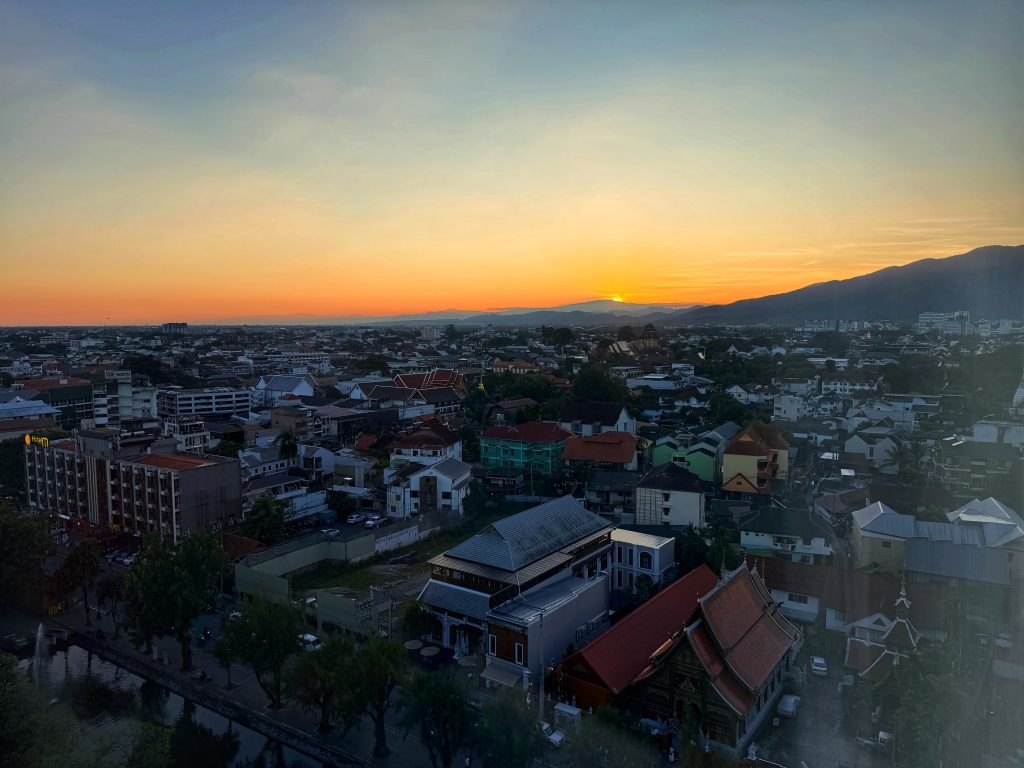
在这样鲜明的对比里,我总是想得到答案:是什么决定了一个国家的繁荣?是制度?资源?地理?文化?历史留下的长链条?
In such a stark contrast, I always find myself wanting an answer: what determines a country’s prosperity? Is it its political system? Its resources? Geography? Culture? Or the long chain of history it carries?
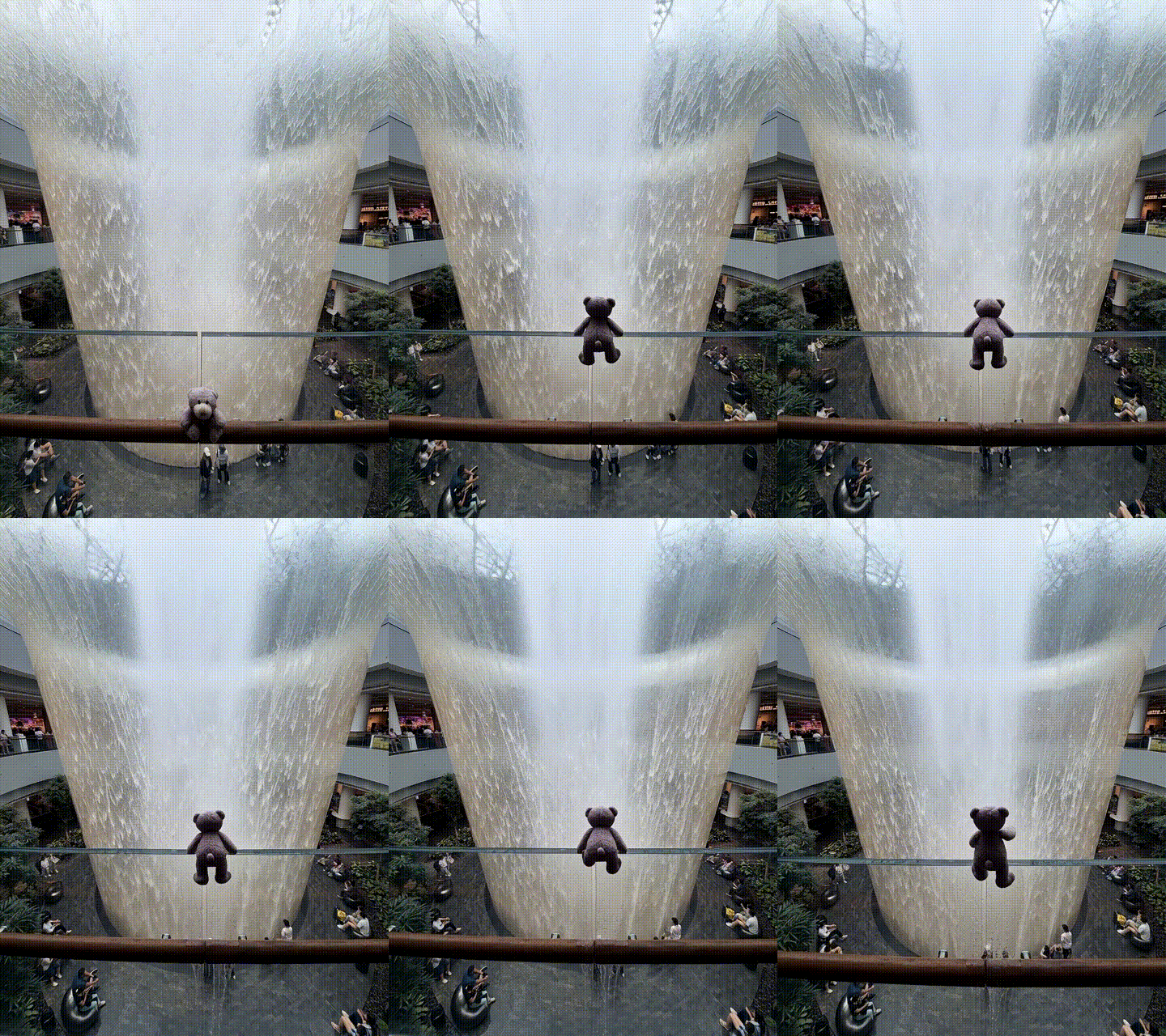
Bear passing time at The Jewel in Singapore airport … 小熊正在新加坡机场的星耀樟宜打发时间 …
很高兴你俩平安顺利抵达清迈。住的地方看起来很好!
看了你的介绍,隔着屏幕我都能感受到和Jackie见面的喜悦! 人和人的差距是巨大的,我很喜欢很欣赏Jackie这样的人!
这为旅途又增添了温暖和趣味。
东南亚的一些景象真是各有特色。贫穷落后就是有贫穷落后的道理呀。
小熊好悠闲。
Was the Ibis CBD in Auckland?
Did Jackie ever meet Wilfred?
We never even met his son, our grandfather.
In the photo of you & Jackie, you both look very relaxed.
Yes, Ibis was only a few blocks from our first place… Jackie wasn’t even aware of most of the family until the 90s.