11/19-11/20, 2025 星期三和星期四, Wednesday & Thursday, the 18th & 19th day of our Down Under to Eastern Delight trip
这两天的总结是什么呢?开车、游船、大巴、游船、晕船、寂静之声,大巴、游船、开车、飞机。
这两天正好是我们早在家里就安排好的——神奇海峡过夜游船行程。我们需要在周二上午 11 点半之前从皇后镇赶到马纳普里参加中午12 点半的出发。好在今天没有下雨,开车轻松不少。行程大约两个半小时,我们早上8点就出发,打算一路慢慢开、边走边停、看看风景。
These past two days have been all about: driving, boating, bussing, more boating, seasickness, “the sound of silence,” then back again, and finally flying.
These two days happened to be the overnight Doubtful Sound cruise we had booked before coming. We needed to get from Queenstown to Manapouri by 11:30 a.m. on Tuesday to join the 12:30 p.m. departure. Fortunately, it didn’t rain today, which made the drive much easier. The trip takes about two and a half hours, so we left at 8 a.m., planning to take it slow, stop along the way, and enjoy the scenery.
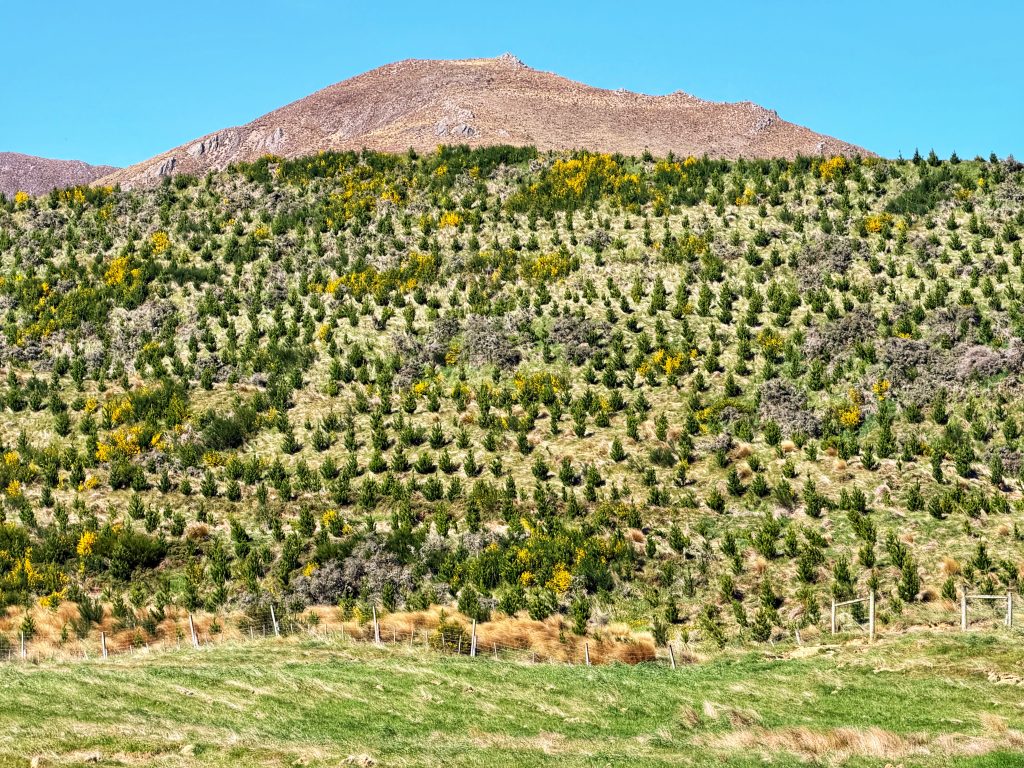
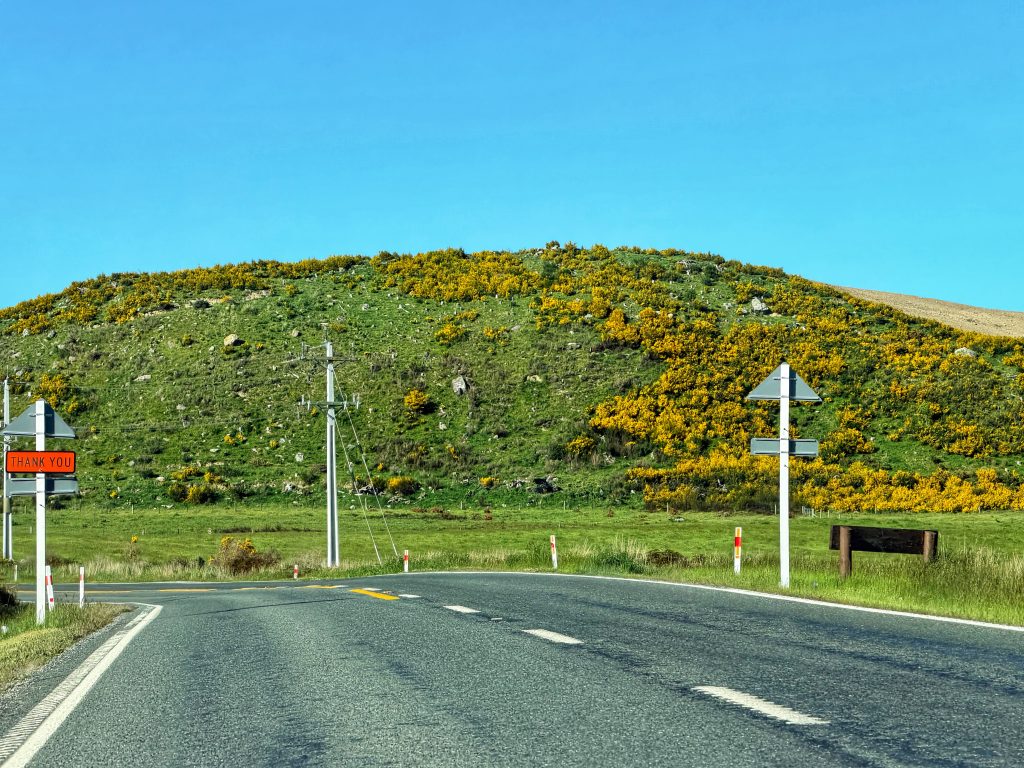
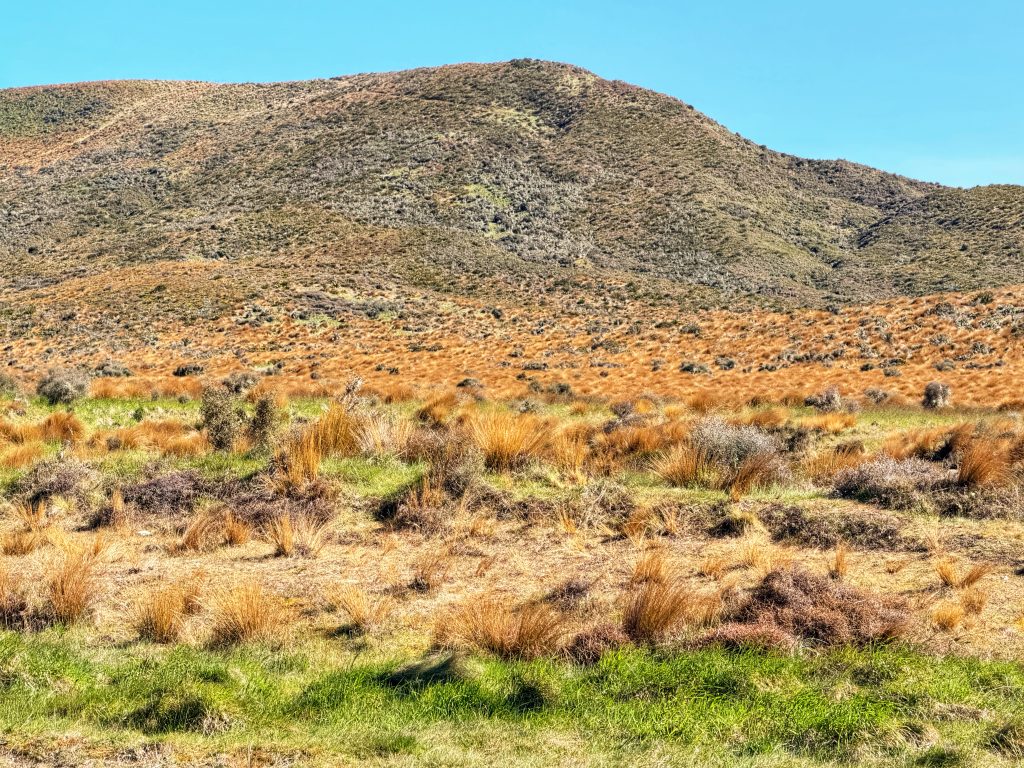
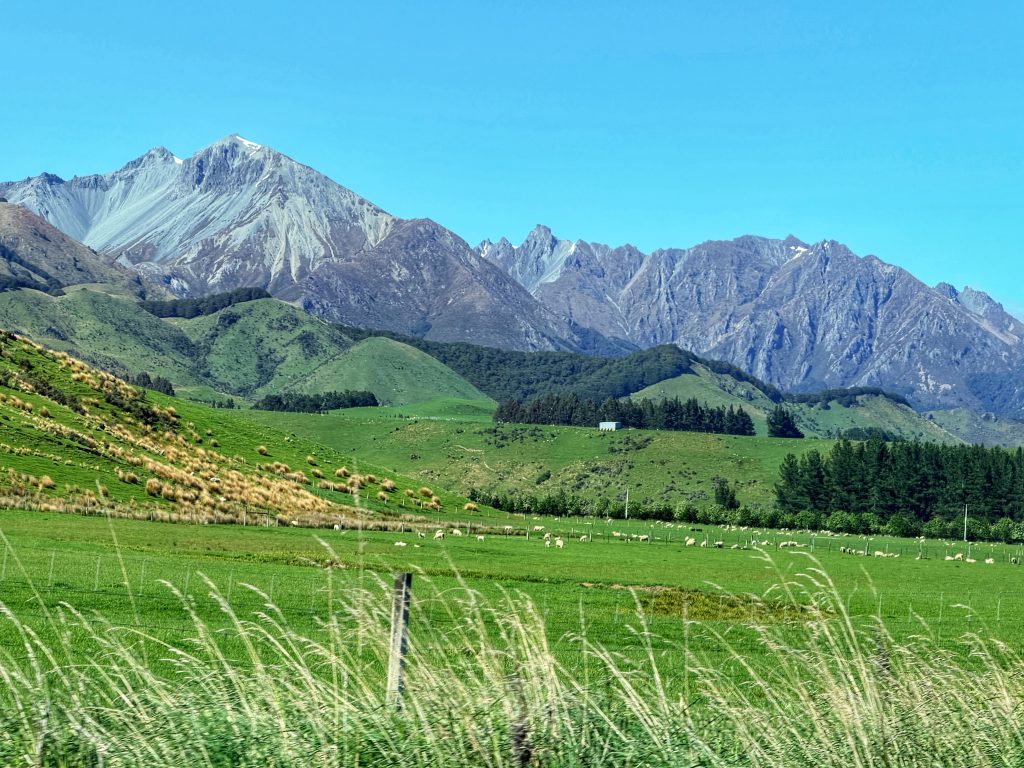
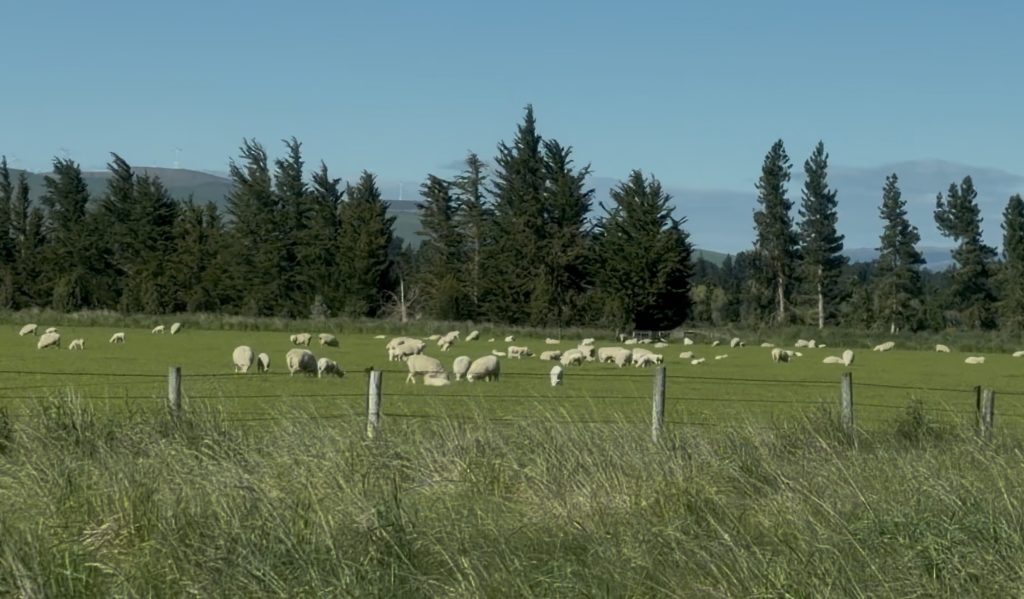
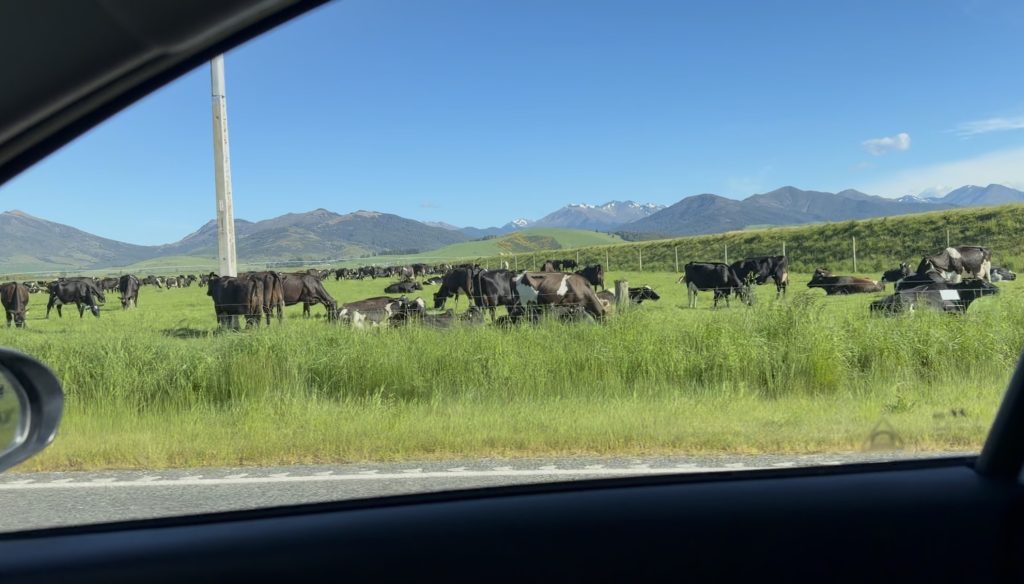
从皇后镇继续往南开的途中,地貌变化得非常明显。和去格林诺奇方向不同,不是很多高耸、白雪覆盖的山脉,而是一整片柔和的绿色——绿色的山、绿色的平原、绿色的草地。成群的绵羊安静地低头吃草,有些羊身上的羊毛厚得像随时能剪下一整袋;一只只小羊紧紧跟在妈妈身边,一边走一边吃,非常可爱。牛群懒洋洋地在草地上散着、躺着,吃着草,一幅田园悠闲图。
As we continued driving south from Queenstown, the landscape changed dramatically. Unlike the road toward Glenorchy, there fewer towering, snow-covered mountains—just a wide sweep of gentle green: green hills, green plains, green meadows. Flocks of sheep dotted the fields, some with wool so thick it looked like you could shear off an entire bag at once; little lambs stayed close to their mothers, nibbling as they walked, irresistibly cute. Cattle wandered or lounged lazily across the grass, chewing as they pleased—a peaceful, pastoral scene.
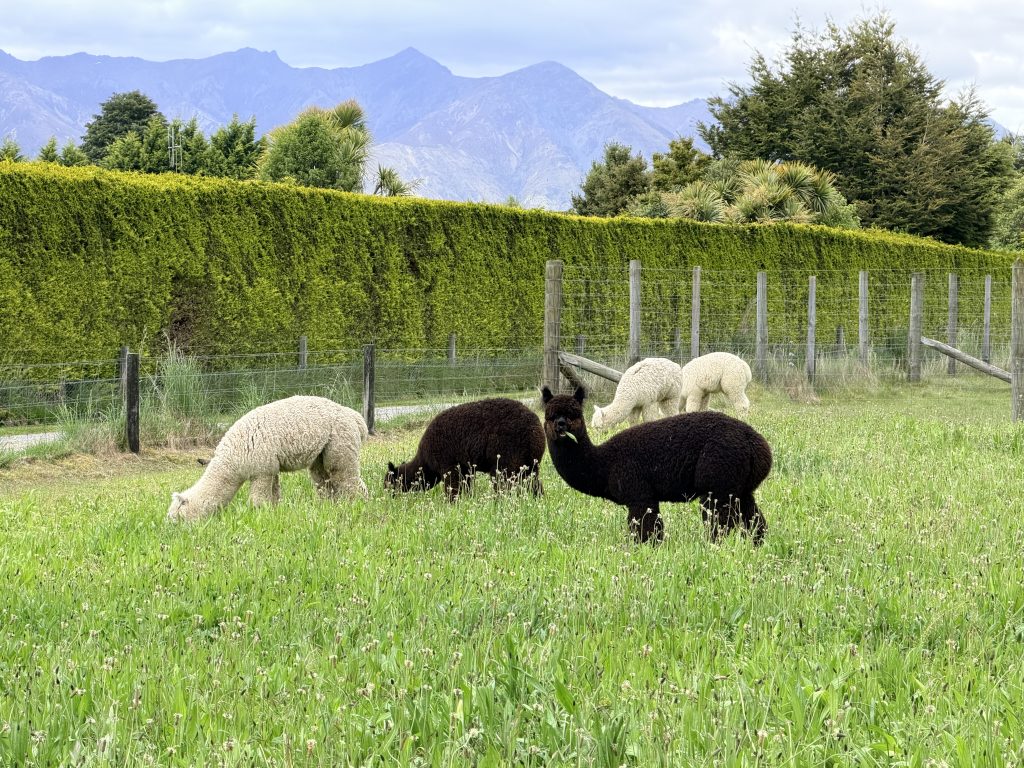
快抵达马纳普里时,路边出现了一家又一家的鹿农场,红鹿们也都埋头认真吃草。更意外的是,我们还看见了几家养羊驼的农场——那些毛茸茸的“小脑袋”立在草地上,看着就让人心情变好。
As we neared Manapouri, we began to see one deer farm after another along the roadside, with red deer lowering their heads and grazing intently. Even more surprising, we spotted several alpaca farms—their little fluffy heads popping up in the grass were enough to brighten anyone’s mood.
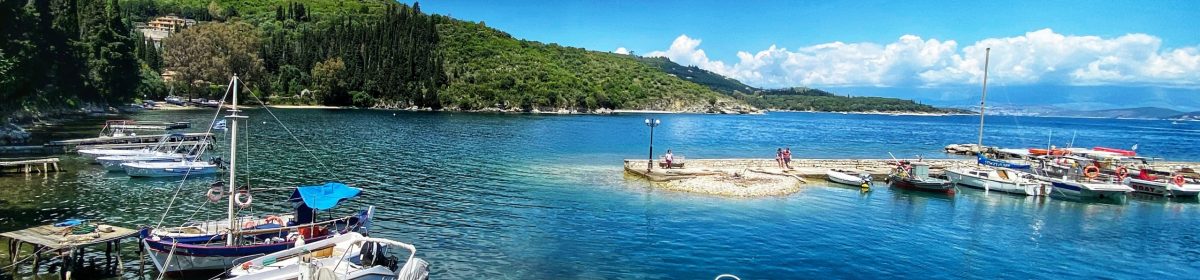
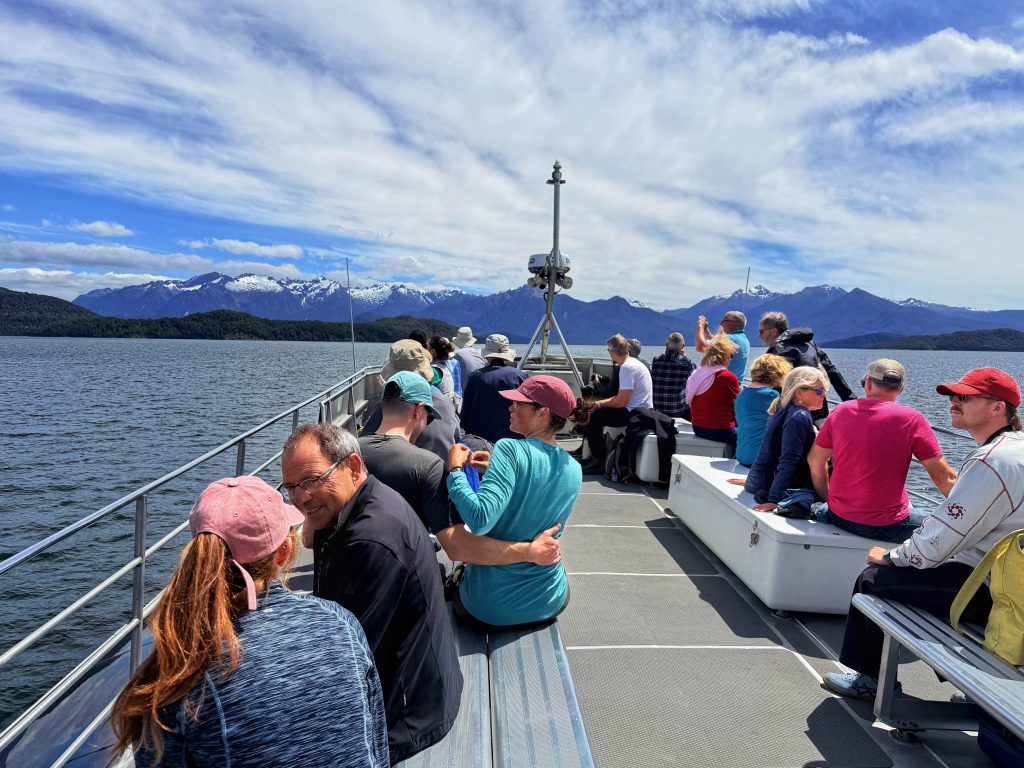
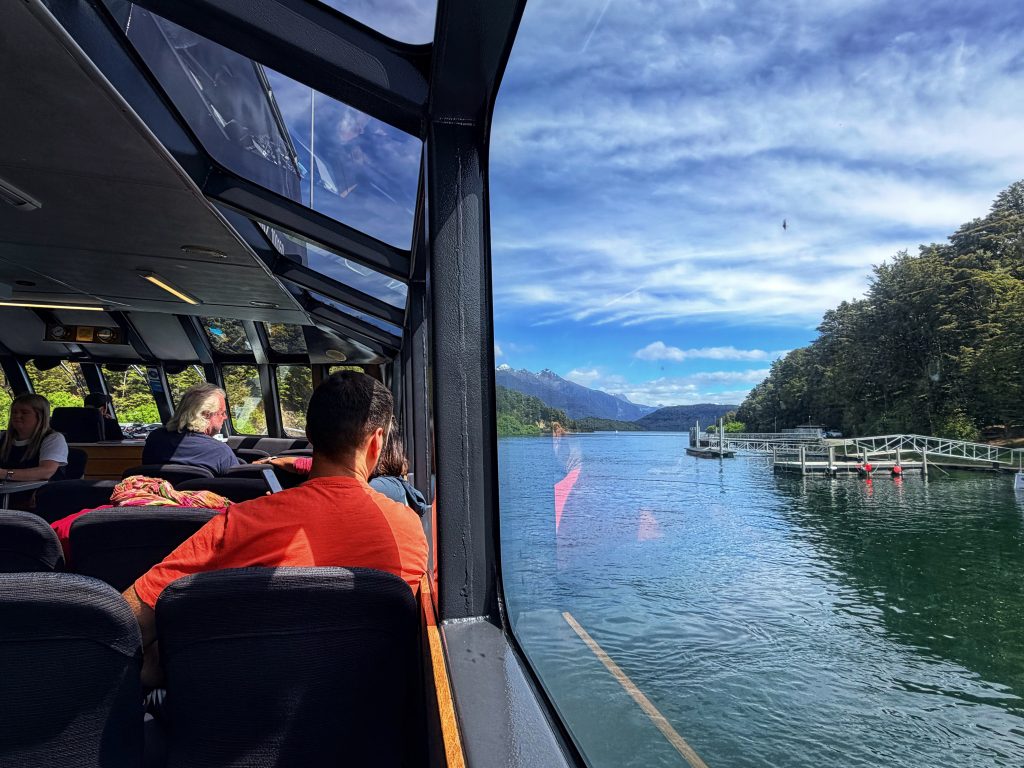
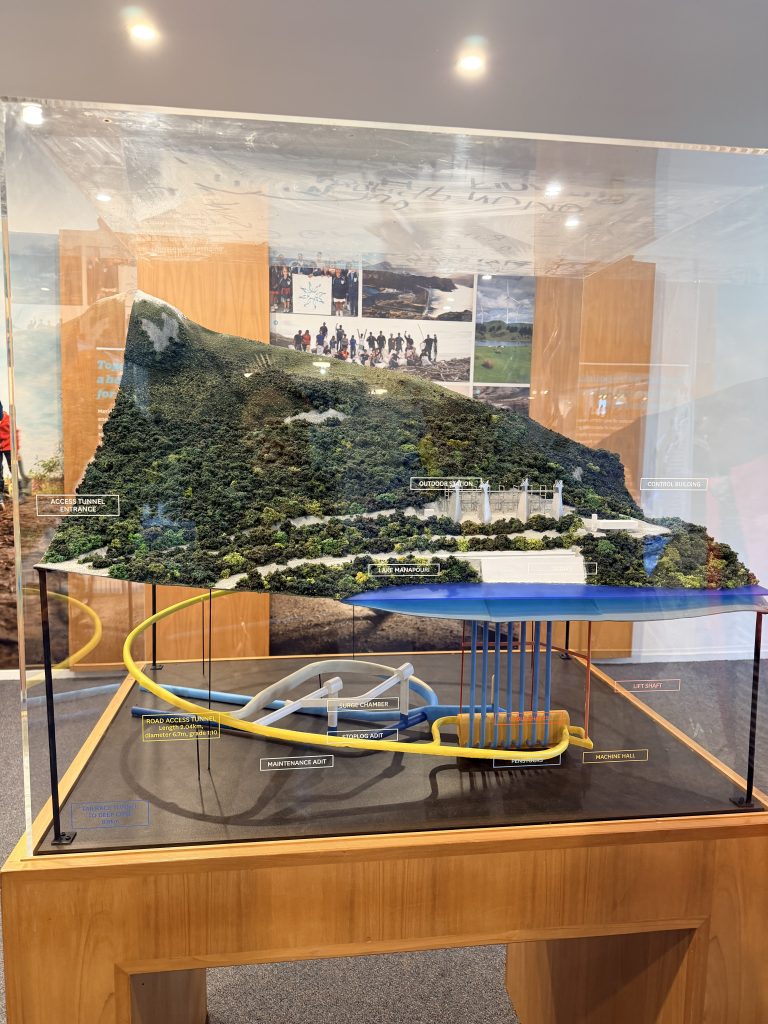
到达马纳普里后,我们把车停在24小时免费的停车场,办理登记后,12点半准时登上第一段小游艇,从马纳普里湖出发,航程大约45分钟,这段游艇的目的地是西臂游客中心。在这个游客中心的旁边是纳普里水电站,解说员说,这个水电站是新西兰规模最大、也是最深的地下水电站之一。它建在地下200多米的岩洞中,发电厅完全隐藏在山体内部。
After arriving in Manapouri, we parked the car in the free 24-hour lot. After checking in, we boarded the first small boat at 12:30 sharp and set off across Lake Manapouri. The ride took about 45 minutes, and its destination was the West Arm Visitor Centre. Next to the visitor centre is the Manapouri Power Station. The guide explained that it is one of New Zealand’s largest and deepest underground hydroelectric stations. Built more than 200 metres below ground in a cavern of solid rock, its turbine hall is completely hidden inside the mountain.
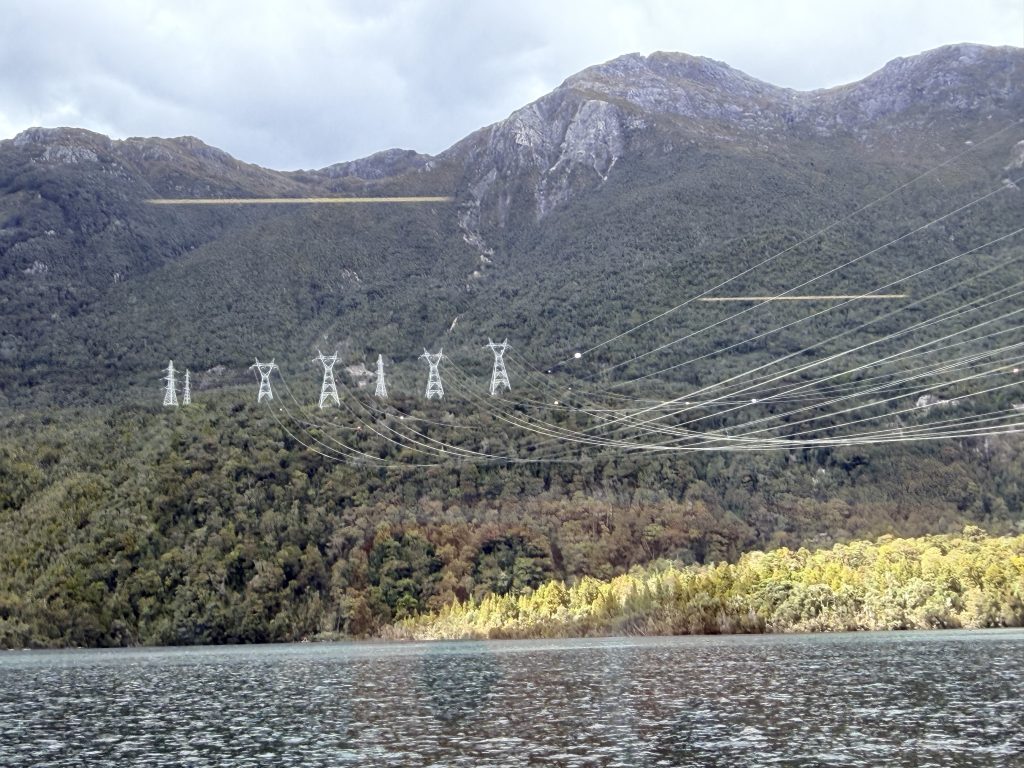
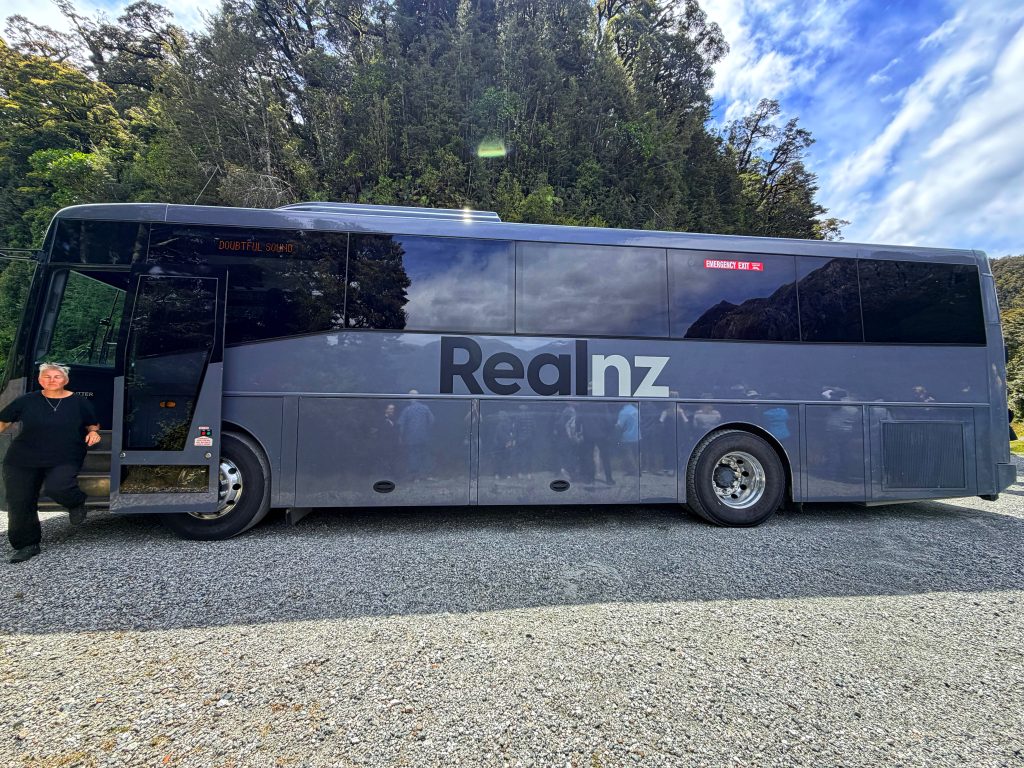
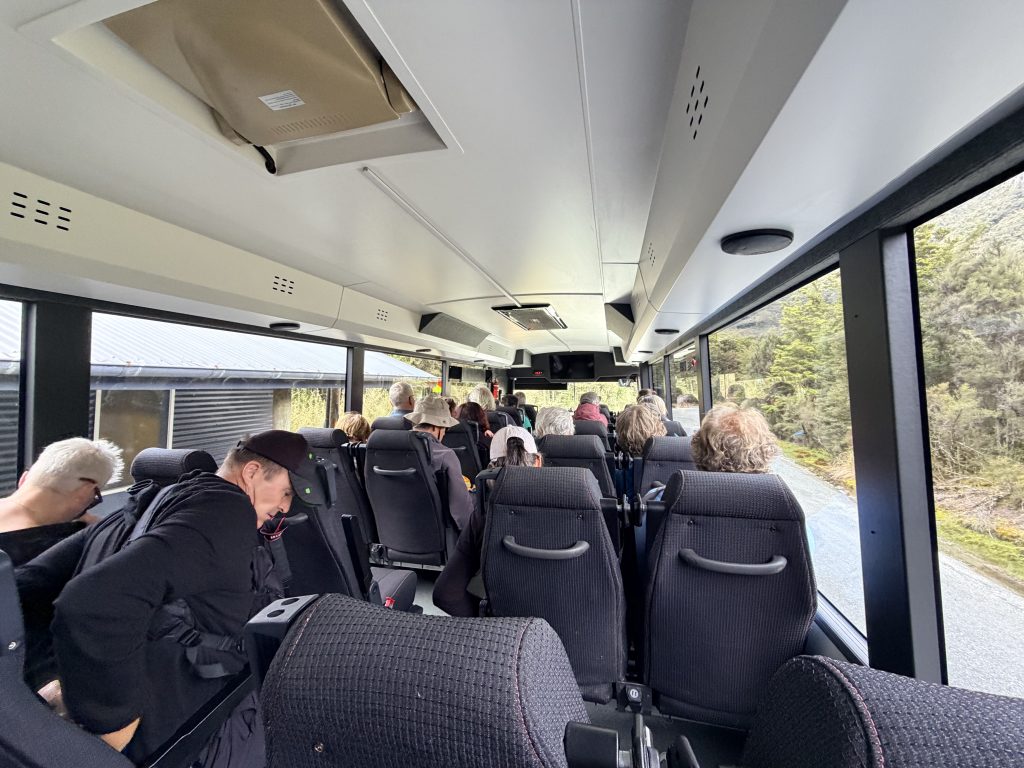
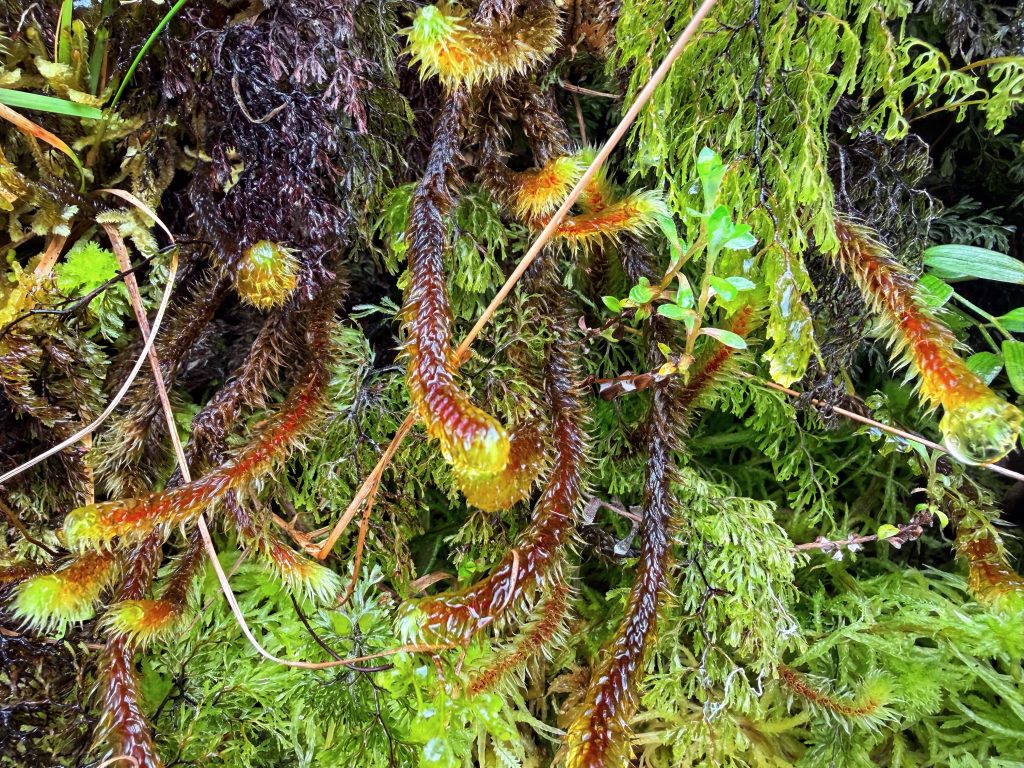
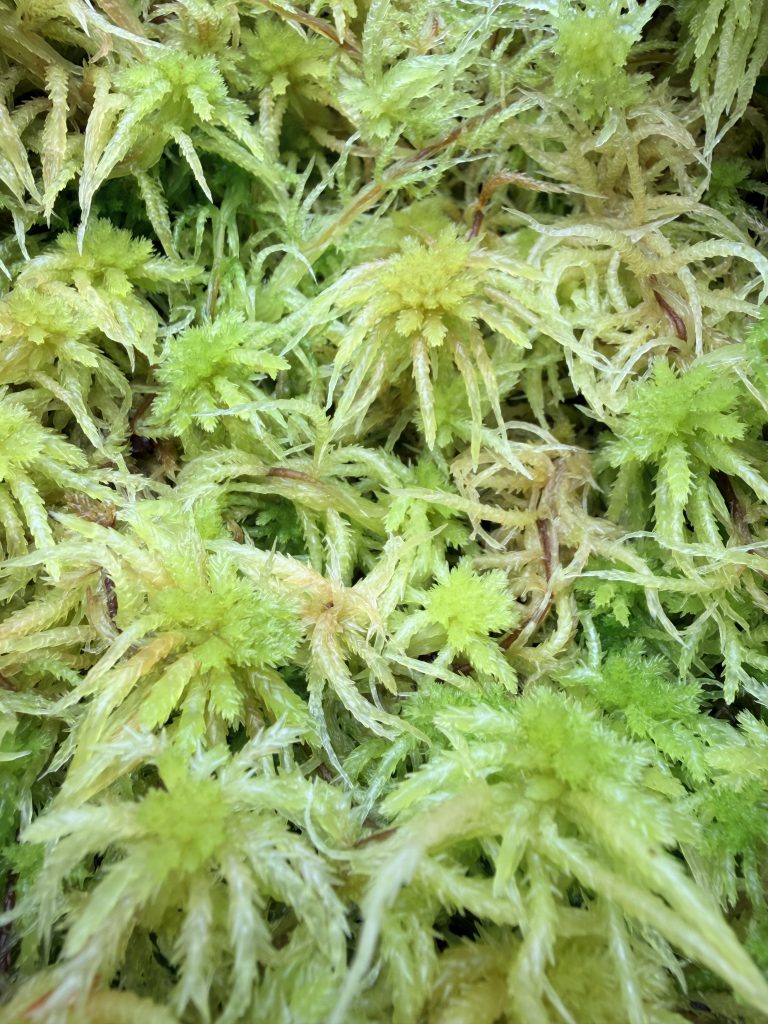
接着,我们换乘 RealNZ 的高山景观大巴,沿着威尔莫特通道行驶一个小时。值得一提的是,这条通道不与任何公共道路相连,穿越的都是极其浓密的原始雨林。司机介绍说,这条路完全由RealNZ 公司自行维护 (听起来似乎不符合逻辑)。雨林属于国家保护区,任何东西都不能带进来,也不能带出去,因此这里的生态保持着最原始的模样——湿润、茂密、生机旺盛。一路上可以看到厚厚的青苔铺满树干,司机说这些苔藓对森林生态至关重要。
Next, we transferred to the RealNZ bus and which took us an hour along the Wilmot Pass. It’s worth mentioning that this road is not connected to any public highway at all—it cuts through incredibly dense, untouched rainforest. The driver told us that the entire road is maintained solely by RealNZ (which sounds somewhat counterintuitive). The rainforest is part of a national protected area, so nothing can be brought in or taken out, which keeps the ecosystem in its most pristine state—humid, lush, and full of life. Along the way, we saw thick layers of moss covering the tree trunks, and the driver explained that this moss is essential for the health of the forest ecosystem.
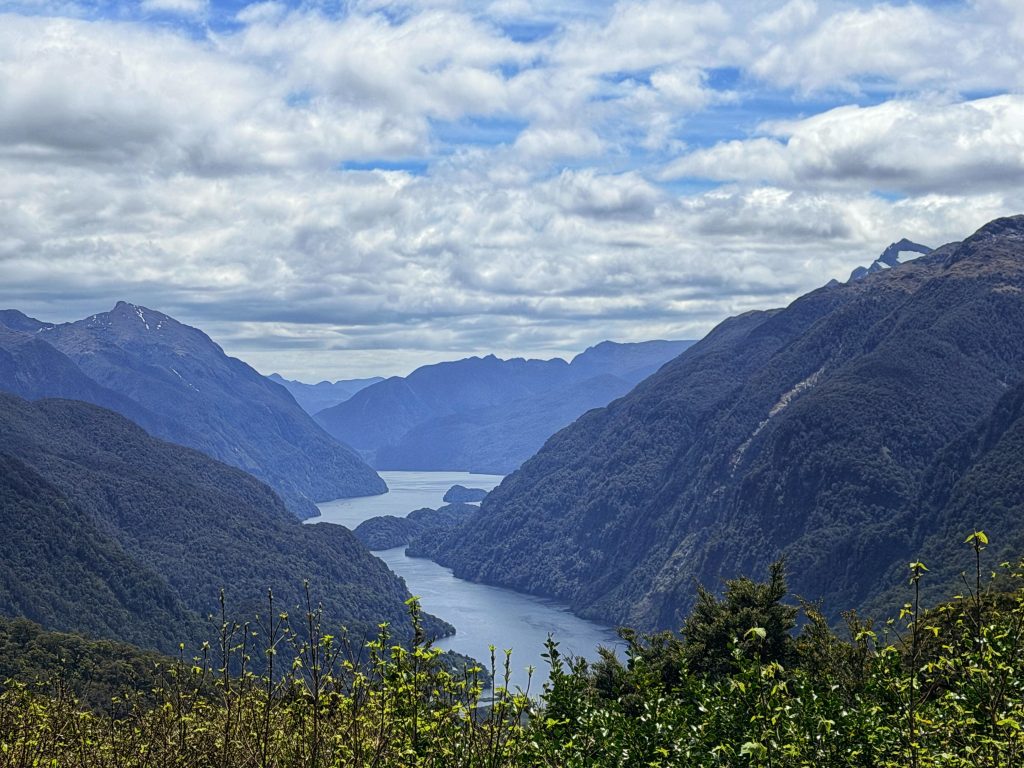
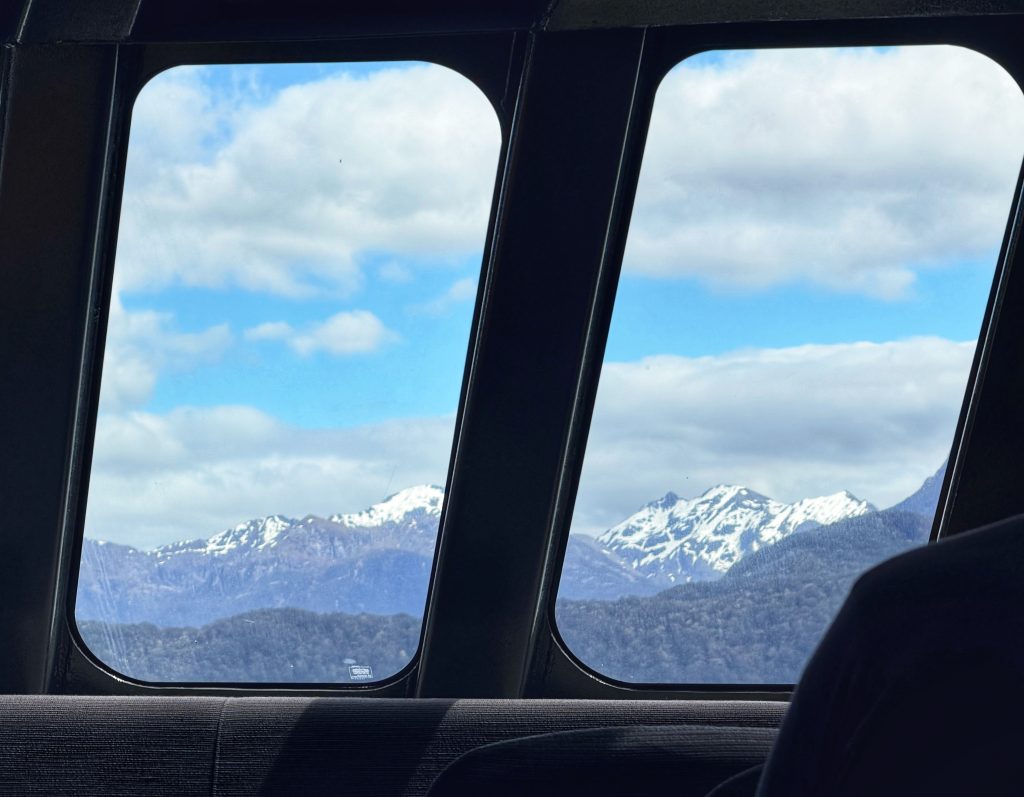
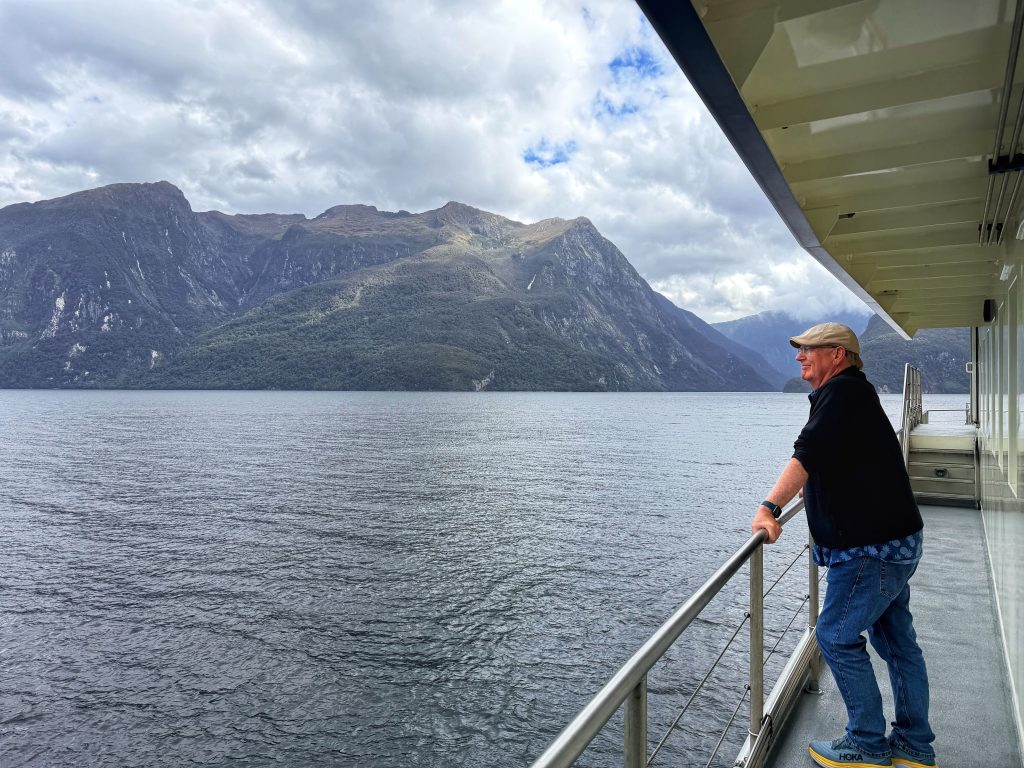
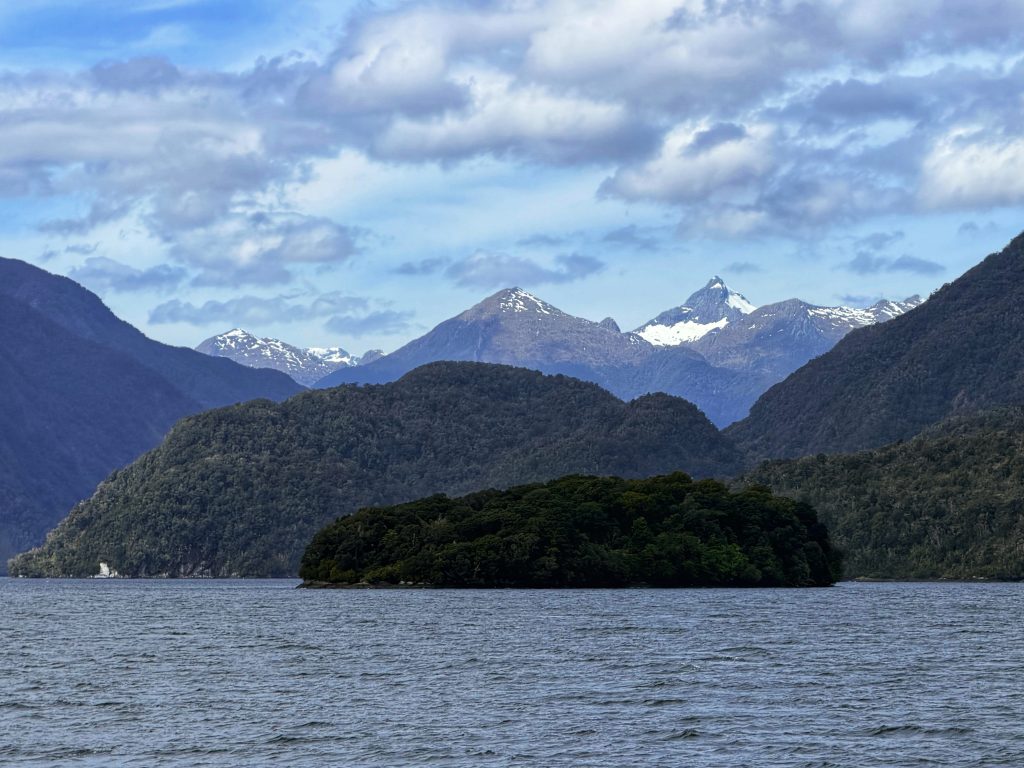
终于,我们抵达了深湾,在这里登上了那艘复古游船航海家号,正式开始了神奇海峡的过夜航程。船上大约五十名游客,游船缓缓驶入幽深的峡湾,两侧群山被云雾环绕,景色静谧又壮阔。神奇峡湾位于新西兰南岛的峡湾地区国家公园,该国家公园以令人惊叹的峡湾而闻名,这些峡湾是大约两万年前由冰川侵蚀作用形成,冰川深入大分水岭,塑造出壮丽的景观。神奇峡湾是该地区最长、最深的峡湾之一。
Finally, we arrived at Deep Cove and boarded the vintage vessel Navigator, officially beginning our overnight journey through Doubtful Sound. There were about fifty passengers on board. As the ship glided into the shadowy fjord, mountains rose steeply on both sides, wrapped in drifting mist—quiet, majestic, and almost otherworldly.
Doubtful Sound lies within Fiordland National Park in New Zealand’s South Island, a region famous for its breathtaking fjords. These fjords were carved by glaciers some twenty thousand years ago, as ice pushed deep into the main divide and sculpted the dramatic landscapes we see today. Doubtful Sound is one of the longest and deepest among them.
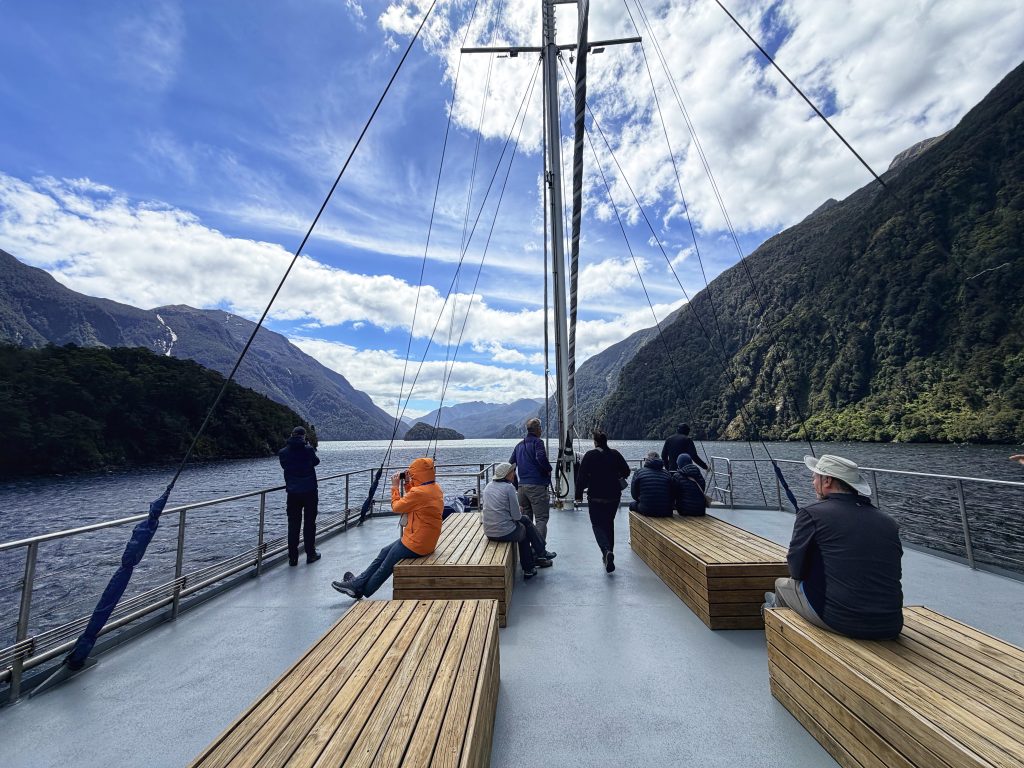
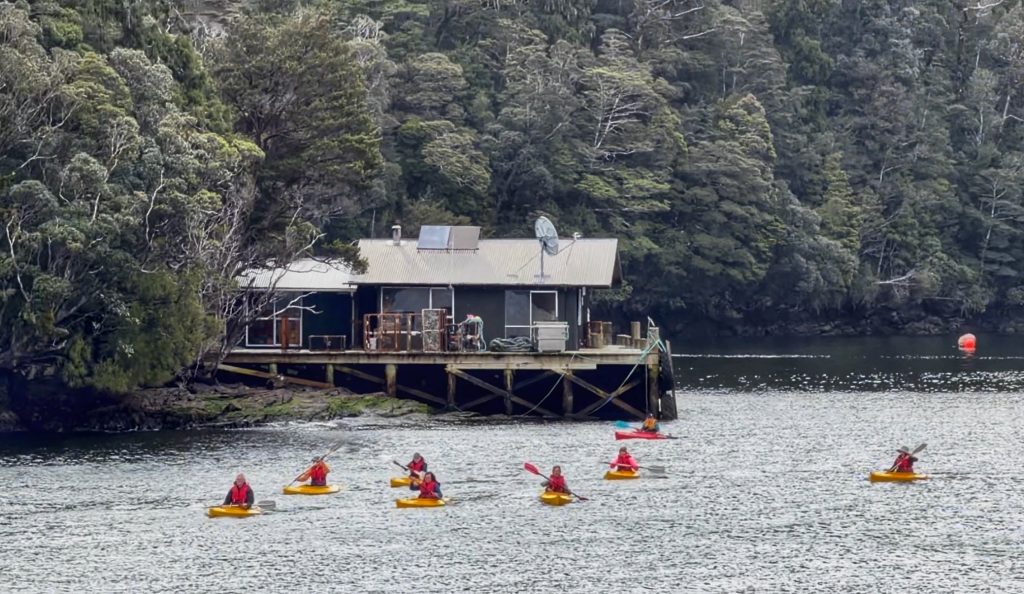
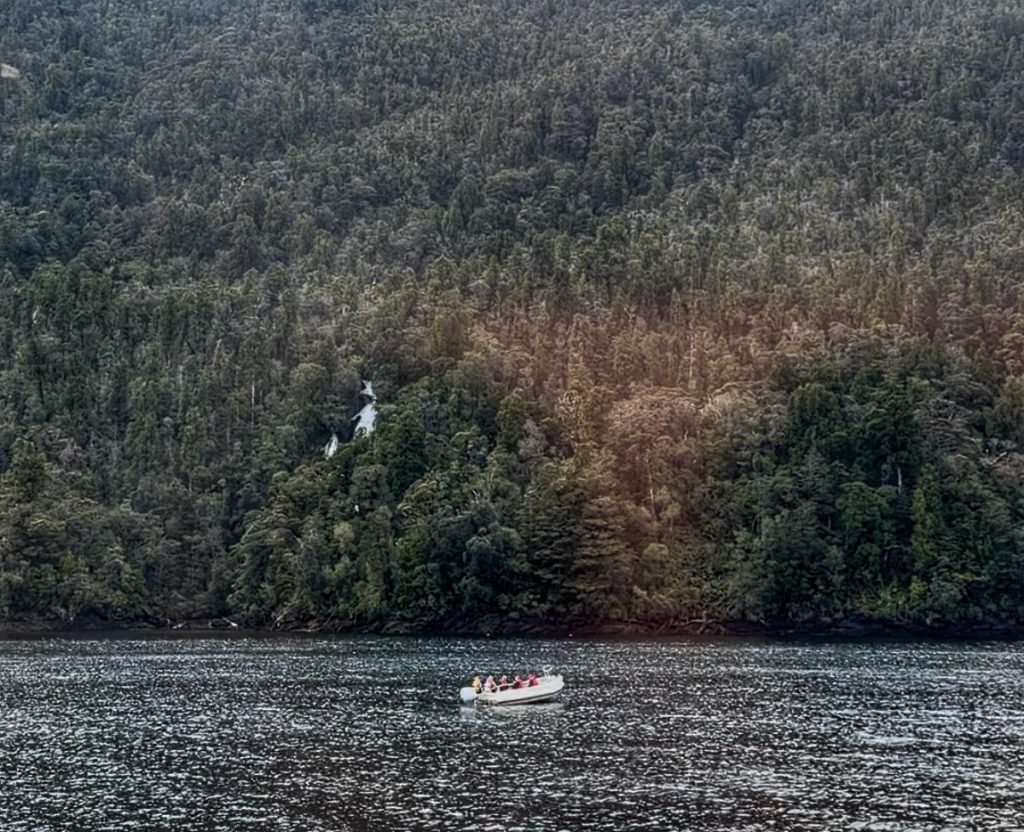
临近傍晚,游船停在了,有一些水上活动,比如皮划艇,小船游览,或者下水游泳,我俩一项也没参加 – Near dusk, the ship anchored and offered several water activities, such as kayaking, small-boat excursions, and even swimming. We didn’t join any of them.
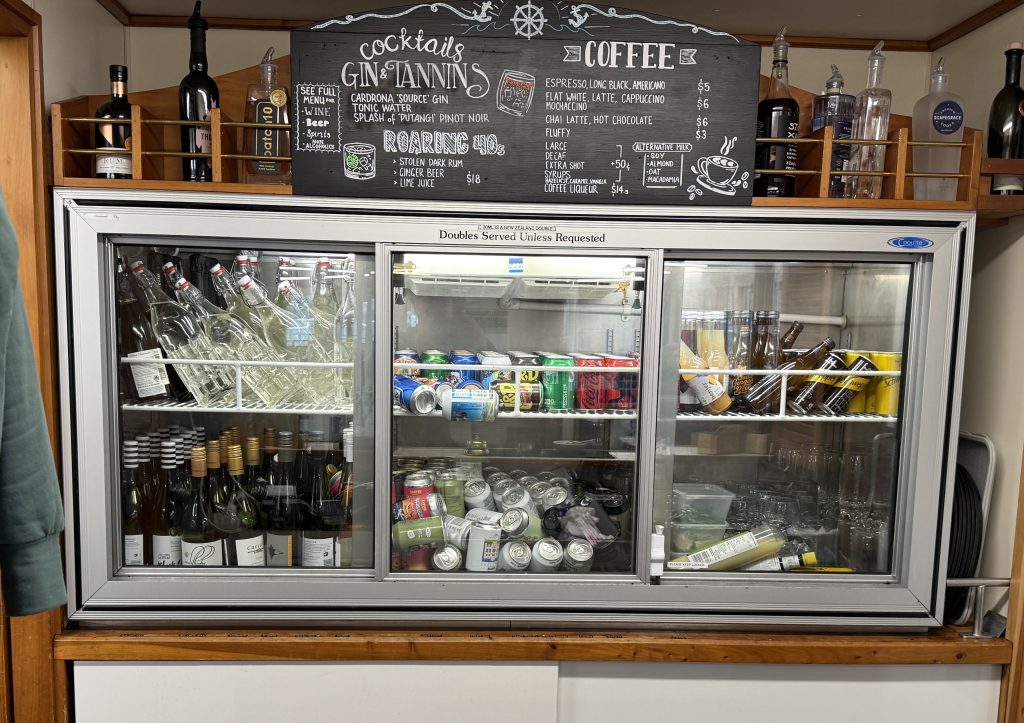
直到游船接近塔斯曼海,风突然大了起来,海浪也跟着猛烈起来。船身开始上下左右地晃,我从一开始的轻微不适,很快发展成真正的晕船。驶入外海后摇晃更剧烈,餐厅桌上的餐具接连掉落,连酒吧冰箱里的瓶子也被晃得东倒西歪。我硬撑着没有吐,但难受得只能回房间平躺。好在在外海停留大约三十分钟后,游船终于掉头,重新驶回平静的峡湾。我在心里暗暗发誓:以后再也不会主动选择这种容易晕船的行程了。当然,也因此错过了看海狮和企鹅的机会。
As the ship neared the Tasman Sea, the wind suddenly picked up and the waves grew fierce. The boat began to lurch in all directions. What started as mild discomfort quickly turned into real seasickness. Once we entered open water, the rocking intensified—cutlery slid off the tables in the dining room, and even the bottles in the bar fridge clattered around. I managed not to throw up, but felt so awful I had to lie down in the cabin.
Thankfully, after about thirty minutes in the open sea, the ship finally turned around and headed back into the calm fjord. I quietly swore to myself that I would never again volunteer for any trip prone to seasickness. Of course, that also meant I missed the chance to see sea lions and penguins.
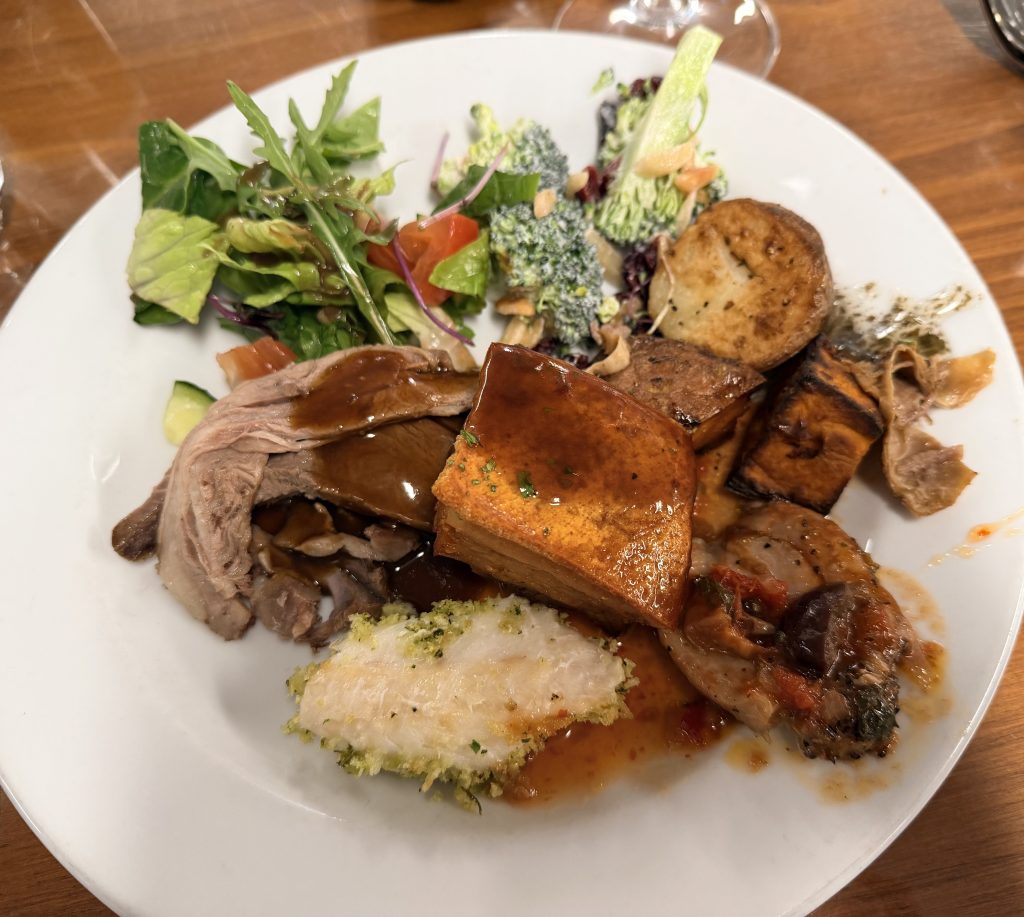
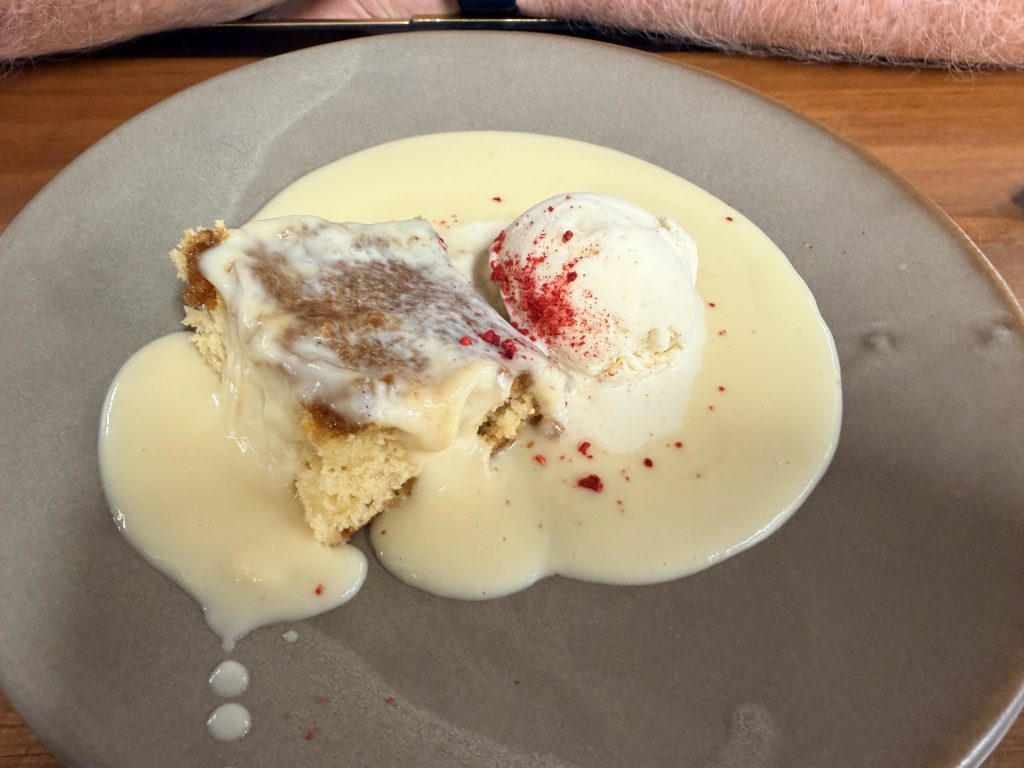
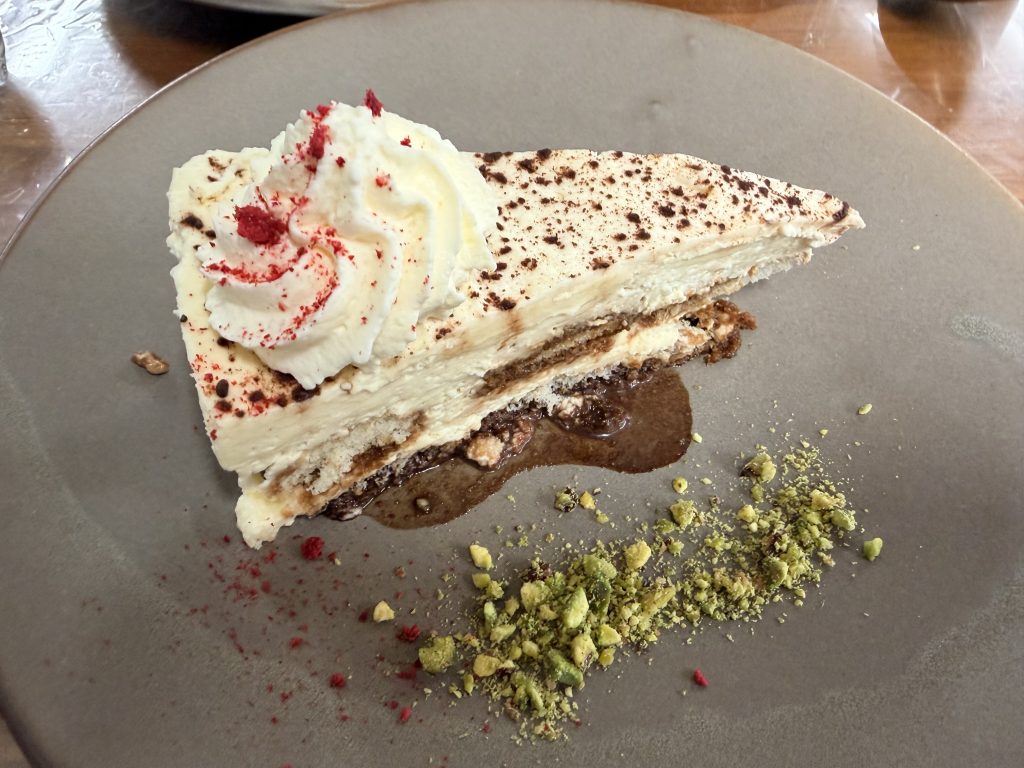
晚餐是一场丰盛的自助餐:牛肉、脆皮五花、鱼、希腊风味鸡肉、蔬菜、沙拉和甜点,应有尽有。吃完已经快9点,回到房间休息睡觉。这里远离城市,没有一丝灯光,窗外漆黑一片。就这样,我们在新西兰最幽深的峡湾里度过了一个安静的夜晚。
Dinner was a generous buffet—beef, crispy pork belly, fish, Greek-style chicken, vegetables, salads, and desserts, all laid out in abundance. By the time we finished it was close to 9 p.m., and we headed back to our cabin to sleep. Far from any city, there wasn’t a single light outside; the view through the window was pure darkness. And so we spent a quiet night in one of the most remote fjords in New Zealand. As there was zero cell service in the fjord, there would be no posting or research until tomorrow.
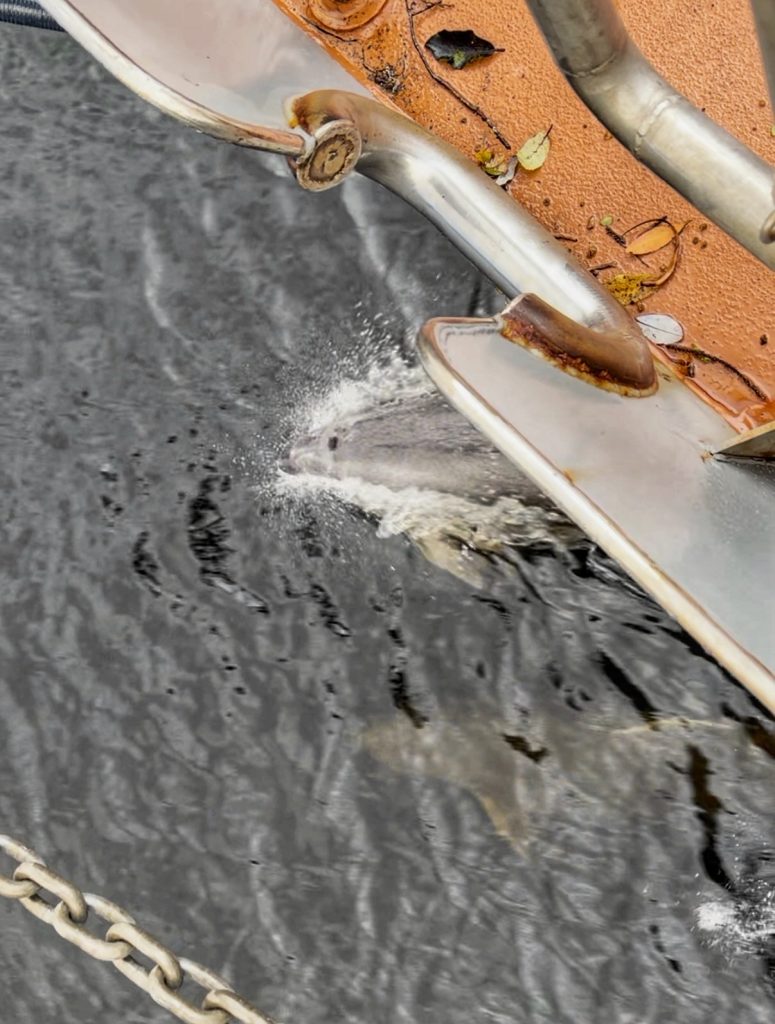
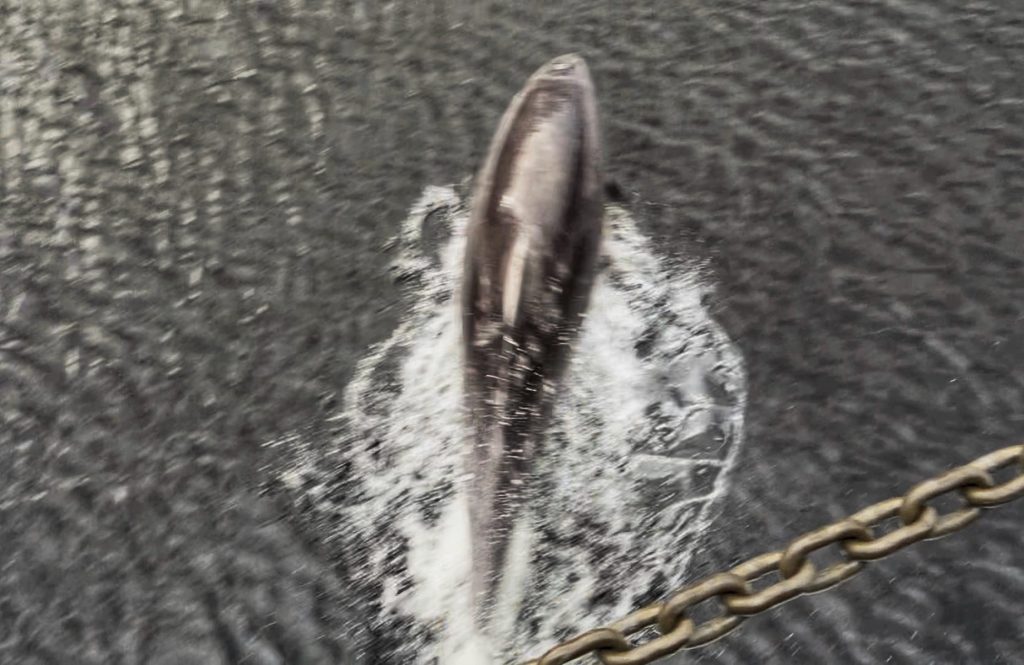
周三,清晨六点半,游船的发动机便缓缓启动,早餐时间是七点到八点,我们刚吃完不久,讲解员在船内广播,船边有海豚,有兴趣的可以去看。我们立刻冲到船头,只见两只海豚就在船前方的浪尖上并肩前行。它们顺着船体切开的水流轻巧滑动,时而跃出水面,时而贴着浪花穿梭。据说海豚特别喜欢这样“搭顺风车”,似乎是在和我们玩耍。
On Wednesday, at 6:30 in the morning, the ship’s engines began to hum softly to life. Breakfast was served from seven to eight. Not long after we finished eating, the guide announced over the speakers that dolphins were swimming alongside the boat. We rushed to the bow and saw two dolphins gliding together right on the crest of the waves in front of us. They rode the current created by the ship with effortless grace, sometimes leaping out of the water, sometimes weaving just beneath the spray. It’s said that dolphins love “hitching a ride” like this—and love playing with the boats.
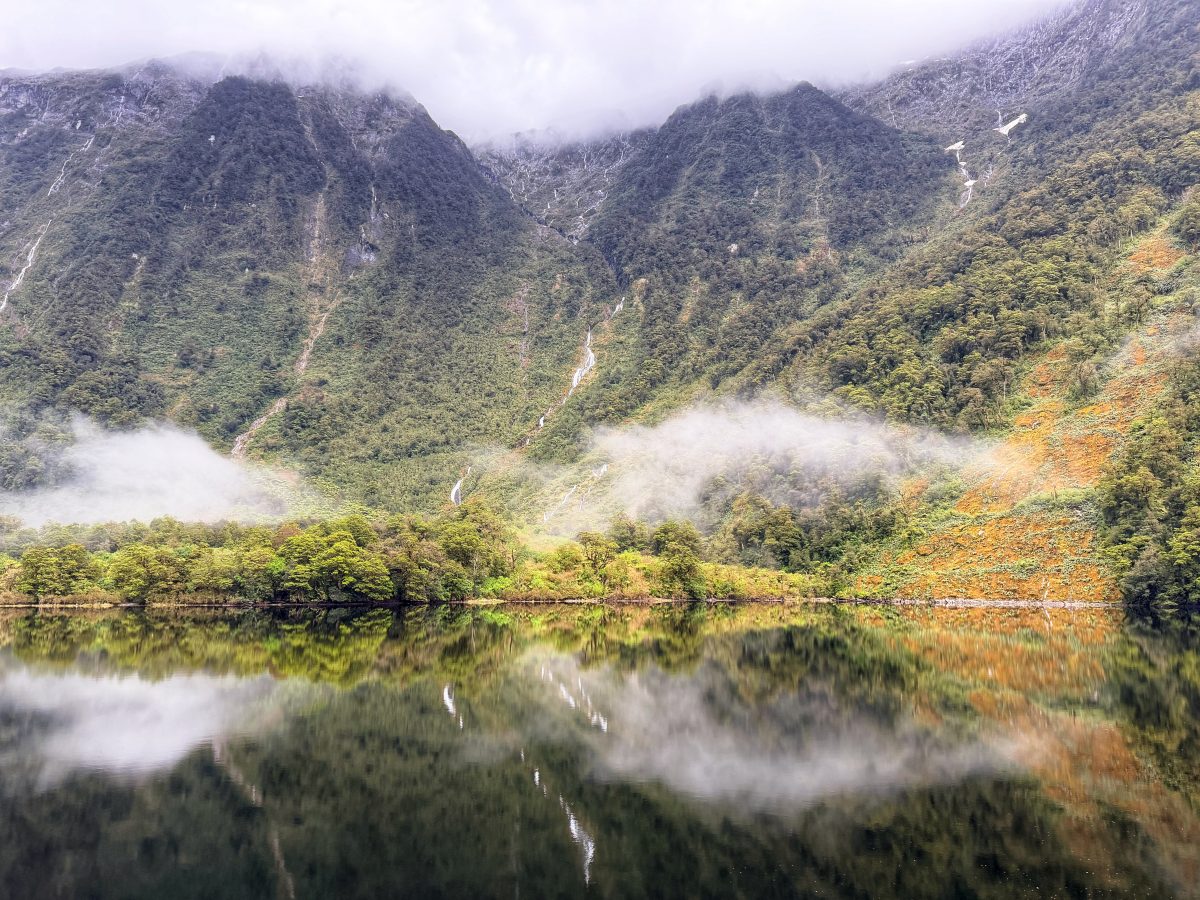
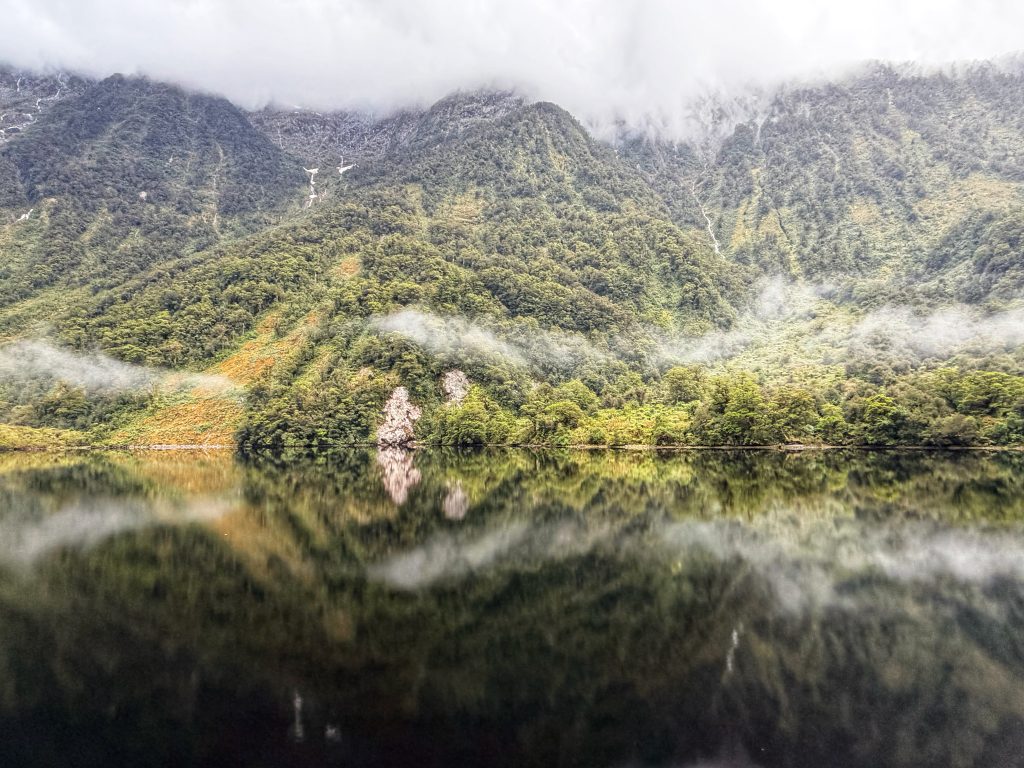
在返航前,游船先带我们驶向 神奇海峡的一个分支Hall Arm 的最深处。那里的水面静得几乎没有一丝涟漪,山峦、云层与晨光都倒映在水中,一幅完全对称的镜子世界。就在大家沉浸在这份宁静时,讲解员说要给我们一个特别的体验——“寂静之声”。 船长会关闭所有发动机,所有人也被邀请放下脚步与声音:不走动、不说话、不看手机,只需要安静地享受这一刻。
Before heading back, the ship took us into Hall Arm, one of the branches of Doubtful Sound, all the way to its innermost end. The water there was so still it had almost no ripples at all—mountains, clouds, and the morning light were reflected perfectly, creating a completely symmetrical mirror world. Just as everyone was absorbed in the quiet beauty, the guide told us they had a special experience planned: the “Sound of Silence.” The captain would shut off all engines and generators, and everyone on board was invited to pause—no walking, no talking, no clicking phones—just silence, and the moment itself.
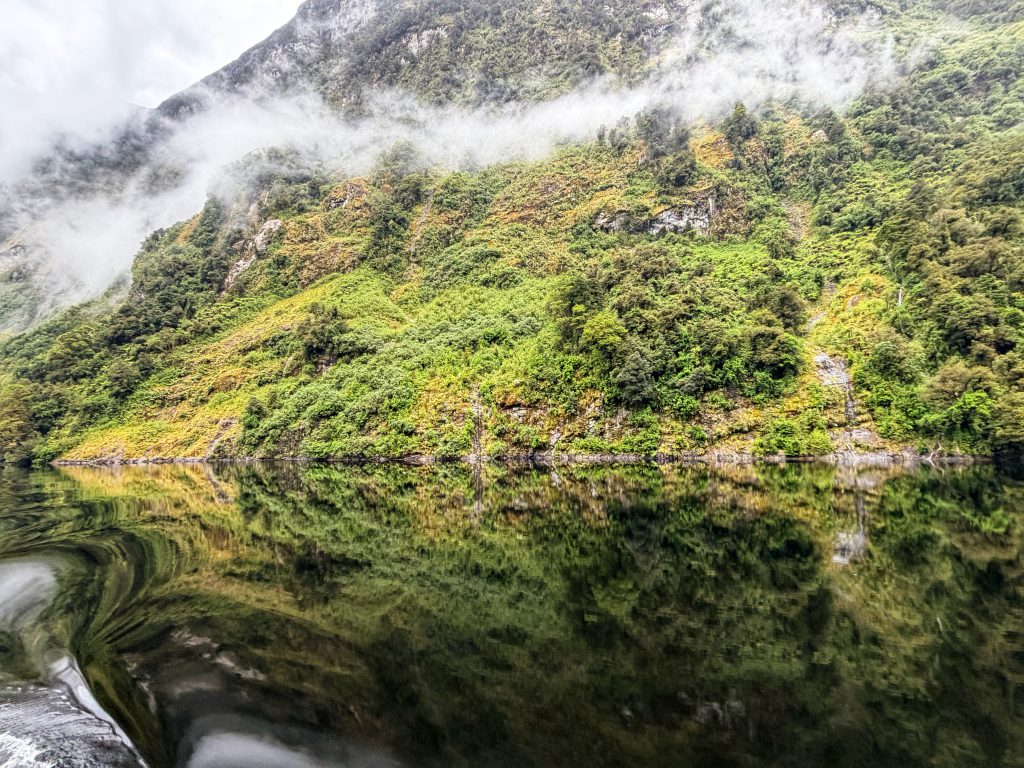
当发动机彻底停下的那一瞬间,耳边立刻被明亮清透的鸟鸣填满。周围从高山垂落的几条细瀑传来潺潺水声,一切都变得异常清晰,没有任何人造噪音的打扰。在那几分钟里,仿佛整艘船都与大自然融为一体,世界只剩下风声、水声与生命的气息。抬眼望去,云雾在山间缓缓飘移,眼前展开了一幅诗意的画卷。
The moment the engines shut off completely, our ears were immediately filled with bright, crystal-clear birdsong. From the cliffs around us, thin waterfalls trickled softly, every sound suddenly vivid without any human noise at all. For those five minutes, it felt as if the entire boat had merged with nature itself—the world reduced to wind, water, and the breath of life. Looking up, we saw mist drifting slowly between the mountains, unfolding like a scene from a poem.
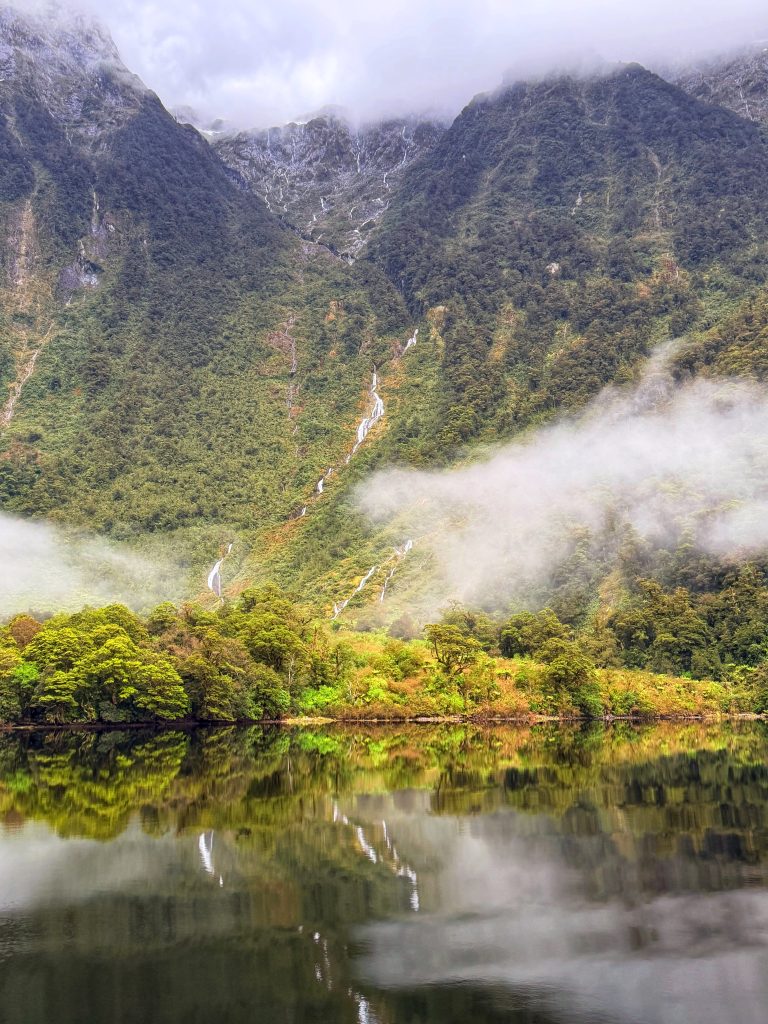
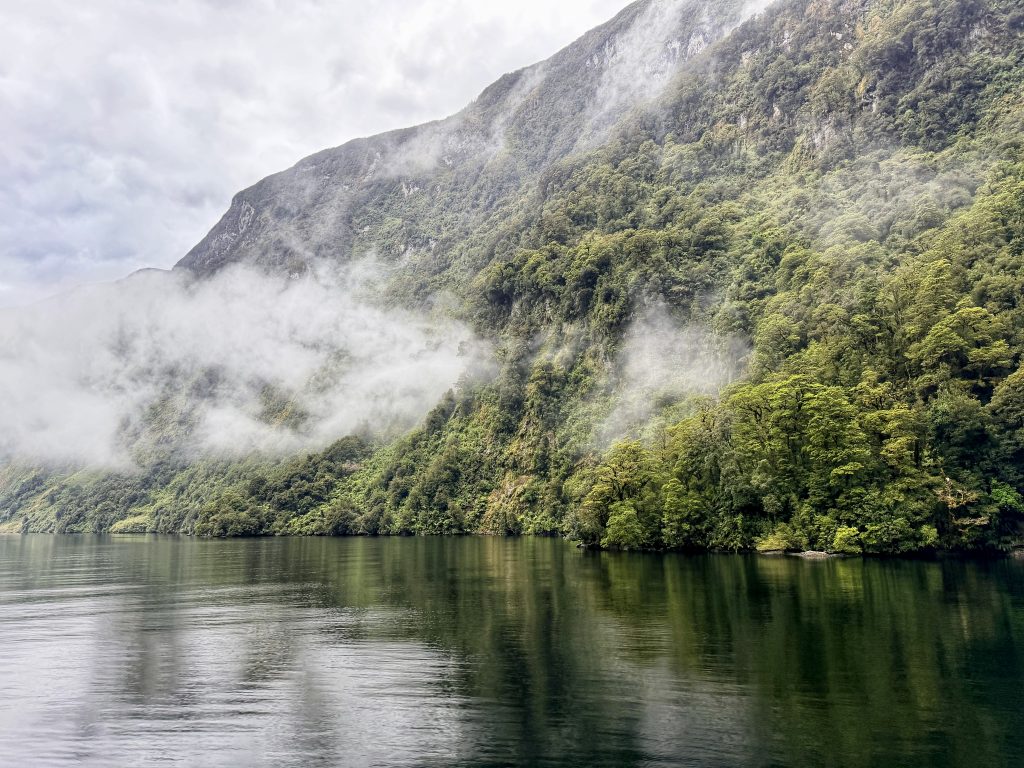
在“寂静之声”的体验结束后,游船慢慢返航,解说员一路分享了许多关于峡湾的知识,其中有一点让我印象特别深刻。峡湾两侧的山体几乎都是岩石,没有真正的土壤,但这些陡峭的山壁上却长满了葱郁的雨林——高大的树木、茂密的灌木,一层层铺到山顶。那么,它们到底是怎样在岩石上扎根、繁盛的呢?
After the “Sound of Silence” experience ended, the ship slowly made its way back. Along the way, the guide shared many facts about the fjord, and one point left a particularly strong impression on me. The mountains on both sides of the fjord are made almost entirely of rock, with no real soil at all, yet the steep cliffs are covered in lush rainforest—towering trees, dense shrubs, layers of greenery all the way to the summits. So how do these plants take root and flourish on bare rock?
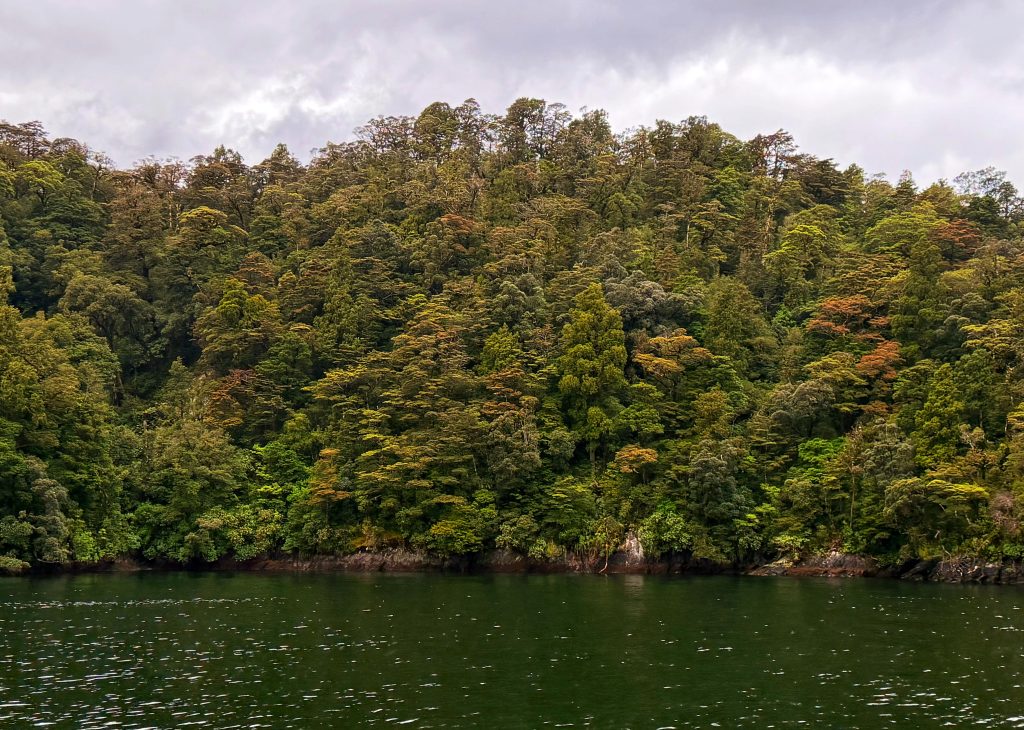
这就要说到所谓的“锚定树”。这里的树木并不是从土里长出来,而是依靠岩面上的苔藓和地衣一点点“站”稳。苔藓和地衣是峡湾生态中最重要的先锋,它们能够在贫瘠的岩面上落脚,吸收雨水,慢慢积累出一层薄薄的湿润垫层,还提供了植物初始生长所需的一些基本养分。树木的种子落下来后,会先在这层苔藓之上发芽,再用细小的根须一点一点钻入岩石的缝隙,像锚一样抓住山壁。这些树的树根往往扎得不深,却会在岩面上向四面八方蔓延,像铺开的网一样紧紧抓住每一寸可以依靠的缝隙。而且树与树之间的根系还会彼此缠绕、互相支撑。久而久之,这些树就真的“锚定”在峭壁上,形成如今看到的繁茂森林。
听着这些故事,再回头望向那些云雾缭绕、披着深绿外衣的山峰,更令人敬畏大自然的神秘力量。
This brings us to the so-called “anchored trees.” The trees here don’t grow out of soil—they survive by slowly “standing” on the mosses and lichens that cling to the rock surface. Moss and lichen are the crucial pioneers of the fjord ecosystem: they can settle on barren rock, absorb rainwater, and gradually build a thin, moist layer that provides the basic nutrients needed for early plant growth.
When a tree seed lands, it first germinates on this layer of moss. Then its fine roots begin to probe into the tiny cracks in the rock, gripping the cliff like anchors. These roots often don’t go very deep, but they spread widely across the rock surface, forming a web that clings to every crack it can find. The roots of different trees also intertwine and support each other. Over time, the trees truly become “anchored” to the sheer cliff faces, forming the lush forests we see today.
The downside of these anchors trees is that if one breaks its grip, they all come crashing down the mountain, referred to as a tree avalanche. It can take over 100 years to regrow that section of forest, beginning with the moss.
Listening to these stories, then looking back at those mist-draped, deep-green mountains, makes the hidden power of nature feel even more awe-inspiring.
还有一个很有意思的知识,自从冰川退去之后,这片区域的生态几乎没有发生改变,最初生活在这里的鸟类几乎没有天敌,因此很多新西兰鸟类都是不会飞或不善飞的。然而随着人类移民而来,老鼠、鼠类和负鼠等外来哺乳动物被带入新西兰,它们开始捕食鸟蛋和幼鸟,导致许多原生鸟类数量大幅下降。为了保护这些脆弱的鸟类,新西兰在各地设置了大量捕鼠器与陷阱,持续进行灭鼠与控制外来物种的行动。讲解员说,到目前为止,只有极少数岛屿成功实现了“无鼠岛”,完全清除外来捕食者。我们的巴士司机还分享了一个辨认外来动物的“小窍门”:看它有几条腿。如果是四条腿,而且不是蜥蜴、青蛙这类原生动物,那它十有八九就是外来物种。这也点出了新西兰生态的特殊性:这里原本几乎没有陆生哺乳类动物。
Another interesting fact: ever since the glaciers retreated, the ecosystem in this region has changed very little. The birds that originally lived here had almost no natural predators, which is why many New Zealand bird species are either flightless or poor fliers. However, when humans arrived, they brought with them invasive mammals such as rats, mice, and possums. These predators began eating bird eggs and chicks, causing the populations of many native birds to decline sharply.
To protect these vulnerable species, New Zealand has installed countless traps and devices across the country to control and eliminate these introduced animals. The guide said that so far, only a very small number of islands have successfully become “predator-free,” completely removing invasive mammals.
Our bus driver also shared a simple trick for identifying introduced animals: check how many legs it has. If it has four legs—and it’s not a native creature like a lizard or frog—then it’s almost certainly an introduced species. This highlights a unique aspect of New Zealand’s ecology: originally, there were virtually no land-based mammals here at all.
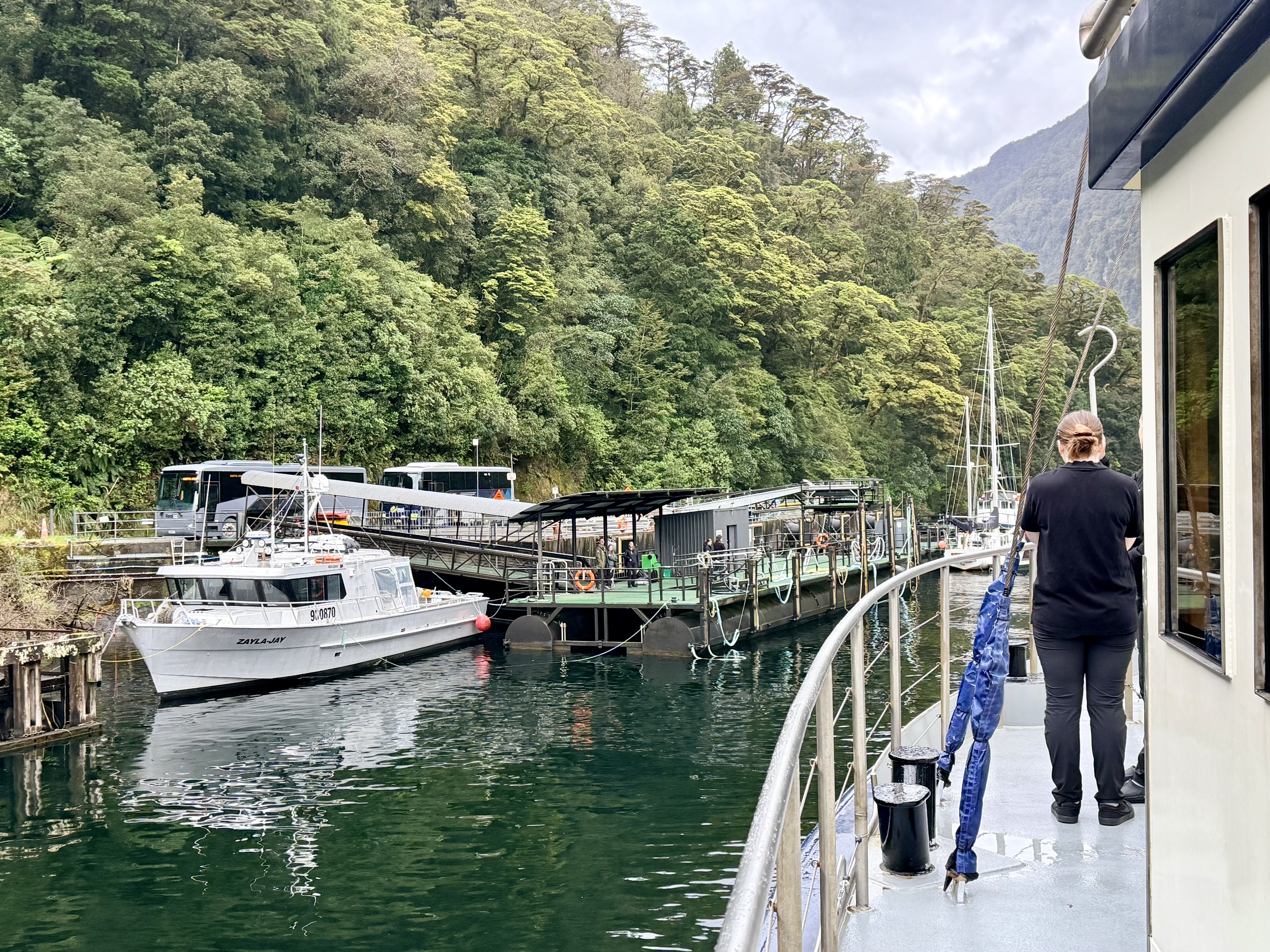
十点多我们抵达深谷,接驳的大巴已经在等候。大约四十分钟的车程后,我们又回到了西臂游客中心,再换乘四十五分钟的小游艇,终于回到了玛纳普里。随后 PJG 又开了两个多小时的车,我们才抵达皇后镇机场,赶上下午五点多飞往奥克兰的航班。
Around ten o’clock we arrived back at Deep Cove, where the connecting bus was already waiting. After about forty minutes on the road, we returned once again to the West Arm Visitor Centre, then boarded another forty-five-minute boat ride and finally made it back to Manapouri. After that, PJG drove for more than two hours, and we reached Queenstown Airport just in time to catch our late-afternoon flight to Auckland.
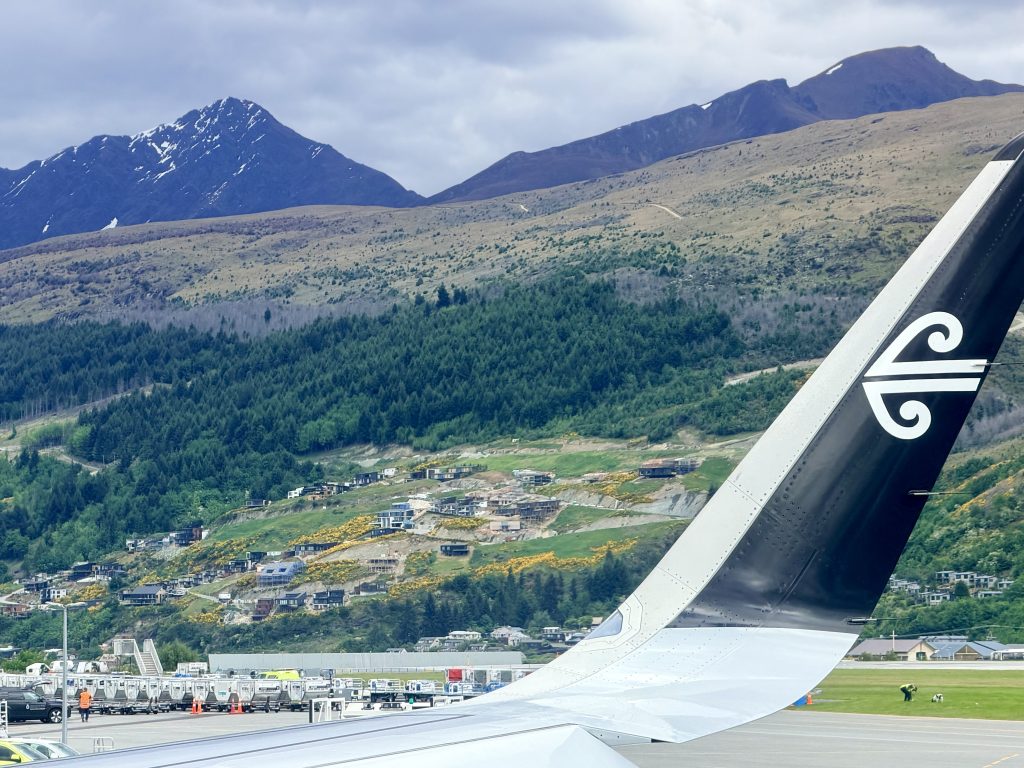
这一趟神奇海峡过夜游,真的是一路舟车劳顿,每一步都来之不易。除了那三十多分钟天旋地转的晕船经历,最让我珍惜的,是海豚与我们并肩前行的那份惊喜,以及在寂静之声里感受到的那种纯粹、毫无杂念的大自然之声。
This overnight trip to Doubtful Sound was truly a journey of constant travel—boats, buses, cars, and flights—every step hard-earned. Aside from that dizzying half hour of seasickness, what I cherish most are the dolphins gliding beside us and the pure, thought-free stillness of the “Sound of Silence.”
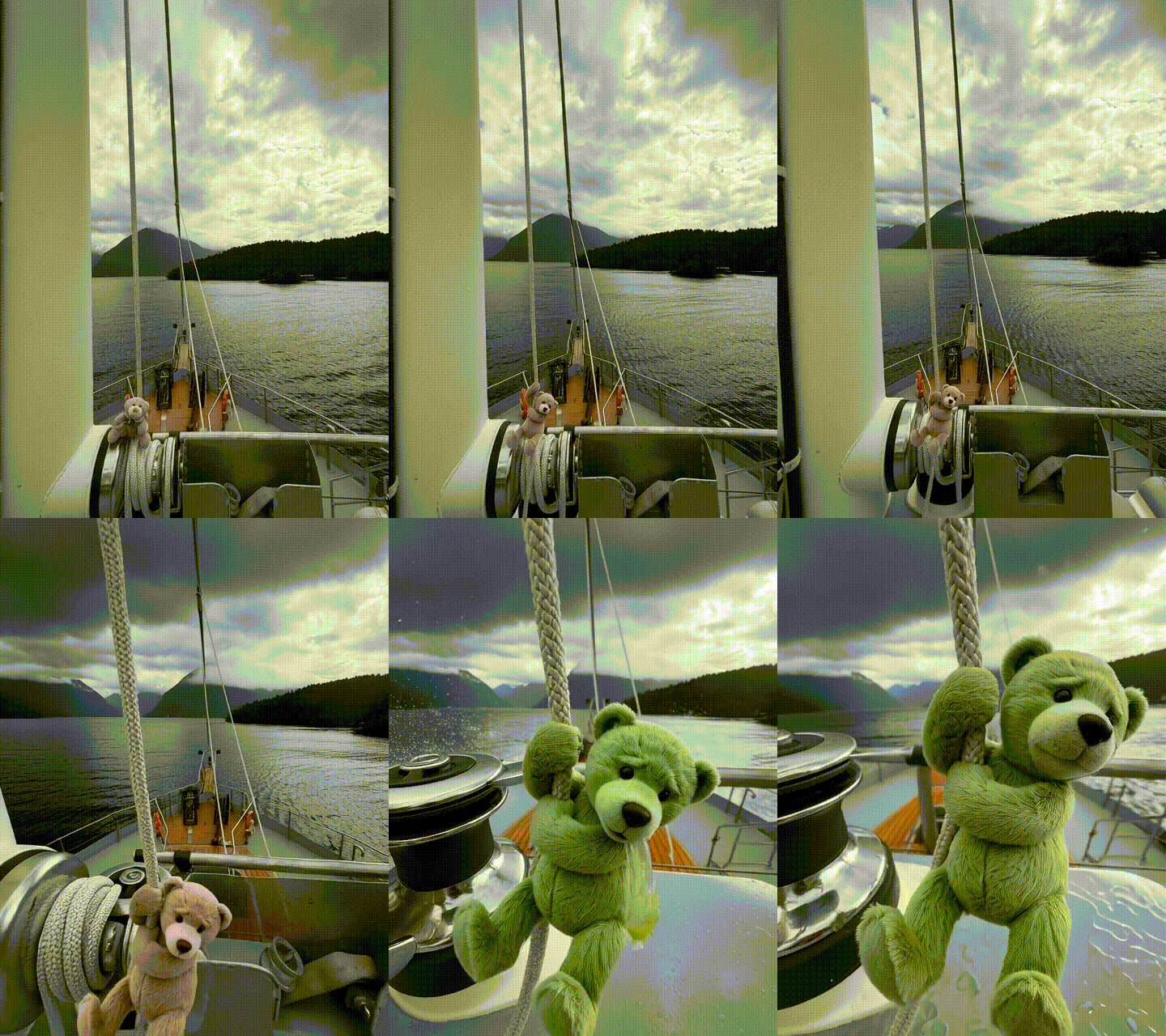
The bear got seasick too … 小熊也晕船了…
好丰富多彩的一天!仙境之旅。
喜欢途中遇见小羊和牛群的那段,越来越有大作家的风范。亲切有画面感。
喜欢寂静之声的那段。那一刻才和大自然融为一体。湖水深湖面静,让我想起水越深越平静那个道理,为人也许也是那样子吧。
还喜欢海豚那段,你俩太幸运了,看到了真的海豚,就在身边,让我好激动。
风太大了吧,晕船很难受。好在其他的体验弥补一下。
有创意 小熊也晕船啦!
是啊!她写得非常好!
她跟我说她再也不要坐邮轮了,但我敢肯定她以后会改变主意的!
Seems like you had an enjoyable cruise except for your seasickness. (I get it too on open choppy waters.)
I didn’t know that the plants on a fjord were anchored on moss and not soil. Did you see any section that looked like a tree avalanche had happened?
Seems like you cut it too close for comfort getting to the airport.! Glad you made it.
Yes we did see … the guide said one happened a few weeks ago and the entire water was filled with tree debris and the water was completely brown.